
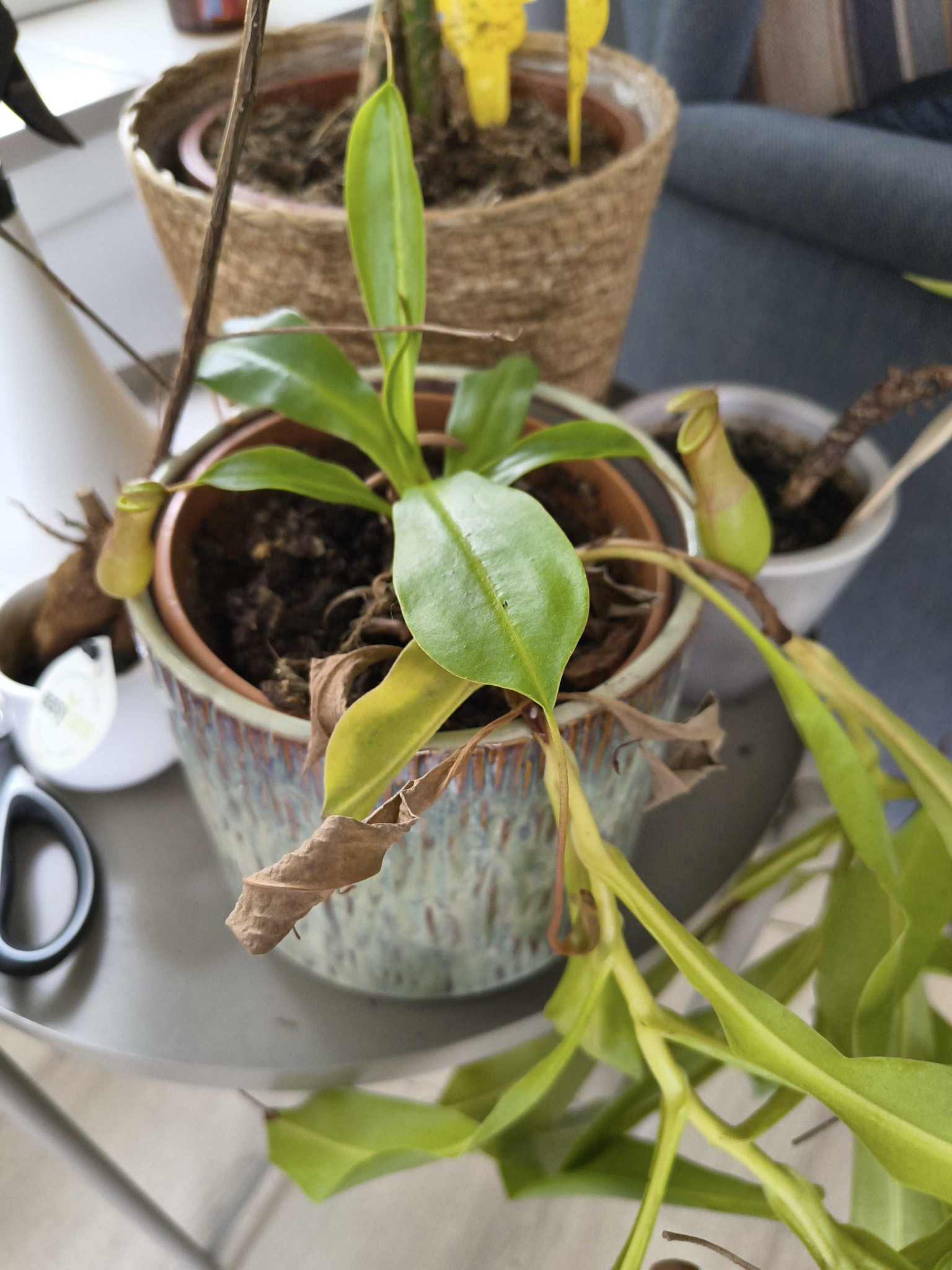
Tropical Pitcher Plant
Nepenthes spp.
An evergreen climbing or trailing vine characterized by specialized leaf modifications called pitchers, which are suspended from tendrils extending from the leaf tips.
- Light
- Bright, indirect light for 6 to 8 hours per day; avoid harsh direct midday sun which can scorch the leaves.
- Water
- Keep the growing medium evenly moist at all times using only low-mineral water like distilled, reverse osmosis, or rainwater. Never allow the roots to dry out completely, and avoid standing water that causes root rot.
- Growth
- Perennial climbing or trailing epiphyte and terrestrial vine with a moderate growth rate, capable of sprawling several feet long as stems mature.
Care instructions
Provide bright, indirect sunlight for at least 6 hours daily, maintain consistently moist conditions using distilled or rainwater, plant in nutrient-poor, highly draining media such as a mixture of sphagnum moss and perlite, and avoid chemical fertilizers.
Growing details
Sunlight
Bright, indirect light for 6 to 8 hours per day; avoid harsh direct midday sun which can scorch the leaves.
Watering
Keep the growing medium evenly moist at all times using only low-mineral water like distilled, reverse osmosis, or rainwater. Never allow the roots to dry out completely, and avoid standing water that causes root rot.
Soil
Requires an extremely loose, nutrient-deficient, and acidic soil mix with high drainage. A classic mixture consists of long-fiber sphagnum moss and perlite or coarse orchid bark, maintaining a pH between 4.5 and 6.0.
Hardiness zone
USDA Zones 11 to 12; tropical plants that cannot tolerate frost or temperatures below 55 degrees Fahrenheit.
Growth habit
Perennial climbing or trailing epiphyte and terrestrial vine with a moderate growth rate, capable of sprawling several feet long as stems mature.
Bloom season
Non-flowering (dioecious plants produce inconspicuous green or brownish flowers infrequently in indoor cultivation)
Propagation
Propagated primarily through stem cuttings taken during active growth, or by air layering older, leggy vines.
Common pests & issues
Susceptible to mealybugs, aphids, and scale insects, which can be treated manually or with gentle insecticidal soaps. Cultural issues include leaf tip browning from low humidity or mineral buildup from tap water.
Similar species
Sarracenia and Darlingtonia are often confused with Nepenthes, but they are temperate pitcher plants growing directly from underground rhizomes rather than tropical vining plants with tendrils.