
How to Care for Plantain
Growing guide for Plantain (Plantago major), a tough, adaptable low rosette plant that tolerates compacted, dry, and difficult ground with ease.
Read the full Plantain encyclopedia entry →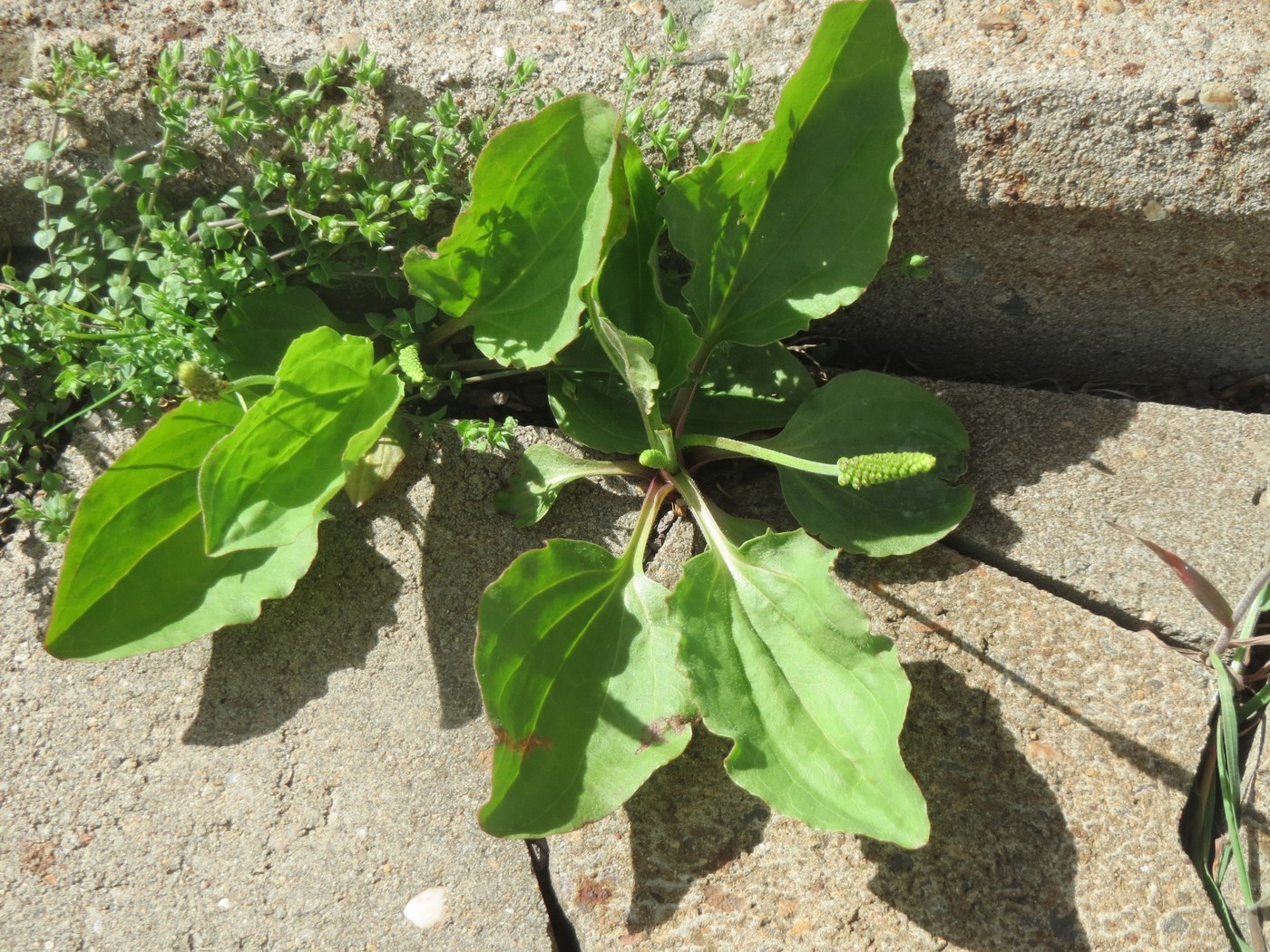
Plantain is a low-growing rosette plant with broad, ribbed leaves and slender upright flower spikes. Its defining quality is sheer toughness: it establishes and persists in compacted, trodden, and poor ground where few other plants manage, making it about as easy as growing gets.
Light
Plantain grows in full sun to part shade. It is highly adaptable and flowers well in bright positions while still tolerating dappled or partial shade. Sunnier sites produce more compact, sturdy rosettes and abundant flower spikes.
Water
This plant is remarkably adaptable to moisture, tolerating both dry spells and compacted soils that hold little water. It has low to moderate needs and rarely requires supplemental watering once established. It can also cope with occasional damp conditions, though it never wants to sit in standing water.
Soil & Potting
Plantain thrives in almost any soil, including heavy, compacted, or nutrient-poor ground where its fibrous roots take firm hold. It tolerates a wide pH range and difficult sites like path edges and hard-packed earth. In containers, ordinary potting mix in a well-draining pot is more than sufficient.
Humidity & Temperature
Hardy across a wide climate range, Plantain endures cold winters and hot summers alike and needs no special humidity. This broad environmental tolerance is why it colonizes such a variety of settings so readily and returns dependably year after year.
Feeding
Feeding is unnecessary. Plantain grows vigorously in lean, poor soils without any fertilizer. If you want fuller, greener leaves for ornamental purposes, a light spring feed will do, but the plant performs perfectly well with none.
Propagation
Plantain propagates easily from seed, produced abundantly along its upright spikes and readily self-sown. Scatter seed on the soil surface, where light and moisture prompt quick germination. Established rosettes can sometimes be divided, though seed is the simplest and most reliable route.
Repotting / Pruning
The plant forms a tight basal rosette that needs little pruning; simply remove spent flower spikes if you wish to prevent self-seeding. Transplant young rosettes while small, as the fibrous root system establishes quickly in a new spot. It regrows readily from the crown if cut back.
Common Problems & Pests
Plantain is exceptionally trouble-free and largely ignored by pests and diseases. In damp, crowded conditions leaves may occasionally develop mildew or leaf-spot markings, and slugs may nibble tender new foliage. These are minor, and good air circulation and drainage keep the plant healthy.
Seasonal Care Tips
Plantain greens up in spring and sends up flower spikes through the warmer months. Deadhead the spikes before seed sets if you want to limit its enthusiastic spread. It tolerates foot traffic and neglect, dies back somewhat in winter, and returns reliably. Overall it is a plant-it-and-forget-it grower.
Frequently asked questions
Will Plantain grow in compacted soil?
Yes. Tolerating compacted, hard-packed ground is one of its signature traits. Its fibrous roots take firm hold in difficult soils where many plants fail, including path edges and trodden ground.
How do I keep Plantain from spreading?
Remove the upright flower spikes before they set and drop seed, since the plant self-sows freely. Pulling young rosettes while small also keeps it in check.
Does Plantain need much water?
No. It has low to moderate water needs and tolerates dry, compacted conditions well. Established plants rarely need watering, though they dislike standing water.
Can Plantain handle shade?
It is adaptable and grows in full sun to part shade. It flowers most freely and stays most compact in brighter spots, but persists in dappled or partial shade too.