Plantain
Plantago major
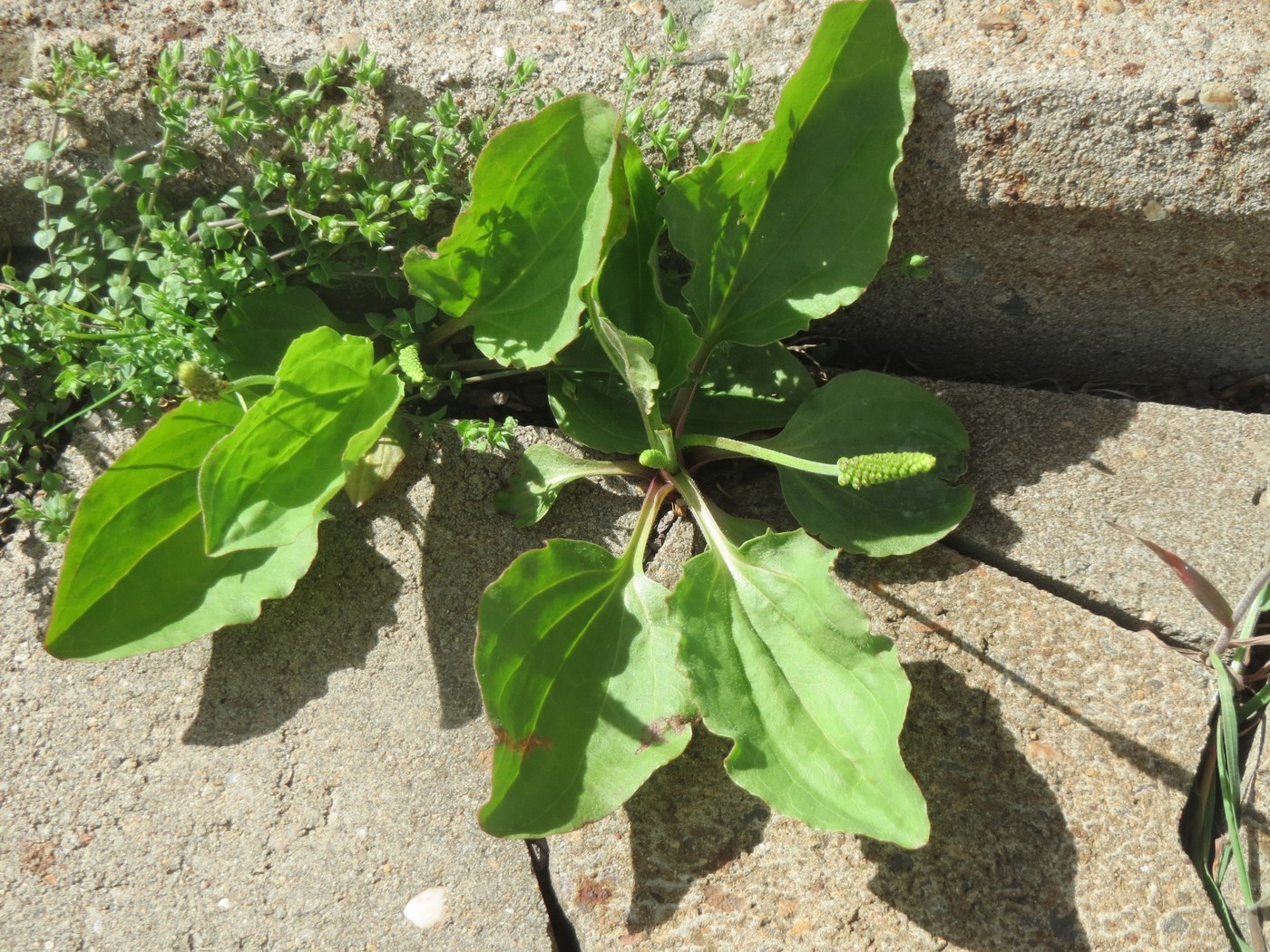
Broadleaf plantain is a tough, low-growing lawn and trail-side herb (not the banana relative) with broad ribbed leaves arranged in a flat rosette. It is one of the most common colonizers of compacted ground.
- Light
- Full sun to part shade
- Water
- Adaptable; tolerates dry and compacted soil
- Difficulty
- Easy
Got a plant like this?
Identify any plant from a photo, free.
Overview
Plantain in this sense is Plantago major, a perennial herb in the plantain family (Plantaginaceae) — not the starchy banana-like fruit, which is a different plant entirely.
Native to Europe and Asia, it has spread worldwide as a hardy companion of human activity, thriving in lawns, paths and compacted ground. Indigenous North Americans called it "white man's footprint" because it appeared wherever European settlers trod.
Its broad, strongly ribbed leaves and slender flower spikes make it one of the most easily recognized lawn and path plants.
How to identify it
- Leaves: broad, oval, in a flat basal rosette, with 5-9 prominent parallel veins (ribs) running lengthwise and tough, stringy when torn
- Flowers: tiny, greenish, packed onto a slender erect spike well above the leaves
- Seeds: numerous small seeds along the spike, ripening brown
- Habit: low ground-hugging perennial rosette, very tolerant of trampling
- Note: the related narrowleaf plantain (P. lanceolata) has long, narrow lance-shaped leaves
Care & growing
Light: Full sun to partial shade.
Water: Highly adaptable; tolerates both dry, compacted soil and periodic moisture.
Soil: Grows in poor, compacted and disturbed soils that defeat many plants.
Temperature: Cold-hardy through a wide range, roughly USDA zones 3-9.
Feeding: None required; it thrives on neglect.
Propagation: Self-seeds abundantly; usually arrives on its own. Sow seed in spring if cultivating intentionally.
Habitat & origin
Native to Europe and Asia, Plantago major now grows on every inhabited continent. It is one of the most successful colonizers of human-disturbed ground.
Look for it in lawns, sidewalk cracks, trail edges, driveways, pastures and compacted waste ground, where its trample-tolerant rosette outcompetes more delicate plants.
Frequently asked questions
Is this plantain the same as the banana-like plantain?
No. This is the herb Plantago major, a small broad-leaved lawn plant. The cooking plantain is a type of banana (Musa) and is completely unrelated.
How do I tell broadleaf plantain from narrowleaf plantain?
Broadleaf plantain (Plantago major) has broad oval leaves in a flat rosette, while narrowleaf plantain (P. lanceolata) has long, narrow, lance-shaped leaves. Both bear flowers on slender upright spikes.
Why does plantain grow in compacted soil?
Its flat, tough rosette and deep roots tolerate trampling and poor, packed ground where many plants fail, which is why it thrives along paths and in lawns.
Plantain guides
In-depth guides for identifying, growing, and caring for Plantain.
How to Care for Plantain
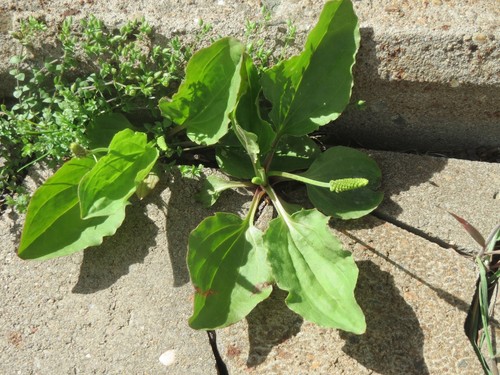
Growing guide for Plantain (Plantago major), a tough, adaptable low rosette plant that tolerates compacted, dry, and difficult ground with ease.
Plantain Identification Guide
Identify broadleaf and ribwort plantain (Plantago) by their basal leaf rosettes with parallel ribs and slender flower spikes on leafless stalks.