
How to Care for Plum Yew
Grow-care guide for Plum Yew (Cephalotaxus harringtonii): a shade-tolerant evergreen shrub with soft needles, easy in moist, well-drained soil.
Read the full Plum Yew encyclopedia entry →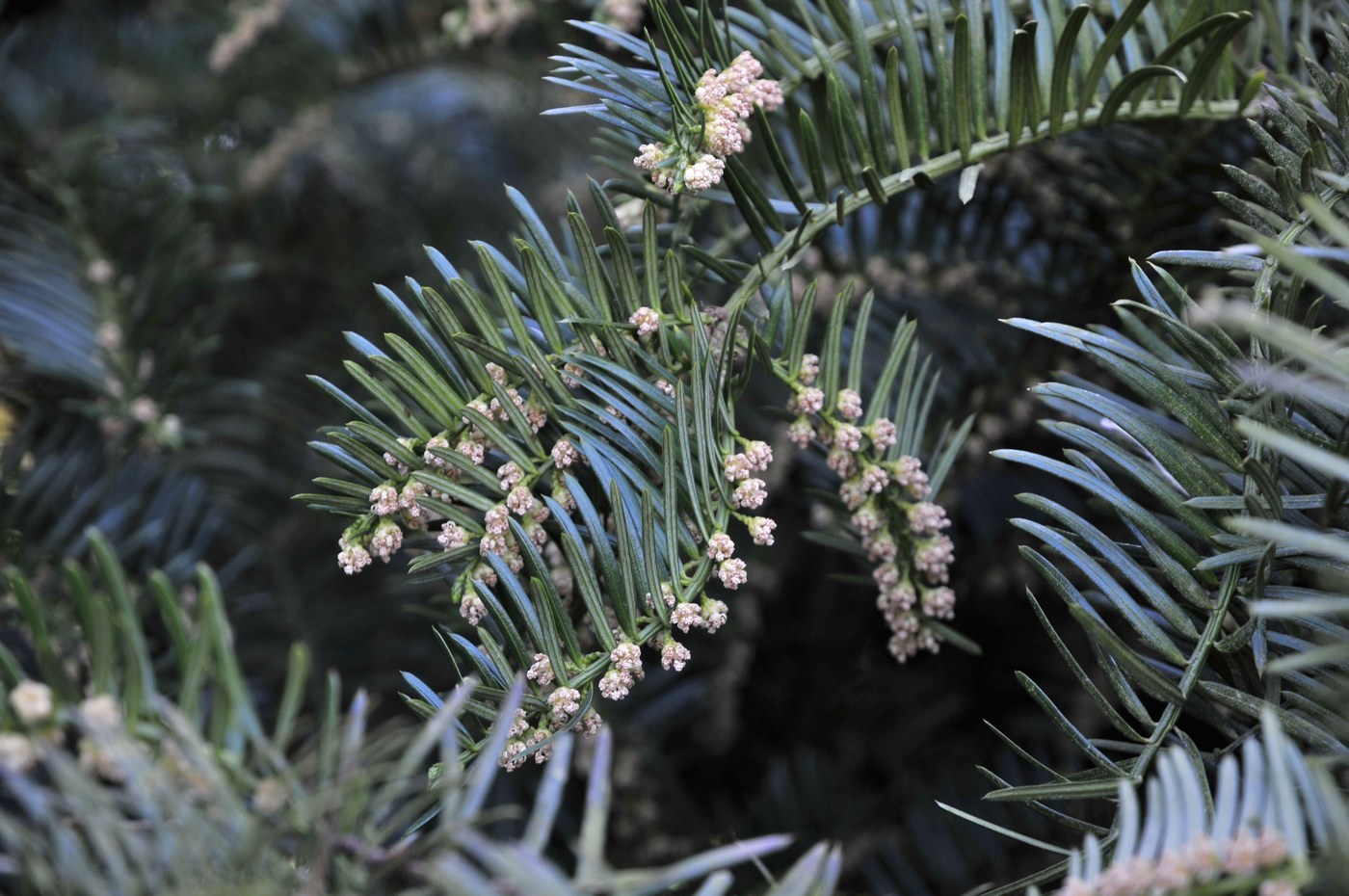
Plum Yew is a graceful, slow-growing evergreen conifer with soft, glossy, yew-like needles and a relaxed, layered habit. It is one of the most shade-tolerant needled evergreens, making it a versatile, low-fuss choice for woodland borders, foundation plantings, and shady beds.
Light
Plum Yew thrives in part shade to full shade, which sets it apart from most conifers. Dappled woodland light or a few hours of morning sun with afternoon shade produces dense, healthy foliage. It can handle more sun in cool climates if kept well watered, but in hot regions strong afternoon sun bleaches the needle color and stresses the plant. Deep shade is tolerated, though growth becomes more open there.
Water
Keep the soil moist and well-drained, especially while the shrub establishes in its first couple of seasons. Water deeply and regularly during dry spells, letting the surface dry slightly between soakings. Once established, Plum Yew is fairly drought tolerant thanks to its tough root system, but it looks its best with consistent moisture. Avoid waterlogged ground, which it will not tolerate.
Soil & Potting
Grow Plum Yew in fertile, humus-rich, well-drained soil. It adapts to a range of textures, from sandy to clay-leaning, as long as drainage is good, and it accepts both slightly acidic and neutral soils. Work compost or leaf mold into the planting hole to improve structure and moisture retention. A 2 to 3 inch mulch layer over the root zone keeps roots cool and moisture steady.
Humidity & Temperature
This is a hardy, adaptable shrub that shrugs off both heat and humidity better than true yews, and it tolerates cold well within its range. It handles the humid summers of the southeastern climates gracefully. Protect newly planted specimens from harsh, drying winter winds, which can brown exposed foliage on the windward side.
Feeding
Plum Yew is a light feeder. An application of balanced, slow-release fertilizer in early spring is plenty for most plantings, or simply top-dress with compost annually. Avoid heavy or late-season feeding, which can push soft growth that is more vulnerable to stress. In rich soils, no supplemental feeding is usually necessary.
Propagation
Propagate most reliably from semi-hardwood cuttings taken in late summer or fall; treat the base with rooting hormone and keep the cuttings in a humid, shaded frame, as they root slowly over several months. Upright stems tend to produce upright plants, while side shoots root into more spreading forms. Seed propagation is possible but slow and requires stratification.
Repotting / Pruning
Plum Yew needs little pruning and takes well to shearing when you do want to shape it, tolerating hard cuts better than many conifers. Prune in late winter or early spring to control size or maintain a formal outline. Container specimens can be repotted every two to three years into fresh, well-drained mix, moving up a size as roots fill in.
Common Problems & Pests
This is a notably trouble-free shrub with few serious pests. Root rot from poorly drained, soggy soil is the main risk, so prioritize drainage. Occasional scale insects may appear and can be managed with horticultural oil. Winter wind burn and needle browning can occur on exposed sites; siting in sheltered shade prevents most of it.
Seasonal Care Tips
Plant in spring or fall to let roots establish in mild weather. Water attentively through the first summer and during droughts. Refresh mulch each spring and apply any fertilizer then. Shear or shape in late winter before new growth flushes. In cold, windy regions, a burlap screen protects young plants through their first winter.
Frequently asked questions
Can Plum Yew grow in full shade?
Yes. Plum Yew is one of the most shade-tolerant needled evergreens and grows well in part to full shade. In deep shade it becomes more open, while dappled light produces the densest foliage.
How fast does Plum Yew grow?
It is a slow grower, adding only a few inches per year. This makes it low-maintenance and easy to keep in scale, but you should buy a size that suits your space since it takes years to fill in.
Does Plum Yew tolerate heat and humidity?
Yes, it handles hot, humid summers better than true yews, which is why it is popular in warmer southern gardens. Provide afternoon shade and consistent moisture in the hottest regions.
Can I prune Plum Yew into a hedge?
It responds well to shearing and can be maintained as a low hedge or shaped form. Prune in late winter or early spring, and it tolerates fairly hard cuts if you need to renovate an overgrown plant.