
Plum Yew Identification Guide
How to identify plum yew (Cephalotaxus) by its long, spine-tipped, soft needles in two ranks and large plum-like olive-green seeds. Covers needles, fruit, habit, and how to separate it from true yew.
Read the full Plum Yew encyclopedia entry →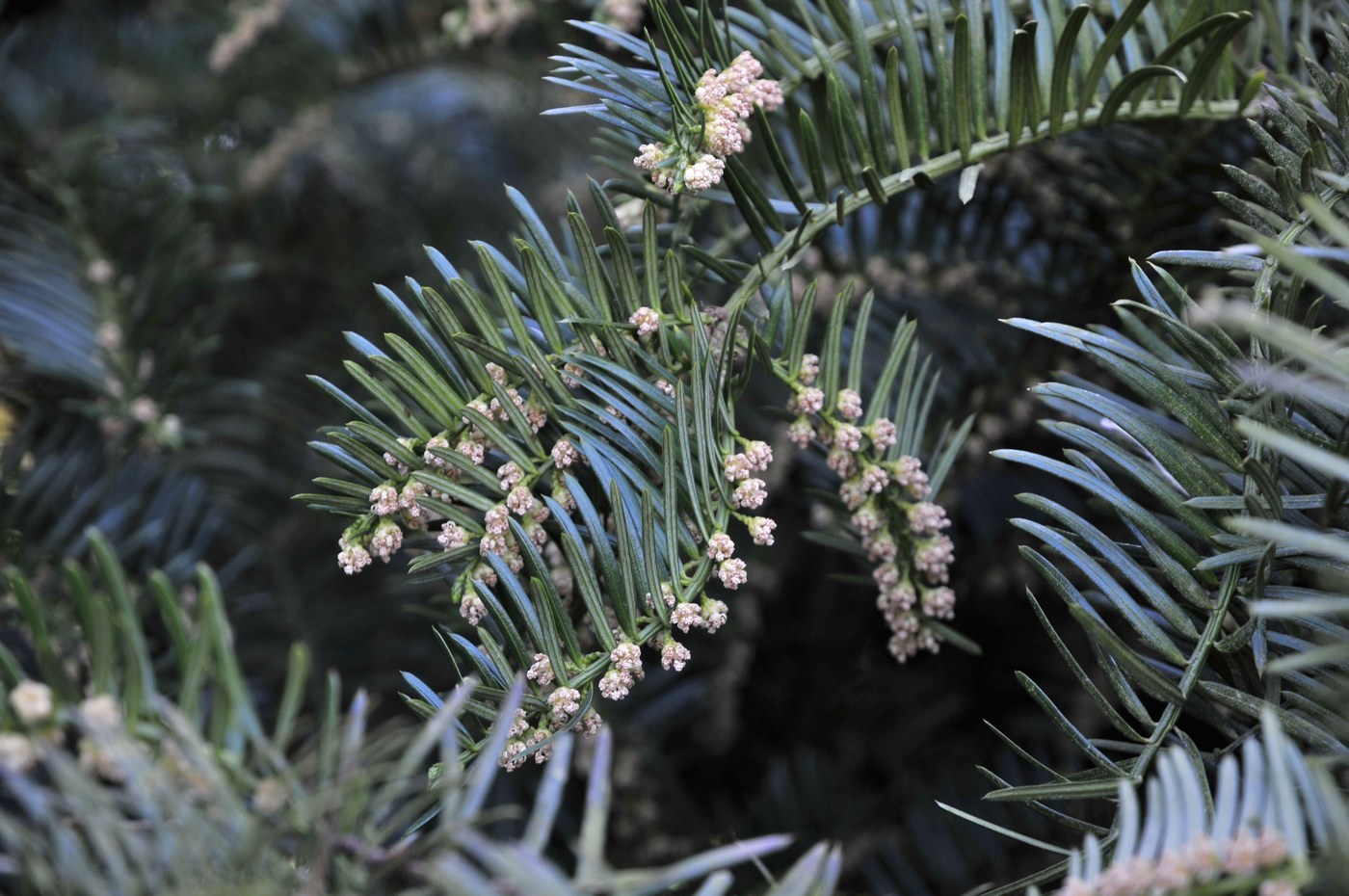
Key Identifying Features
Plum yews (Cephalotaxus, especially C. harringtonii) resemble true yews but bear large, fleshy, plum-shaped seeds and have longer, broader, spine-tipped needles. They are shade-tolerant evergreen shrubs and small trees with soft, two-ranked foliage.
- Needles longer than yew (2–5 cm), soft but ending in a fine sharp point
- Two broad, vivid white bands on the needle underside
- Seeds large, fleshy, olive-green to purple, plum-like (not a red cup)
- Spreading, shade-loving, often shrubby habit
Leaves & Stems
Needles are linear, 2–5 cm long, flattened, dark glossy green above, arranged in two ranks that often spread into a V or sweep upward in cultivars. The underside shows two conspicuous broad white (silvery) stomatal bands. Each needle tapers to a soft but distinct spine tip—pricklier than yew, softer than a holly. Crushed foliage may smell mildly resinous. Shoots are green, becoming brown; growth is typically dense and spreading. Bark is reddish-brown and flaky on older stems.
Flowers & Fruit
Plum yews are usually dioecious (separate male and female plants). The female seeds are the giveaway: large, oval, 2–3 cm long, fleshy and green ripening to olive-brown or purplish, looking like a small olive or plum and borne in small clusters. This contrasts sharply with true yew's single seed sitting in a soft red open cup (aril). Male plants bear small rounded pollen cones clustered along the undersides of shoots in spring.
How to Tell It Apart from Look-Alikes
- True yew (Taxus): Shorter needles, soft non-spiny tips, and a red fleshy cup (aril) around a single exposed seed; plum yew has longer spine-tipped needles and whole plum-like fruits.
- Torreya (nutmeg yew): Very rigid, sharply spine-tipped needles that are painful to touch; plum yew needles are softer.
- Podocarpus: Broader, strap-like leaves without the two white bands and spine tip.
Where You'll Find It
Native to East Asia (Japan, Korea, China, into the Himalayas) in forest understory. Widely planted as a tough, deer-resistant, shade-tolerant evergreen for hedges and shady borders, where it substitutes for yew in hot or humid climates. Look for it in shady garden plantings and woodland edges.
Quick ID Checklist
- Long (2–5 cm) needles with a fine spine tip
- Two broad white bands beneath each needle
- Needles in two ranks, often V-spread or upswept
- Large fleshy plum/olive-like green-purple seeds
- Shade-tolerant, spreading evergreen
An evergreen like a coarse yew but with long spine-tipped needles and large plum-shaped fruits is a plum yew.
Frequently asked questions
How is plum yew different from true yew?
Plum yew has longer needles ending in a fine spine tip with two bright white bands beneath, and large fleshy plum-like seeds, whereas true yew has short soft-tipped needles and a single seed nestled in a soft red cup.
Why is it called plum yew?
The female plants produce large, oval, fleshy seeds that ripen green to olive-purple and resemble small plums or olives, unlike the berry-like red aril of true yews.
Are plum yew needles sharp?
They taper to a fine spine point that can prick, making them sharper than soft yew needles but much softer than the rigid, painful needles of Torreya (nutmeg yew).
Where is plum yew commonly grown?
Native to East Asian forest understories, it is widely planted as a shade-tolerant, deer-resistant evergreen substitute for yew, especially in hot or humid regions.