Plumeria Identification Guide
How to recognize plumeria (frangipani) by its thick succulent branches, leathery leaves, and intensely fragrant five-petaled flowers.
Read the full Plumeria encyclopedia entry →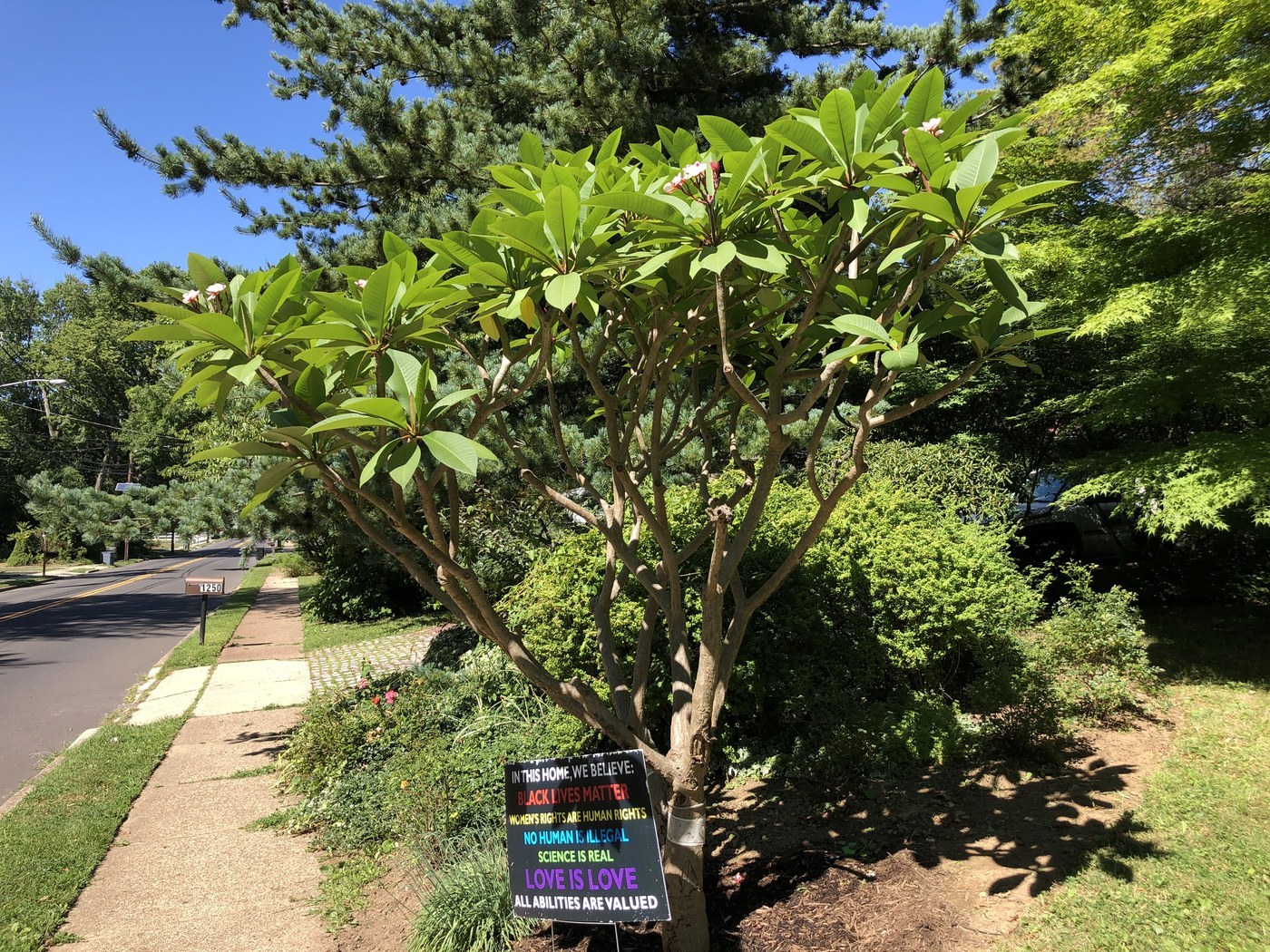
Key Identifying Features
Plumeria (frangipani) is a small tropical tree or large shrub in the dogbane family (Apocynaceae). The most reliable signs are its thick, blunt, sausage-like branches that ooze a milky white latex when broken, its clusters of waxy fragrant flowers at branch tips, and its tendency to drop all leaves in the dry/cool season, leaving knobby bare limbs.
- Stout, fleshy gray-green branches with rounded tips and visible leaf-scar rings
- Milky sap (latex) from any cut or broken part
- Five-petaled pinwheel flowers in white, yellow, pink, or red, often with a yellow throat
- Powerful sweet perfume, strongest in the evening
Leaves & Stems
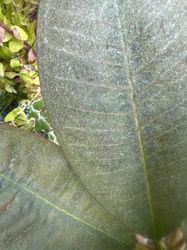
Leaves are large, leathery, and clustered toward the ends of the branches in a rosette. They are typically 8-20 inches long, oblong to lance-shaped with a pointed or rounded tip, and have a prominent central vein with parallel side veins running to the margin. Leaf surfaces are usually deep green and slightly glossy. Branches are smooth, thick, and somewhat brittle; when you snap a twig the white milky latex that appears is a hallmark of the genus.
Flowers & Fruit
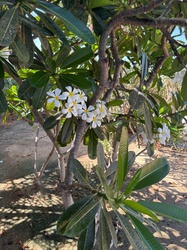
Flowers are borne in showy terminal clusters. Each bloom has five overlapping petals arranged like a pinwheel around a small tubular center, usually 2-4 inches across. Common color combinations are white-with-yellow-center (the classic frangipani), solid yellow, pink, and deep crimson. The fragrance is rich and tropical, often compared to jasmine, citrus, or gardenia. Fruit, when it forms, is a pair of long slender seedpods (follicles) that split to release winged seeds, but many cultivated plants rarely set fruit.
How to Tell It Apart from Look-Alikes
- Oleander (Nerium oleander): has narrow willow-like leaves in whorls and slender stems, not thick succulent branches; flowers are smaller.
- Hibiscus: has toothed leaves and a prominent central column of stamens, plus no milky sap.
- Adenium (desert rose): related and also has milky sap, but it forms a swollen bottle-shaped trunk and much smaller leaves.
- Magnolia: larger solitary flowers and woody non-succulent branches with no latex.
The combination of thick blunt branches + milky sap + fragrant 5-petaled pinwheel flowers is essentially unique to plumeria.
Where You'll Find It
Plumeria is native to Central America and the Caribbean and is now grown throughout tropical and subtropical regions worldwide, especially Hawaii (where it is used for leis), Southeast Asia, and the Mediterranean. It thrives in full sun, well-drained soil, and frost-free climates, and is commonly planted in gardens, temple grounds, parks, and as a container plant.
Quick ID Checklist
- Thick, blunt, succulent gray-green branches with leaf-scar rings
- Milky white latex from any broken part
- Large leathery leaves clustered at branch tips with strong parallel veins
- Five-petaled pinwheel flowers, often white/yellow, very fragrant
- Drops leaves in dry/cool season, leaving bare knobby limbs
Frequently asked questions
How can I be sure a plant is plumeria and not oleander?
Plumeria has thick, succulent, blunt-tipped branches and large leaves clustered at the tips, while oleander has thin woody stems and narrow willow-like leaves in whorls. Both have milky sap, but the branch shape and big leathery leaves are the giveaway.
Why does my plumeria lose all its leaves?
This is normal. Plumeria is deciduous in cool or dry seasons and drops its leaves, leaving knobby bare branches until warm weather returns.
What color are plumeria flowers?
Most often white with a yellow center, but cultivars come in solid yellow, pink, orange, and deep red, frequently with blended or multi-colored petals.
What do plumeria leaves look like?
Leaves are large and leathery, 8-20 inches long, oblong to lance-shaped, with a prominent central vein and parallel side veins, clustered toward the ends of the thick branches in a rosette.
Plumeria identified by the community
Recent Plumeria specimens identified with Plant Identifier.