
Poison Oak Identification Guide
How to identify poison oak (Toxicodendron) by its three-leaflet clusters, lobed oak-like leaves, and growth habit, plus how to distinguish it from similar look-alikes.
Read the full Poison Oak encyclopedia entry →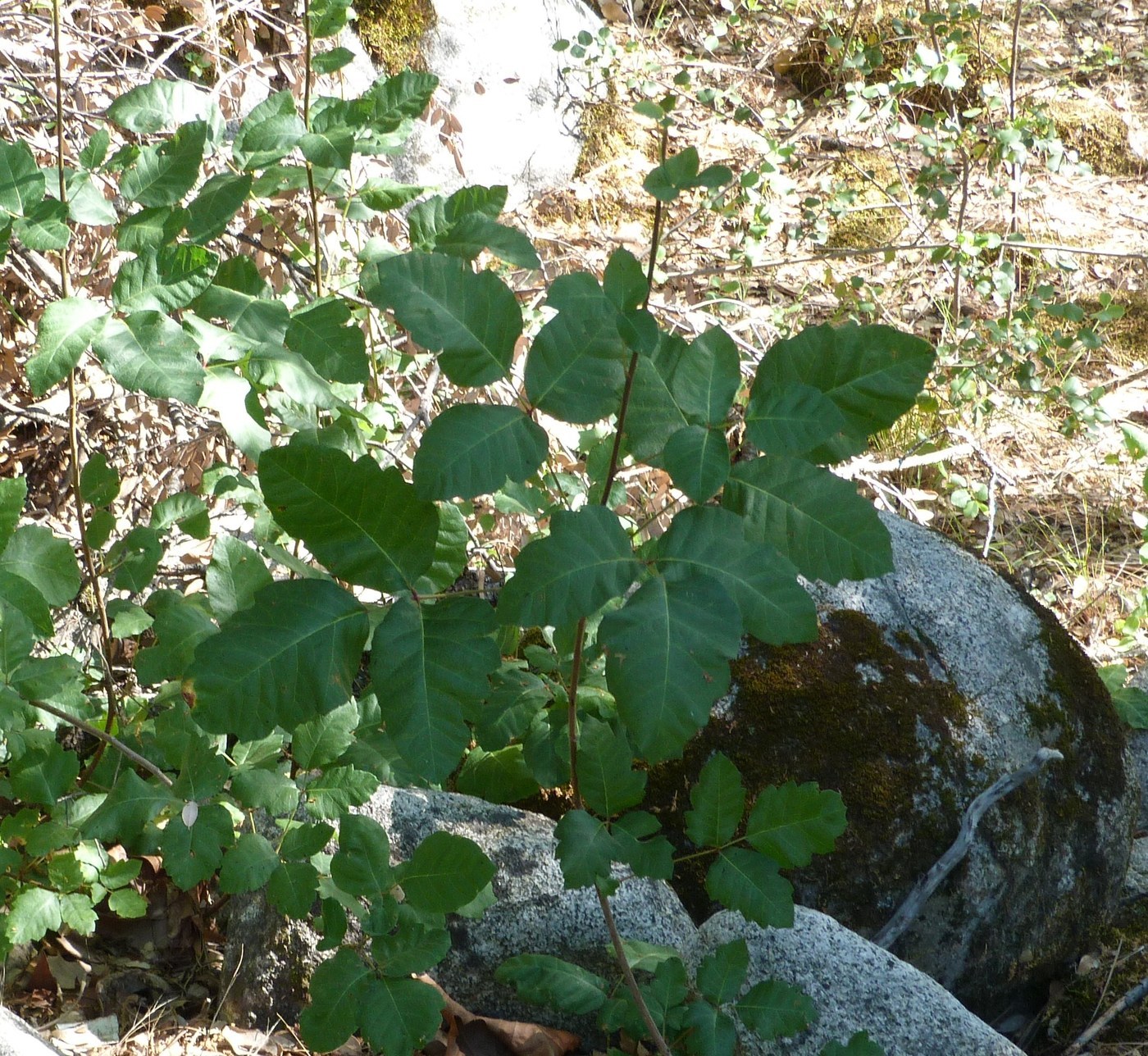
Key Identifying Features
Poison oak (Toxicodendron diversilobum in the West, Toxicodendron pubescens in the Southeast) is recognized by the classic saying "leaves of three, let it be." Look for:
- Leaves divided into three leaflets (occasionally five or seven)
- Lobed, scalloped, or wavy leaflet edges resembling oak leaves
- A central leaflet on a longer stalk than the two side leaflets
- Surfaces that can be glossy or dull, often slightly fuzzy underneath
Leaves & Stems
Each compound leaf has three leaflets, and the leaflets typically have rounded lobes that give them an oak-leaf silhouette. Leaflets are usually 1-4 inches long. New spring growth is often reddish or bronze, maturing to green in summer and turning brilliant red, orange, or yellow in fall. Stems are woody; the plant grows as a shrub (especially in the East and in open Western sites) or as a climbing vine that scrambles up trees using aerial rootlets.
Flowers & Fruit
Flowers are small, greenish-white to yellow-green, borne in loose clusters in spring. They are easy to overlook. The fruit is a cluster of small, round, greenish-white to tan berries (drupes) that often persist into fall and winter — a useful ID clue when leaves have dropped. These whitish berries help separate Toxicodendron from many berried shrubs.
How to Tell It Apart from Look-Alikes
- Poison ivy: Very similar three-leaflet pattern, but ivy leaflets are usually more pointed and almond-shaped rather than oak-lobed; the ranges and appearances overlap.
- Boxelder seedlings: Have three to five leaflets but grow with opposite leaf arrangement, while poison oak leaves are alternate.
- Blackberry/bramble: Has three to five leaflets but carries thorns, which poison oak never has.
- Fragrant sumac (Rhus aromatica): Looks very similar with three lobed leaflets, but its center leaflet is stalkless (sessile), whereas poison oak's center leaflet has a noticeable stalk.
A glossy, thornless plant with three oak-lobed leaflets in an alternate arrangement is a strong match for poison oak.
Where You'll Find It
Poison oak favors chaparral, oak woodlands, forest edges, trail margins, stream banks, and disturbed ground. Western poison oak dominates much of California and the Pacific Coast; Atlantic poison oak occurs in the sandy soils of the Southeastern U.S. It thrives in both sun and partial shade and is extremely common along hiking trails.
Quick ID Checklist
- Three leaflets per leaf (occasionally 5-7)
- Oak-like lobed/scalloped leaflet margins
- Center leaflet on a longer stalk, leaves alternate
- No thorns and no square stem
- Greenish flowers; whitish-tan berry clusters
- Red/bronze new growth, brilliant fall color
- Grows as shrub or climbing woody vine
Frequently asked questions
How do I tell poison oak from poison ivy?
Both have three leaflets, but poison oak leaflets are typically lobed and rounded like an oak leaf, while poison ivy leaflets are usually more pointed and almond-shaped. Their ranges and appearances overlap, so look closely at the leaflet outline.
What harmless plant looks most like poison oak?
Fragrant sumac (Rhus aromatica) is the closest mimic, with three lobed leaflets. The key difference is that fragrant sumac's center leaflet is stalkless, while poison oak's center leaflet sits on a distinct stalk. Boxelder seedlings and blackberry can also be confused but have opposite leaves or thorns respectively.
Where does poison oak typically grow?
It commonly grows in chaparral, oak woodlands, forest edges, trail margins, and stream banks. Western poison oak is widespread along the Pacific Coast, while Atlantic poison oak occurs in sandy soils of the Southeastern U.S.
What color is poison oak through the seasons?
New spring growth is often reddish or bronze, leaves mature to green in summer, and in autumn the foliage turns brilliant red, orange, or yellow, which makes it stand out among surrounding plants.