Poison Sumac Identification Guide
Identify poison sumac (Toxicodendron vernix), a wetland shrub, by its compound red-stemmed leaves with 7-13 smooth-edged leaflets and drooping white berries.
Read the full Poison Sumac encyclopedia entry →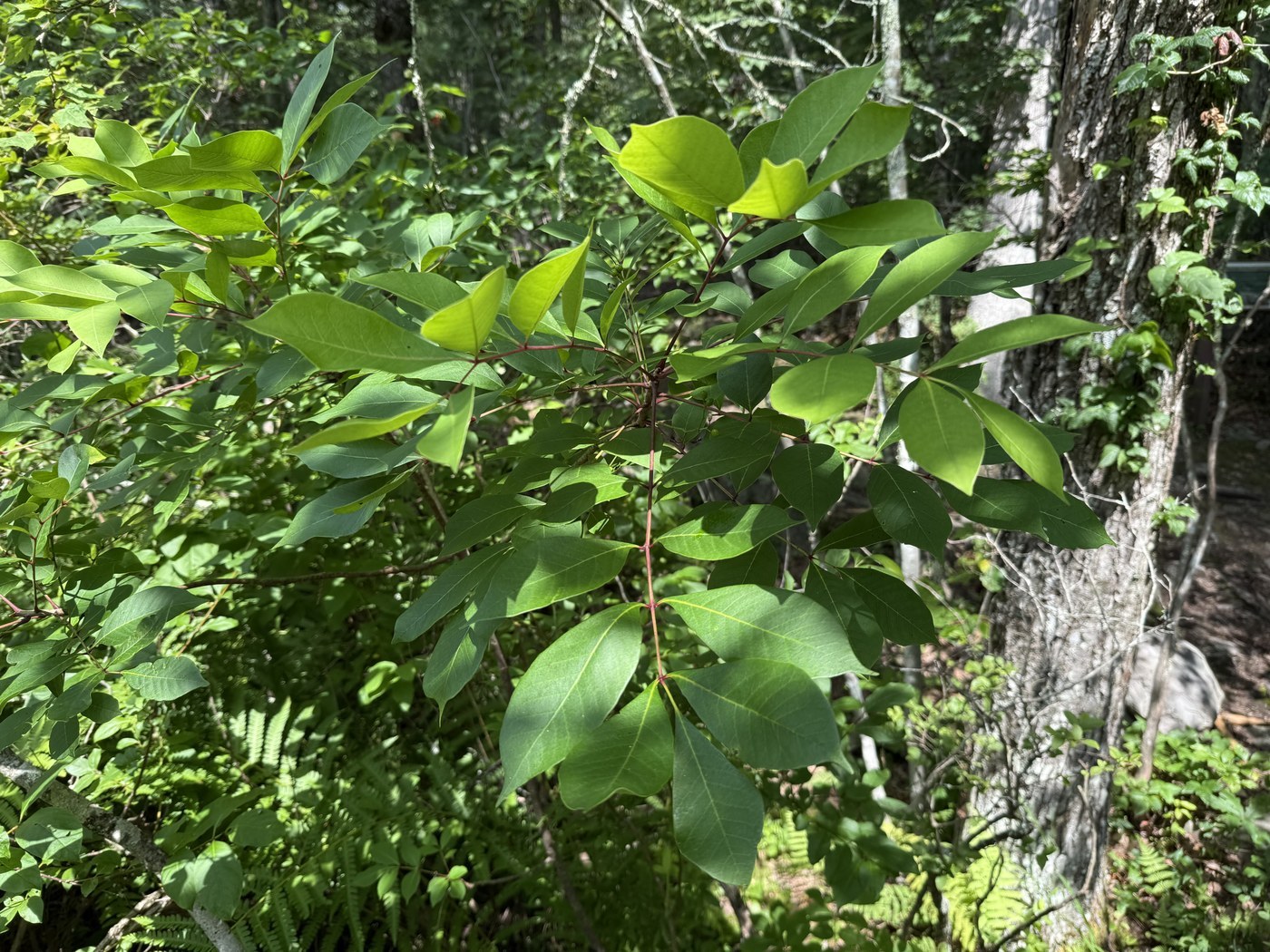
Key Identifying Features
Poison sumac (Toxicodendron vernix) is a wetland shrub or small tree. The key clues are its pinnately compound leaves with smooth-edged leaflets on red stalks, plus its wet, swampy habitat.
- Compound leaf with 7 to 13 leaflets, arranged in pairs plus one at the tip
- Smooth (entire) leaflet margins with no teeth
- Red leaf stalks (rachis), especially striking
- Drooping clusters of white/cream berries hanging from leaf axils
Leaves & Stems
Each leaf is pinnately compound, 7-14 inches long, with 7-13 leaflets arranged in opposite pairs and a single leaflet at the tip. Leaflets are 2-4 inches long, oval, pointed, with smooth untoothed edges and a glossy upper surface. New growth and the central leaf stalk are characteristically red. Foliage turns brilliant orange-red in fall.
Stems and bark are gray and smooth on a shrub or small tree typically 6-20 feet tall.
Flowers & Fruit
Small, greenish-yellow flowers appear in loose clusters in spring. The fruit is the most useful long-distance ID: drooping, loose clusters of small, round, white to gray-green berries that hang down from the leaf axils, persisting into winter. This contrasts sharply with the upright berry cones of harmless sumacs.
How to Tell It Apart from Look-Alikes
- Staghorn/smooth sumac (Rhus): have toothed (saw-edged) leaflets and upright, dense, fuzzy red berry cones held above the foliage. Poison sumac has smooth-edged leaflets and drooping white berries.
- Ash trees: have compound leaves, but leaflets are usually toothed and the plant is a large tree with opposite branching.
- Poison ivy: only three leaflets; poison sumac has 7-13.
The pairing of smooth leaflet margins + red rachis + drooping white berries + swamp habitat is conclusive.
Where You'll Find It
Poison sumac grows almost exclusively in wet, swampy, boggy ground: standing-water swamps, bogs, fens, pond edges, and flooded woodland in the eastern U.S. and southeastern Canada. Unlike the harmless sumacs, it does not grow on dry roadsides. If a "sumac" is in a dry field, it is almost certainly a different, harmless kind.
Quick ID Checklist
- Wetland/swamp shrub or small tree
- Compound leaves with 7-13 smooth-edged leaflets
- Red leaf stalk (rachis)
- Drooping clusters of white/gray berries
- Brilliant orange-red fall color
- NOT in dry sunny roadsides (that rules it out)
Frequently asked questions
How do I tell poison sumac from harmless sumac?
Poison sumac has smooth-edged leaflets, a red leaf stalk, and drooping clusters of white berries, and grows in wet swamps. Harmless sumacs have toothed leaflets and upright fuzzy red berry cones on dry sites.
Where does poison sumac grow?
Almost exclusively in wet, swampy, boggy habitats such as bogs, fens, and pond edges in the eastern U.S. and southeastern Canada. It does not grow on dry roadsides.
How many leaflets does poison sumac have?
Each compound leaf has 7 to 13 leaflets arranged in pairs with one at the tip. This separates it from poison ivy, which always has only three leaflets.
What is the most distinctive feature of poison sumac?
The central leaf stalk (rachis) is characteristically red, the leaflets have smooth untoothed edges, and the whole plant grows in wet, swampy ground, a combination that stands out from other sumacs.
Poison Sumac identified by the community
Recent Poison Sumac specimens identified with Plant Identifier.