Poison Sumac
Toxicodendron vernix
Poison sumac is a wetland shrub or small tree of eastern North America, distinguished from harmless sumacs by its smooth-edged leaflets and drooping pale berries.
- Light
- Part shade to full sun
- Water
- Wet soils; bogs and swamps
- Difficulty
- Moderate
Got a plant like this?
Identify any plant from a photo, free.
Overview
Poison sumac (Toxicodendron vernix) is a deciduous shrub or small tree native to swamps and wetlands of the eastern United States and southeastern Canada.
Because it grows in boggy, hard-to-reach habitats, it is encountered far less often than its relatives poison ivy and poison oak.
Unlike harmless ornamental sumacs (Rhus species), poison sumac has smooth leaf margins and white to pale-green drooping berries, which are key identification features.
How to identify it
Distinguish poison sumac from harmless sumacs by its smooth leaflets and white berries in wet habitats.
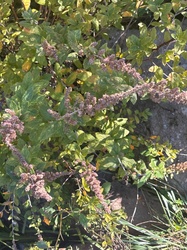
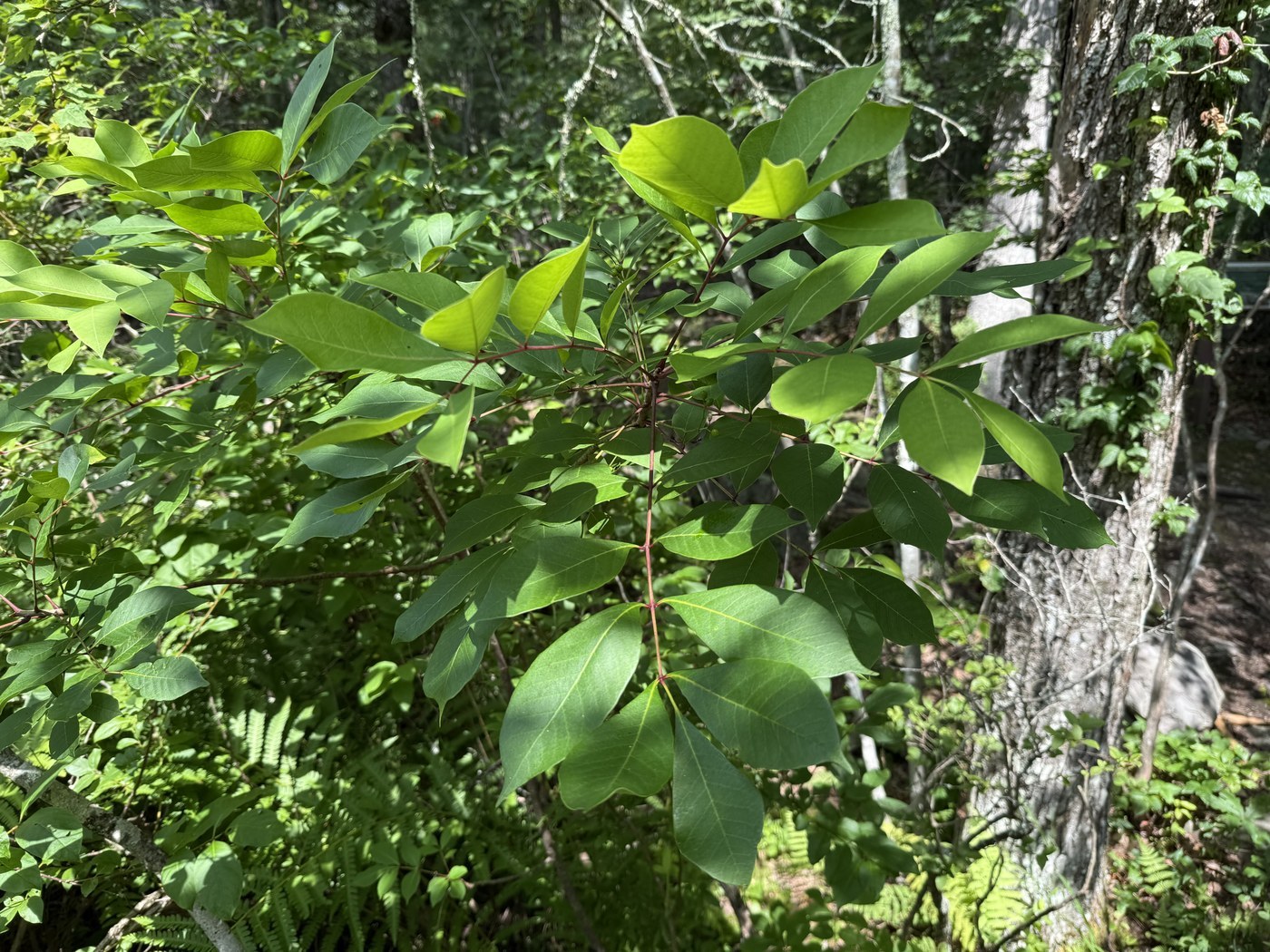
- Leaves: Pinnately compound with 7-13 smooth-edged (untoothed) leaflets, often reddish stems; brilliant red in fall
- Berries: Small, white to grayish-green, hanging in loose drooping clusters (harmless sumacs have upright red berry clusters)
- Bark: Smooth and gray on young growth
- Habit: Shrub or small tree, typically 6-20 feet tall
- Habitat clue: Grows in standing water, bogs, and swamps, not dry roadsides
Care & growing
This plant is not cultivated; it grows naturally in saturated ground.
- Light: Tolerates sun to partial shade in open wetland
- Water: Requires consistently wet, boggy conditions
- Soil: Found in saturated, peaty, acidic wetland soils
- Growth: Forms a shrub or small tree typically 6-20 feet tall, with smooth gray bark on young growth
Habitat & origin
Native to eastern North America, from Quebec and Ontario south through the eastern United States to Florida and Texas.
It is restricted to wet habitats: swamps, bogs, fens, peatlands, and the margins of ponds and slow streams. This wetland preference helps separate it from dry-ground sumacs and is a useful identification clue.
Frequently asked questions
How is poison sumac different from harmless sumac?
Poison sumac has smooth-edged leaflets and drooping white or pale berries and grows in wet swamps, while harmless sumacs have toothed leaflets and upright red berry clusters in dry sites.
Where does poison sumac grow?
It is restricted to wet habitats such as swamps, bogs, fens, and pond margins in eastern North America, which helps separate it from dry-ground sumacs.
How tall does poison sumac get?
It grows as a shrub or small tree, typically 6 to 20 feet tall, with smooth gray bark on young growth.
What do poison sumac leaves look like?
The leaves are pinnately compound with 7 to 13 smooth-edged leaflets on often reddish stems, turning brilliant red in fall.
Poison Sumac guides
In-depth guides for identifying, growing, and caring for Poison Sumac.
Poison Sumac identified by the community
Real specimens identified with Plant Identifier.