Pokeweed Identification Guide
How to identify pokeweed (Phytolacca americana) by its tall reddish-purple stems, large oval leaves, and drooping clusters of dark purple berries on pink stalks.
Read the full Pokeweed encyclopedia entry →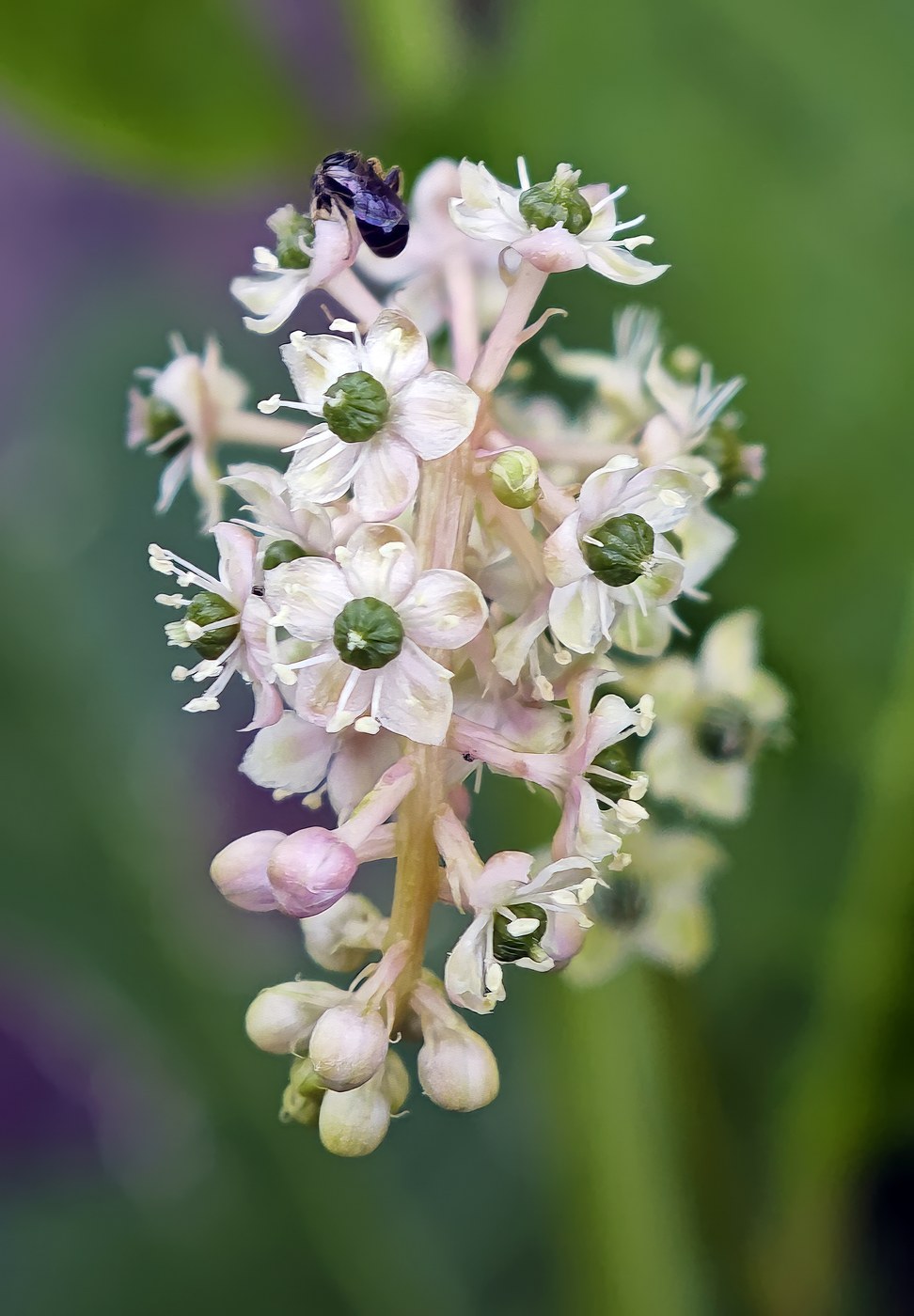
Key Identifying Features
Pokeweed (Phytolacca americana), also called pokeberry, is a large, striking native perennial. Identify it by:
- Tall, smooth, reddish-purple to magenta stems (especially when mature)
- Large, oval to lance-shaped leaves with smooth margins
- Drooping clusters of dark purple-black berries on bright pink-red stalks
- A massive, fleshy taproot
Mature plants reach 4-10 feet tall in a single season.
Leaves & Stems
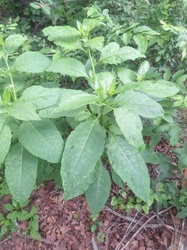
Stems are stout, smooth (hairless), hollow, and turn vivid reddish-purple or magenta as the season progresses — a standout feature. Leaves are alternate, large (6-12 inches), oval to lance-shaped, with smooth (untoothed) wavy margins and a pointed tip; crushed foliage has an unpleasant smell. The plant grows from a large, fleshy, branched white taproot that can be several inches thick.
Flowers & Fruit
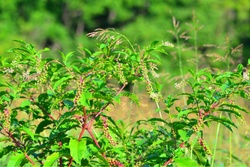
Flowers are small, white to greenish, with pinkish tints, arranged in elongated drooping clusters (racemes). They develop into the plant's signature fruit: flattened, round, dark purple to nearly black berries hanging in clusters on bright pink to red stalks. The juice is a deep magenta-purple. Birds eat the berries and spread the seeds widely.
How to Tell It Apart from Look-Alikes
- Elderberry: Has compound leaves (multiple leaflets) and flat-topped flower clusters; pokeweed has simple, undivided leaves and drooping berry clusters on pink stalks.
- Wild grape: A vine with lobed leaves and tendrils; pokeweed is an erect herb.
- Nightshades: Smaller plants; pokeweed's giant size, magenta stems, and pink berry stalks are distinctive.
- Ornamental pokeweeds: Similar berries, but native P. americana is the common tall roadside form.
The tall magenta stems plus large simple leaves plus drooping purple berries on pink stalks are diagnostic and unmistakable in late summer.
Where You'll Find It
Pokeweed grows in fields, fence rows, forest edges, roadsides, pastures, gardens, and disturbed ground, especially across the eastern and central United States. It favors rich, moist soil and full to partial sun, and often appears where birds drop seeds along fences and under perches.
Quick ID Checklist
- Tall (4-10 ft) smooth reddish-purple/magenta stems
- Large alternate oval leaves, smooth margins
- Drooping clusters of dark purple-black berries
- Bright pink-red berry stalks
- Large fleshy taproot
A tall plant with vivid magenta stems and drooping clusters of dark purple berries on hot-pink stalks is pokeweed — striking and unmistakable.
Frequently asked questions
How do I tell pokeweed from elderberry?
Pokeweed has large simple, undivided leaves, magenta stems, and drooping berry clusters on pink stalks. Elderberry has compound leaves made of several leaflets and produces berries in flat-topped clusters on a woody shrub, so the leaf structure quickly separates them.
What gives pokeweed its purple color?
Pokeweed contains betalain pigments that produce the vivid magenta stems and the deep purple berry juice. This juice has historically been used as a dye and ink.
How tall does pokeweed get?
In a single growing season, mature pokeweed commonly reaches 4 to 10 feet tall, forming a large bushy plant with stout, vivid magenta stems.
How can I recognize pokeweed in late summer?
Look for stout, smooth, reddish-purple stems, large oval alternate leaves, and long drooping clusters of dark purple-black berries hanging from bright pink-red stalks, which together make it easy to recognize.
Pokeweed identified by the community
Recent Pokeweed specimens identified with Plant Identifier.