
Polka Dot Plant Identification Guide
Identify Hypoestes phyllostachya by its green leaves freckled with pink, white, or red spots, opposite leaf arrangement, and soft branching stems.
Read the full Polka Dot Plant encyclopedia entry →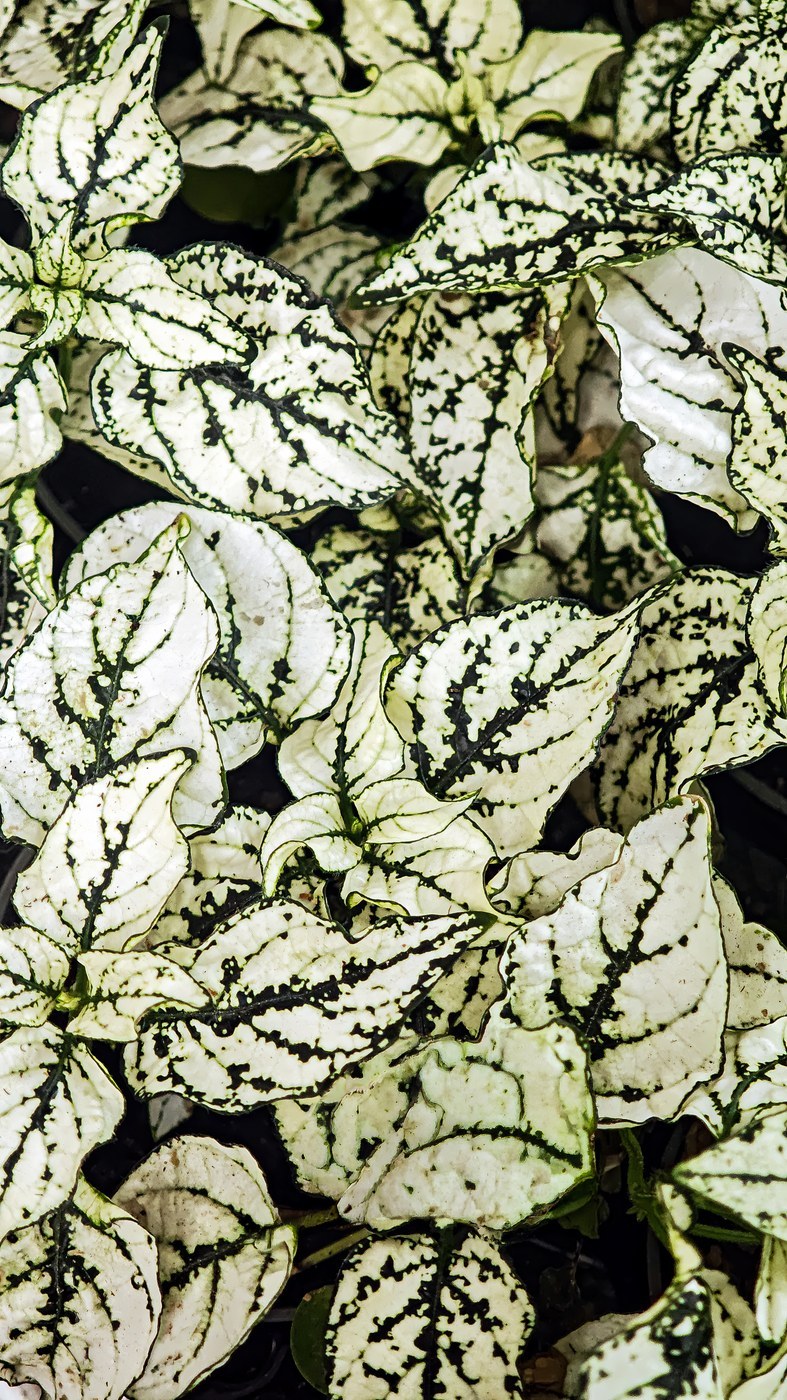
Key Identifying Features
The Polka Dot Plant (Hypoestes phyllostachya) is a small, bushy houseplant grown for its green leaves heavily speckled and splashed with pink, rose, white, or red spots that look like scattered confetti or freckles.
- Oval, pointed leaves with pink/white/red mottling over green
- Leaves arranged in opposite pairs on the stem
- Soft, slightly fuzzy stems and foliage
- Compact, bushy habit, usually 15-45 cm tall as a houseplant
Leaves & Stems
Leaves are egg-shaped to elliptic with a tapered tip, about 5-7 cm long, with a softly hairy surface. The defining trait is the dense spotting; some cultivars are so heavily marked the pink nearly covers the green. Spot color varies by cultivar: 'Pink Splash', 'Red Splash', 'White Splash', and the Confetti series.
Stems are soft, green to pink-tinged, and slightly hairy, branching readily, especially if pinched. The plant is a member of the Acanthaceae family, and its opposite leaves and squarish soft stems reflect that. Without pinching it gets leggy and sprawling.
Flowers & Fruit
Flowering signals the plant is maturing and often declining in vigor. Flowers are small, tubular, lilac to pink-purple, borne in spikes from the leaf axils. They are modest and easily missed. After flowering the plant may set tiny seeds and decline, so growers often pinch off flower spikes. Fruit is a small capsule.
How to Tell It Apart from Look-Alikes
- Nerve plant (Fittonia) has bold vein patterning (lines), not scattered dots, and lies flatter and lower.
- Caladium and coleus also have colorful leaves but are much larger and have different shapes; coleus has scalloped/toothed margins and square stems.
- Aluminum plant (Pilea cadierei) has silver patches arranged between veins, not random pink/red dots.
- The combination of green leaves with random pink/red/white speckling, opposite, on soft fuzzy stems is unique to polka dot plant.
Where You'll Find It
Native to Madagascar, it grows in warm, humid forest understory. It is sold worldwide as a colorful houseplant, terrarium filler, and seasonal bedding/container plant in shade. Indoors it wants bright indirect light to keep spotting vivid.
Quick ID Checklist
- Green leaves freckled with pink, white, or red
- Oval, pointed, softly hairy leaves
- Opposite leaf pairs on soft stems
- Compact, bushy growth
- Small tubular lilac flowers when mature
Frequently asked questions
How do I tell a polka dot plant from a nerve plant?
Polka dot plant has random spots and splashes scattered across the leaf, while Fittonia (nerve plant) has a network of contrasting colored veins forming distinct lines.
Why is my polka dot plant losing its bright colors?
Too little light causes the spots to fade and the plant to favor green. Give it bright, indirect light to keep the pink, red, or white markings strong.
Should I let it flower?
Many growers pinch off the small lilac flower spikes, because flowering and seeding can trigger the plant to decline. Removing flowers keeps growth bushy and the foliage colorful.
Why does my plant look leggy?
Without regular pinching, polka dot plants stretch and sprawl. Pinch the growing tips to encourage branching and a fuller, more compact shape.