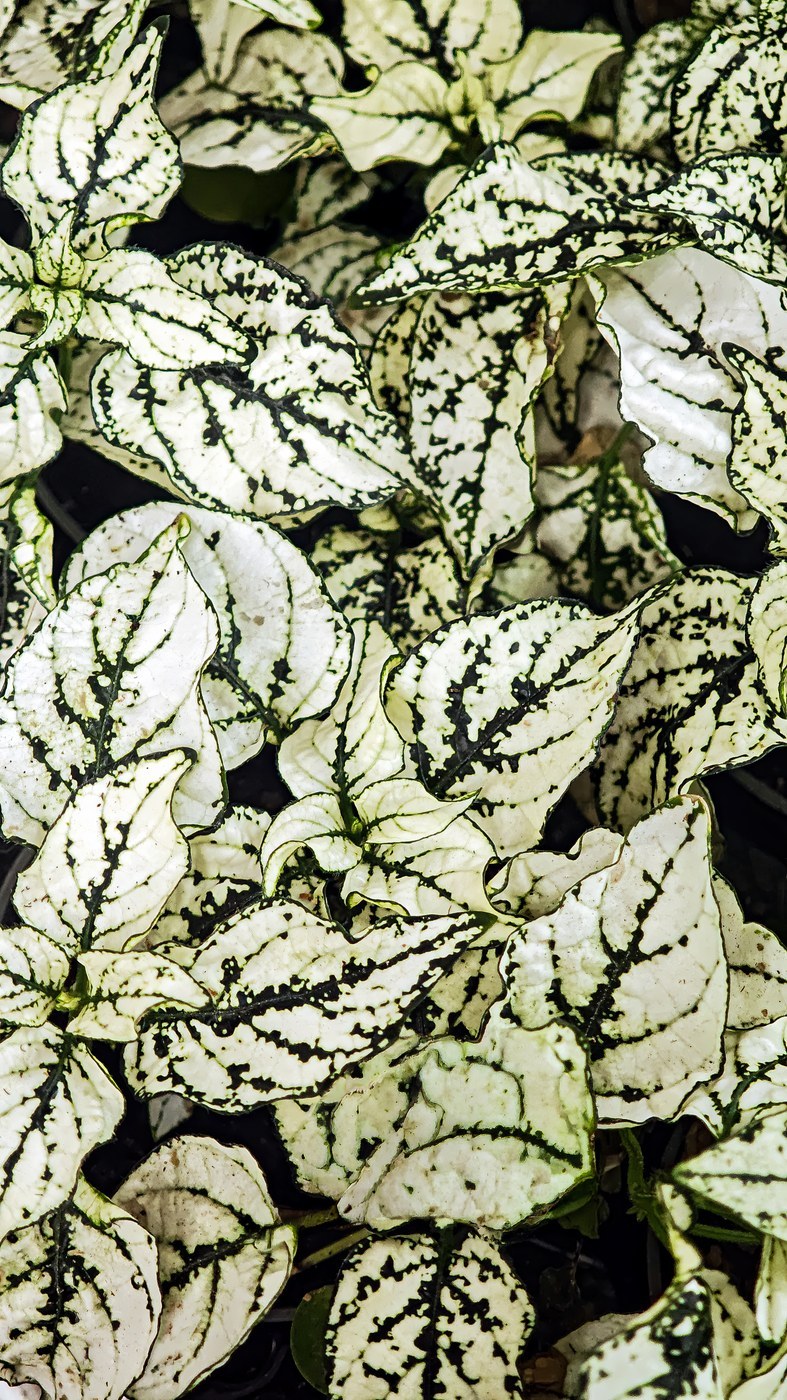
Polka Dot Plant
Hypoestes phyllostachya
A compact, bushy plant grown for its colorfully spotted leaves splashed in pink, white, or red over green. Cheerful and easy, though it gets leggy without pinching.
- Light
- Bright indirect light
- Water
- Keep evenly moist
- Difficulty
- Easy
Got a plant like this?
Identify any plant from a photo, free.
Overview
The Polka Dot Plant is a small, soft-stemmed foliage plant celebrated for its boldly speckled leaves. The base color is green, overlaid with dense freckles and splashes of pink, rose, white, or red depending on the cultivar.
Naturally a short-lived but fast-growing plant, it is often used in terrariums, dish gardens, and as a colorful annual bedding plant. Regular pinching keeps it full and bushy rather than leggy.
How to identify it
Identify it by:
- Leaves: oval, pointed, softly fuzzy, heavily spotted or mottled with pink, white, or red over green
- Size: compact, typically 10-20 in tall indoors
- Habit: bushy and mounding when pinched; leggy and sprawling if not
- Stems: soft, green, somewhat brittle
- Flowers: small, insignificant lavender to pink tubular blooms; flowering signals the plant is nearing the end of its cycle
Care & growing
Light: Bright indirect light keeps the speckling vivid; too little light fades the colors, too much direct sun bleaches them.
Water: Keep soil evenly moist but not soggy; it wilts dramatically when dry but usually recovers after watering.
Soil: Rich, well-draining potting mix.
Temperature: 65-80F (18-27C); likes warmth and humidity.
Feeding: Balanced liquid fertilizer monthly during the growing season.
Propagation: Very easy from stem-tip cuttings rooted in water or moist soil.
Tip: Pinch back growing tips regularly to prevent legginess and pinch off flower spikes to prolong the plant's life.
Habitat & origin
Native to South Africa and Madagascar, where it grows as a low understory plant in warm, humid, partly shaded forest settings.
It is grown worldwide as an indoor foliage plant, a terrarium plant, and a colorful warm-season bedding annual in shaded garden spots.
Frequently asked questions
Why is my Polka Dot Plant losing its color?
Faded spotting usually means too little light. Move it to brighter indirect light to restore the vivid pink or white markings.
Why is my plant getting tall and leggy?
Without regular pinching it naturally stretches. Pinch back the growing tips often to keep it compact and bushy.
My Polka Dot Plant is flowering, is that bad?
Flowering signals the plant is maturing and may decline afterward. Pinch off the flower spikes to extend its life, or take cuttings to start fresh plants.
Polka Dot Plant guides
In-depth guides for identifying, growing, and caring for Polka Dot Plant.
How to Care for Polka Dot Plant
Grow the colorful Polka Dot Plant (Hypoestes phyllostachya) for its pink, red, or white speckled foliage with steady moisture and bright light.
Polka Dot Plant Identification Guide
Identify Hypoestes phyllostachya by its green leaves freckled with pink, white, or red spots, opposite leaf arrangement, and soft branching stems.