
Post Oak Identification Guide
How to identify Post Oak (Quercus stellata) by its distinctive cross- or Maltese-cross-shaped leaves with broad squarish lobes, found on dry upland sites.
Read the full Post Oak encyclopedia entry →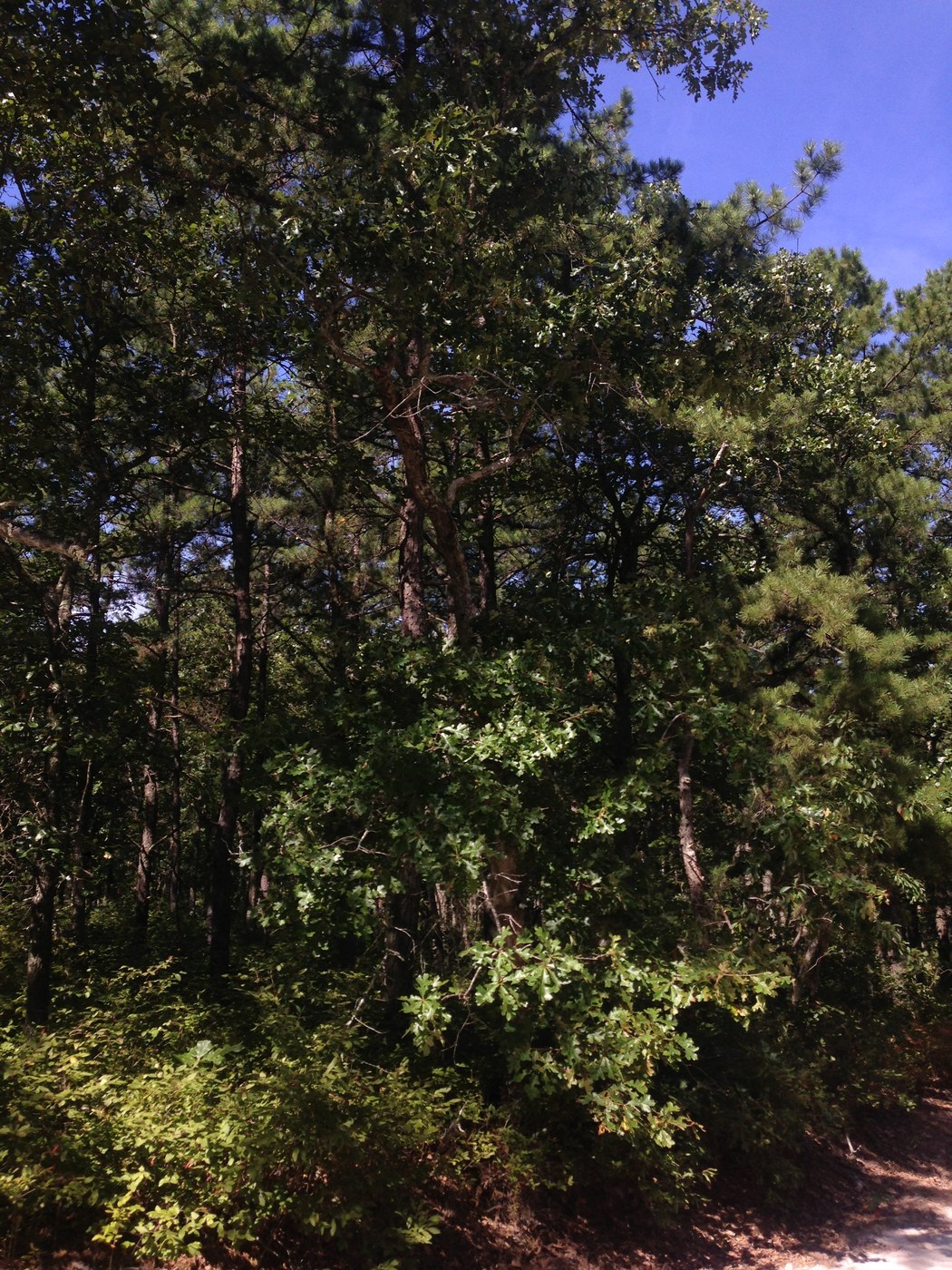
Key Identifying Features
Post Oak (Quercus stellata) is a tough, slow-growing white-oak-group tree of dry, poor soils, usually 30-50 feet tall with a gnarled, spreading crown. Its signature is the leaf shape: the two large middle lobes are squarish and project outward at right angles, giving the whole leaf a distinctive cross or Maltese-cross ("plus sign") outline. Once you recognize this cruciform leaf, post oak is hard to confuse with anything else.
- Cross-shaped leaf with broad, squarish middle lobes
- Thick, leathery, dark green leaves rough to the touch
- Member of the white oak group: rounded lobes (no bristle tips), sweet acorns
Leaves & Stems
Leaves are 4-6 inches long, leathery and thick, with usually 5 rounded lobes. The middle pair of lobes is enlarged and nearly square, set roughly perpendicular to the midrib — producing the trademark cross shape. The upper surface is dark green and rough/sandpapery; the underside is paler with a coating of tiny star-shaped (stellate) hairs (the source of stellata), often felt as a grayish fuzz.
Twigs are stout and often densely covered in yellowish star-shaped hairs. Buds are small, rounded, and reddish-brown. Bark is light gray-brown, broken into rough, scaly, blocky ridges.
Flowers & Fruit
Like all oaks, post oak bears drooping yellow-green male catkins in spring. The acorn is small (1/2-3/4 inch), oval, and seated in a bowl-shaped cap covering about a third to half of the nut. Acorns mature in a single season — a white-oak-group trait — and the kernel is comparatively sweet, low in bitter tannins.
How to Tell It Apart from Look-Alikes
- White oak (Quercus alba): lobes are more numerous, rounded, and finger-like, and leaves are smooth and hairless; post oak leaves are rough and cross-shaped.
- Blackjack oak (Quercus marilandica): leathery leaves too, but bell- or club-shaped with bristle tips (red oak group); post oak lobes are rounded without bristles.
- Bur oak: huge fringed acorn caps and larger leaves with a fiddle shape.
The rigid, cross-shaped, sandpapery leaf with star-hairy undersides is the decisive feature.
Where You'll Find It
Post Oak is a hallmark of dry, sandy or rocky upland sites, ridgetops, and poor soils where few other large trees thrive. It ranges across the southeastern and south-central United States from the Mid-Atlantic to Florida and west through Texas, where the "Post Oak Savanna" and Cross Timbers are named for it. Its dense, rot-resistant wood was historically used for fence posts — hence the name.
Quick ID Checklist
- Leaf with cross / Maltese-cross outline (squarish middle lobes)
- Leaves thick, leathery, rough on top, star-hairy beneath
- Twigs with yellowish stellate hairs
- Rounded lobes, no bristle tips (white oak group)
- Small oval acorn, sweet kernel, bowl-shaped cap
- Dry, poor upland soils of the southeastern/south-central U.S.
Frequently asked questions
What makes a post oak leaf so recognizable?
The two large middle lobes are squarish and stick out at right angles, giving the leaf a distinctive cross or plus-sign shape unlike any other common oak.
Is post oak in the white oak or red oak group?
The white oak group. Its lobes are rounded without bristle tips, its acorns mature in one year, and the kernels are relatively sweet.
Why is it called post oak?
Its dense, durable, rot-resistant wood was widely used for fence posts and railroad ties by early settlers.
Where does post oak typically grow?
On dry, sandy, rocky, or nutrient-poor upland sites and ridgetops, including the Texas Post Oak Savanna and Cross Timbers, where it tolerates conditions too harsh for many trees.