Prickly Lettuce Identification Guide
Identify prickly lettuce (Lactuca serriola) by its prickly leaf midribs, milky sap, vertically aligned leaves, and small yellow dandelion-like flowers.
Read the full Prickly Lettuce encyclopedia entry →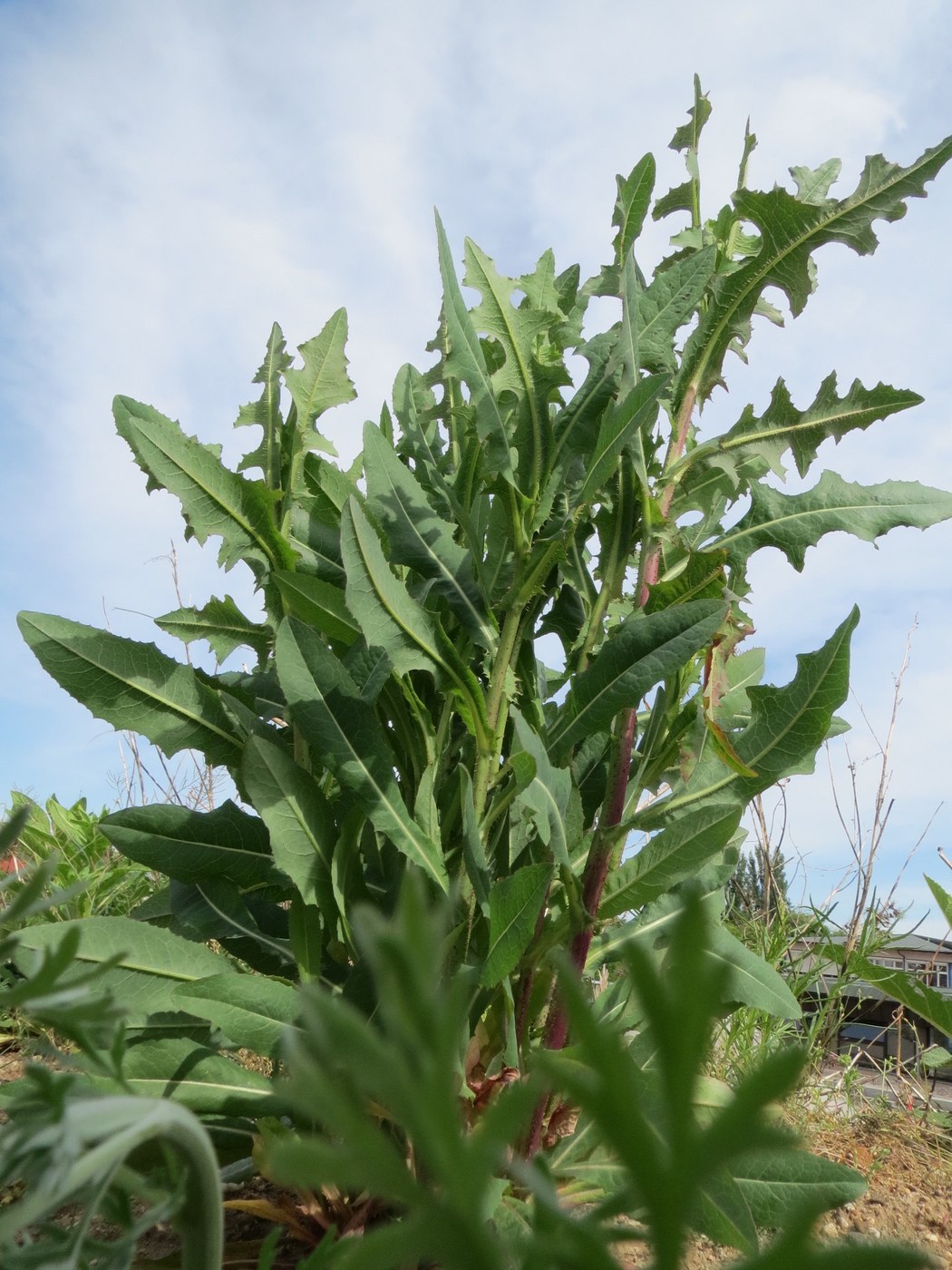
Key Identifying Features
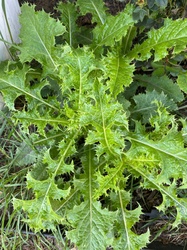
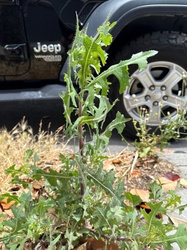
Prickly lettuce (Lactuca serriola), the wild ancestor of garden lettuce, is a tall annual or biennial broadleaf weed. Diagnostic traits are a row of stiff prickles along the underside of the leaf midrib, milky white sap when broken, and leaves that often twist to align their edges vertically (the "compass plant" habit). It is sometimes called compass plant for this north-south leaf orientation.
- Prickles along the lower leaf midrib and stem base
- Milky white latex sap from cut stems and leaves
- Lower leaves often twisted to point edge-up, oriented vertically
- Tall, single, stiff flowering stalk to 5+ feet
Leaves & Stems
Leaves are lobed (often deeply, like a coarse dandelion), gray-green, and clasp the stem with pointed basal lobes. The key feature: a row of sharp, stiff bristles runs along the midrib on the leaf underside, and the leaf margins are spiny-toothed. Upper leaves become less lobed. The tall, smooth stem (often prickly near the base) is hollow and exudes milky sap when cut.
Flowers & Fruit
Flowering occurs in summer. The flower heads are small, pale yellow, dandelion-like (composed only of ray florets), borne in an open branched cluster (panicle) atop the plant. Each head is about 1/3 inch wide. Seeds are tan, flattened, with a white parachute of hairs (pappus) like a small dandelion clock, dispersing on the wind.
How to Tell It Apart from Look-Alikes
- Sow thistle (Sonchus): also has milky sap and yellow flowers, but lacks the prickly midrib bristles and the vertical leaf alignment; flowers are larger.
- Dandelion: a basal rosette with a single flower per leafless stalk; prickly lettuce is a tall branched plant with leafy stems.
- Wild lettuce (Lactuca canadensis): similar but lacks the strong midrib prickles.
The midrib prickles + milky sap + vertically oriented leaves are conclusive for prickly lettuce.
Where You'll Find It
A common weed of disturbed, sunny ground: roadsides, fields, fence lines, gardens, vacant lots, railways, and crop edges across North America, Europe, and beyond. It tolerates drought and poor soil and quickly colonizes bare ground.
Quick ID Checklist
- Tall annual/biennial with a single stiff stalk
- Row of prickles along the lower leaf midrib
- Milky white sap when cut
- Lower leaves twisted to align vertically
- Clasping leaf bases with pointed lobes
- Small pale yellow dandelion-like flowers with windborne seeds
Frequently asked questions
What is the surest sign of prickly lettuce?
Feel the underside of the leaf midrib for a row of stiff prickles, and break a stem to check for milky white sap. Together with vertically aligned leaves, these confirm prickly lettuce.
Why is it called the compass plant?
Its lower leaves often twist so their blades point edge-up in a roughly north-south vertical plane, reducing midday sun exposure, which led to the nickname compass plant.
Is prickly lettuce related to garden lettuce?
Yes. It is the wild ancestor of cultivated lettuce (both are Lactuca species), which is why it has milky sap and a similar growth form, though it is far more bitter and prickly.
How do I tell it from sow thistle?
Both have milky sap and yellow flowers, but prickly lettuce has distinctive prickles along the leaf midrib and vertically oriented leaves, which sow thistle lacks.
Prickly Lettuce identified by the community
Recent Prickly Lettuce specimens identified with Plant Identifier.