Prickly Lettuce
Lactuca serriola
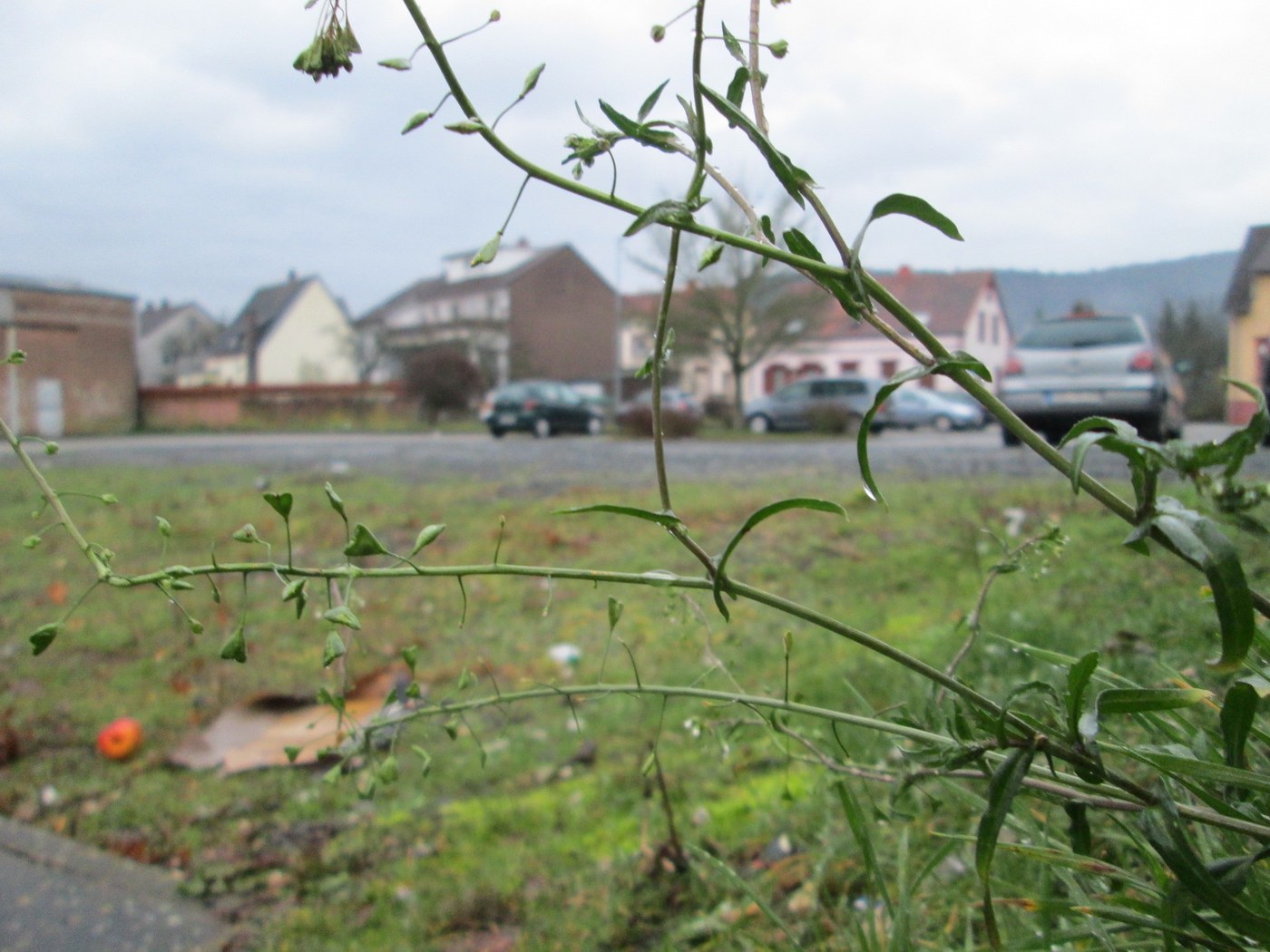
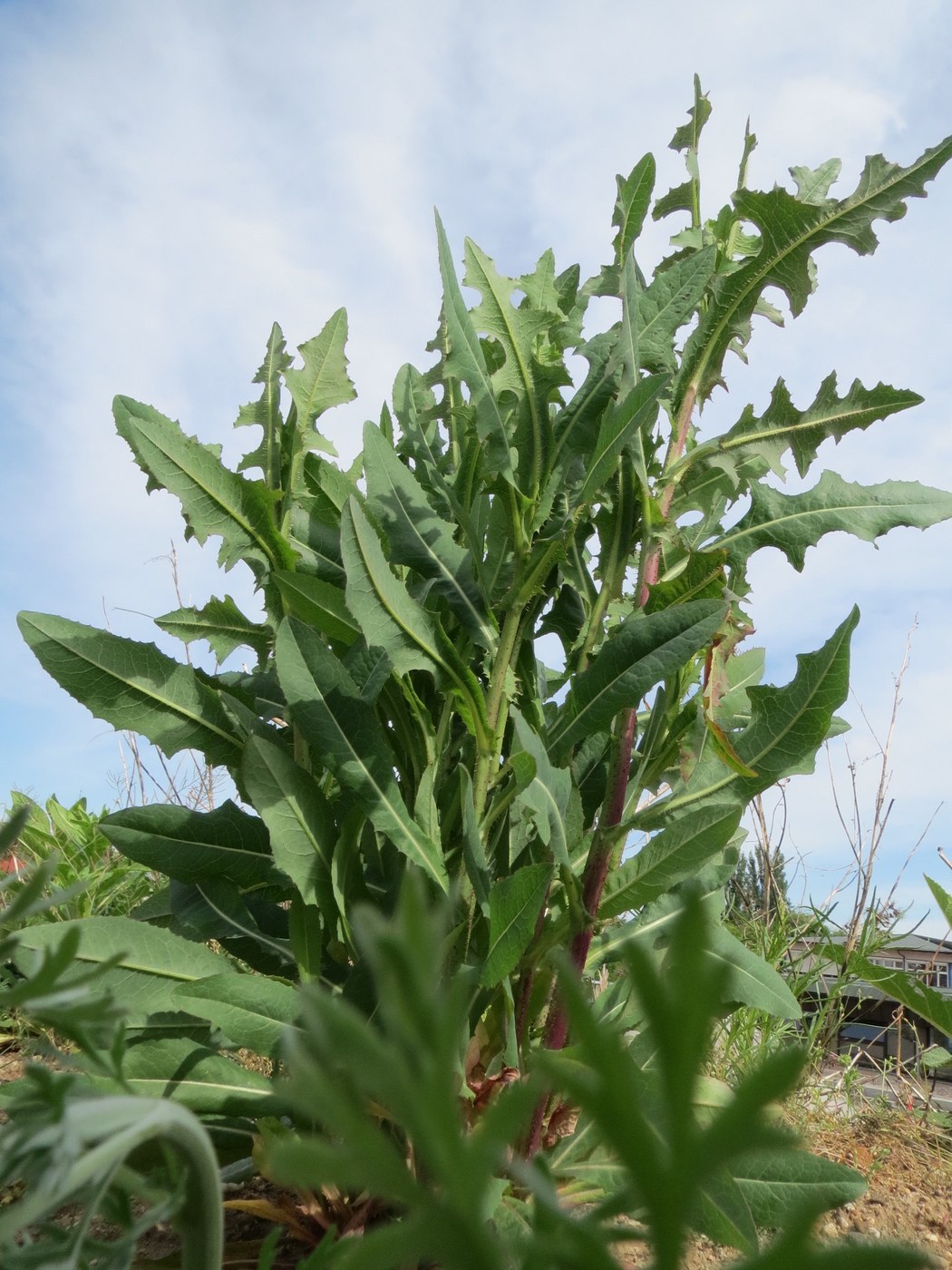
Prickly lettuce is a tall annual or biennial weed and the closest wild relative of cultivated lettuce. It is recognized by spiny leaf midribs, milky sap, and leaves that twist to align vertically like a compass.
- Light
- Full sun
- Water
- Drought-tolerant
- Difficulty
- Easy
Got a plant like this?
Identify any plant from a photo, free.
Overview
Prickly lettuce (Lactuca serriola) is an annual or biennial plant native to Europe, North Africa, and Asia and now a widespread weed across North America and other temperate regions. It is the wild ancestor of garden lettuce (Lactuca sativa) and exudes a milky white latex when cut.
It earns the name 'compass plant' because its leaves often twist to orient their edges north-south, reducing midday sun exposure. The plant can grow quite tall, topped by small pale-yellow dandelion-like flowers that turn into windborne seeds.
It is mainly considered a weed of fields, roadsides, and waste ground.
How to identify it
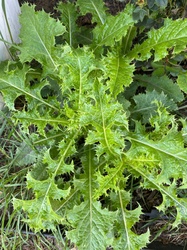
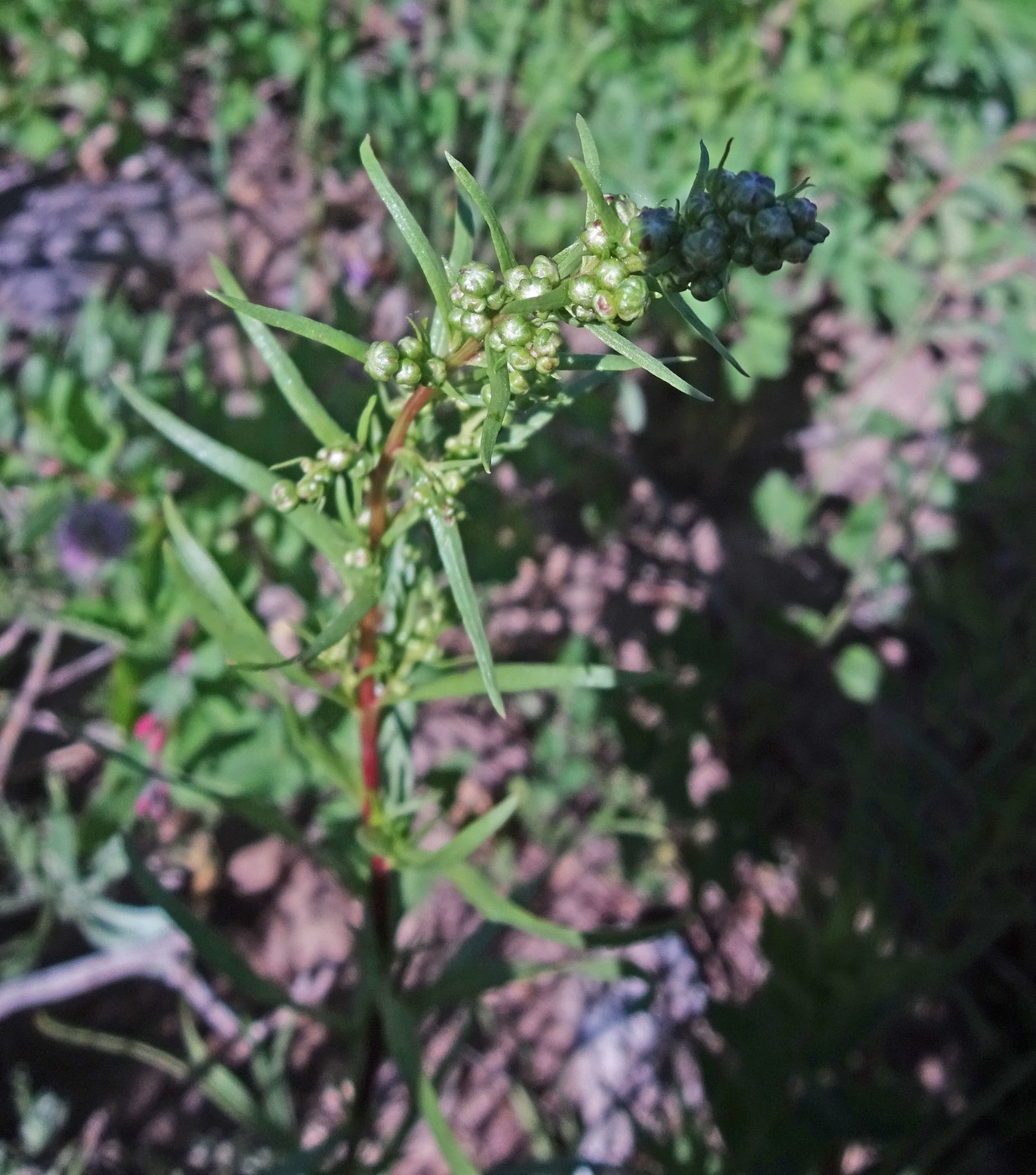
Look for tall, spiny-midribbed leaves, milky sap, and a row of prickles on the leaf undersides.
- Leaves: Deeply lobed, clasping the stem, with a row of stiff prickles along the midrib underside
- Sap: Milky white latex from cut stems and leaves
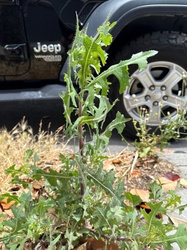
- Orientation: Leaves often twist to a vertical, north-south 'compass' alignment
- Flowers: Small, pale-yellow, dandelion-like, in branched clusters
- Habit: Erect, usually 2-7 feet tall, with a single main stem branching above
Care & growing
Generally managed as a weed.
- Control: Hoe or pull young rosettes before they bolt and set seed
- Timing: Remove before the windborne seeds disperse
- Cultural: Dense planting and mulch limit germination in beds
- It thrives in poor, dry, disturbed soils and full sun, so it needs no care to persist
- Caution: The latex is mildly irritating; wear gloves when handling large amounts
Habitat & origin
Native to Europe, North Africa, and western and central Asia, prickly lettuce has naturalized throughout North America, Australia, and other temperate areas.
It favors dry, sunny, disturbed ground: roadsides, fields, vacant lots, railways, gardens, and waste places. It tolerates poor soils and drought and is one of the most common urban and agricultural weeds.
Frequently asked questions
Is prickly lettuce related to garden lettuce?
Yes, it is the wild ancestor of cultivated lettuce and is used by plant breeders as a source of disease resistance for lettuce crops.
Why is it called the compass plant?
Its leaves often twist so their edges point north and south, which is thought to reduce exposure to intense midday sun.
How can I distinguish prickly lettuce from a dandelion?
Unlike a low dandelion rosette, prickly lettuce grows into a tall, single-stemmed plant 2-7 feet high with prickly leaf midribs and many small pale-yellow flower heads.
Where does prickly lettuce grow?
It favors dry, sunny, disturbed ground such as roadsides, fields, vacant lots, and gardens, and is one of the most common urban and agricultural weeds.
Prickly Lettuce guides
In-depth guides for identifying, growing, and caring for Prickly Lettuce.
How to Care for Prickly Lettuce
Grow prickly lettuce (Lactuca serriola), a tough, upright annual/biennial that thrives on full sun, poor soil and near-total neglect.
Prickly Lettuce Identification Guide
Identify prickly lettuce (Lactuca serriola) by its prickly leaf midribs, milky sap, vertically aligned leaves, and small yellow dandelion-like flowers.
Prickly Lettuce identified by the community
Real specimens identified with Plant Identifier.