
How to Care for Prickly Pear Cactus
Grow a sun-loving Opuntia with full sun, sharp drainage, and minimal water. A bold, drought-tough cactus for gardens and containers.
Read the full Prickly Pear Cactus encyclopedia entry →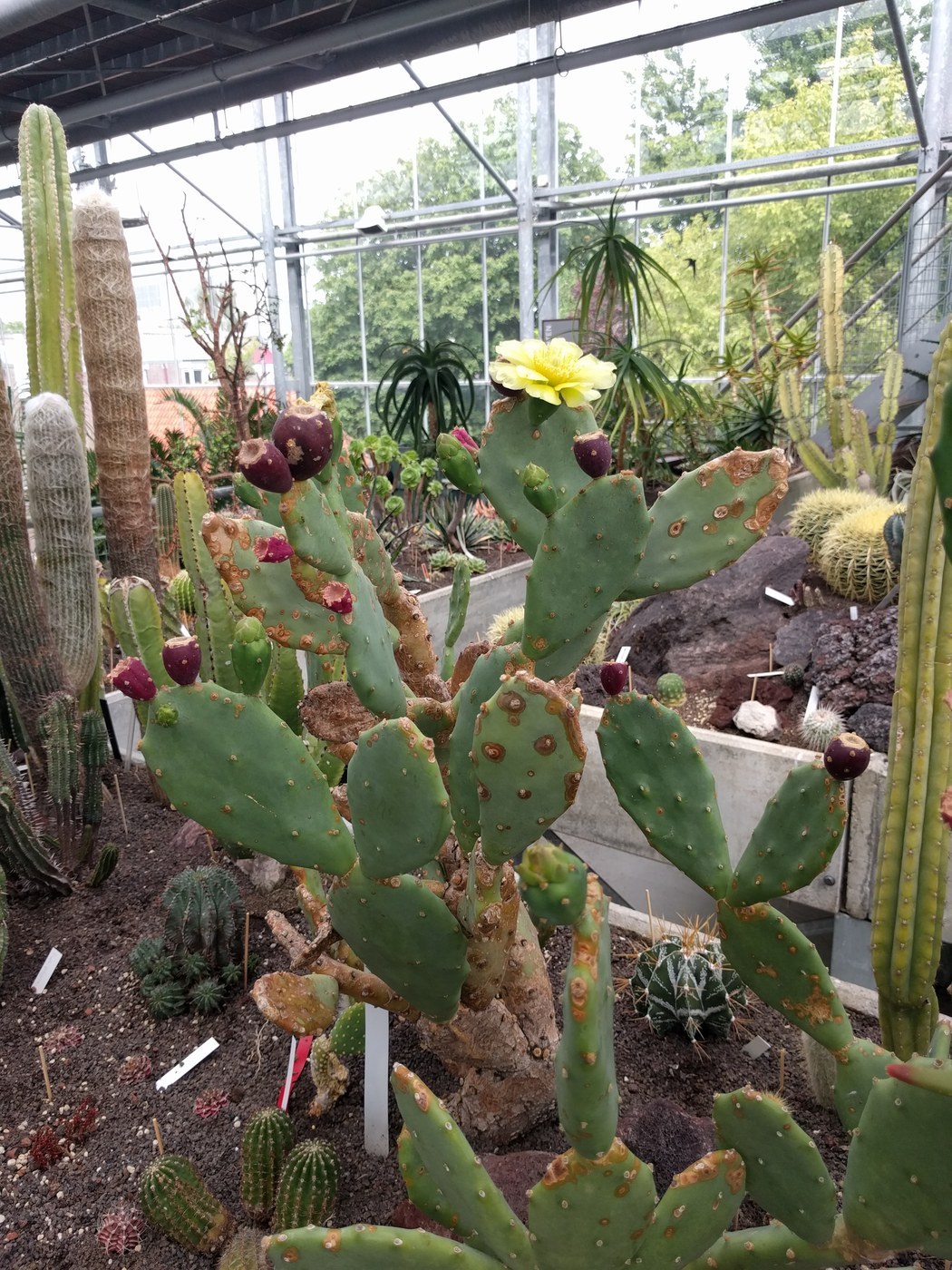
The prickly pear (Opuntia ficus-indica) is a large, architectural cactus made up of flattened, paddle-shaped segments called pads, or cladodes. It is fast-growing for a cactus, extremely drought-tolerant, and thrives on sun and neglect, making it a striking, low-effort choice for hot, dry gardens and containers. Handle it carefully: besides the obvious spines, the pads bear tiny barbed bristles called glochids that lodge easily in skin.
Light
Give prickly pear full sun. It wants the brightest, hottest spot available and rewards it with strong, upright pads and, on mature plants, showy flowers followed by colorful fruit. In shade or weak light the pads grow thin, pale, and floppy and the plant becomes prone to rot. Indoors it needs a south-facing window and ideally supplemental light; most Opuntia are far happier outdoors.
Water
Water infrequently. Established plants are genuinely drought-tolerant and get by on very little; in the ground they often need no supplemental water except in prolonged drought. In containers, water thoroughly only when the soil is bone dry, then let it dry out completely again. Cut watering back sharply in winter when the plant is dormant. Overwatering, especially in cool weather, causes soft, rotting pads and is the main cause of failure.
Soil & Potting
Sharp drainage is essential. Plant in a gritty cactus mix or a lean, sandy soil amended with plenty of pumice, coarse sand, or grit. Heavy, water-retentive soils are fatal. In containers use terracotta with a large drainage hole to speed drying. In the garden, a raised bed or slope helps water run off quickly around the roots.
Humidity & Temperature
This is a plant of hot, dry climates, so it loves warmth and low humidity. It tolerates intense heat with ease. Cold hardiness varies, but Opuntia ficus-indica is more frost-sensitive than some spineless-garden Opuntia relatives; protect it from hard freezes, which can turn pads to mush. Good airflow keeps the pads dry and healthy.
Feeding
Feeding is largely optional. If you want faster growth on a container plant, apply a diluted low-nitrogen or cactus fertilizer once or twice during the spring and summer growing season. Avoid high-nitrogen feeds, which encourage soft, weak growth. Do not feed during winter dormancy.
Propagation
Propagation could hardly be easier. Wearing thick gloves, detach a healthy pad at the joint, let the cut end callus and dry for one to two weeks, then set the base an inch or so into gritty, barely moist soil. Roots form within a few weeks and a new plant is off and growing. Spring and early summer are the best times to root pads.
Repotting / Pruning
Repot container plants only every few years, in spring, using gloves or folded newspaper and thick padding to handle the spiny pads safely. Prune by removing whole pads at the joint to control size and shape or to take cuttings; you can also thin crowded pads to improve airflow. Any cuts should be allowed to dry and callus.
Common Problems & Pests
Rot from overwatering or poor drainage is the chief threat, showing as soft, discolored, collapsing pads; remove affected pads immediately. Cochineal scale, seen as white cottony patches on the pads, is a classic Opuntia pest and can be knocked back with a firm water spray or appropriate treatment. Sunken corky spots can result from cold damage or sunscald on plants moved suddenly into full sun without acclimation.
Seasonal Care Tips
In spring and summer, give full sun, water occasionally when dry, and feed lightly if desired; this is when new pads and flowers appear. In fall, taper watering as temperatures drop. In winter, keep the plant cool, dry, and protected from frost; a dry dormancy improves both cold tolerance and next season's flowering.
Frequently asked questions
How much water does a prickly pear cactus need?
Very little. Established plants are highly drought-tolerant; water container plants only when the soil is completely dry, and reduce watering to almost nothing in winter. Overwatering causes soft, rotting pads.
Can I grow prickly pear from a pad?
Yes, and it is the easiest method. Wearing gloves, snap off a healthy pad at the joint, let the cut end dry and callus for a week or two, then set the base into gritty soil. Roots form within a few weeks.
Why are the pads on my cactus turning soft and mushy?
Soft, collapsing pads almost always mean too much water or poor drainage, sometimes combined with cold. Remove affected pads, improve drainage, and water far less frequently.
Does prickly pear need full sun?
Yes. It thrives in the hottest, sunniest spot you can offer. In shade the pads grow thin and pale and the plant becomes prone to rot and poor form.