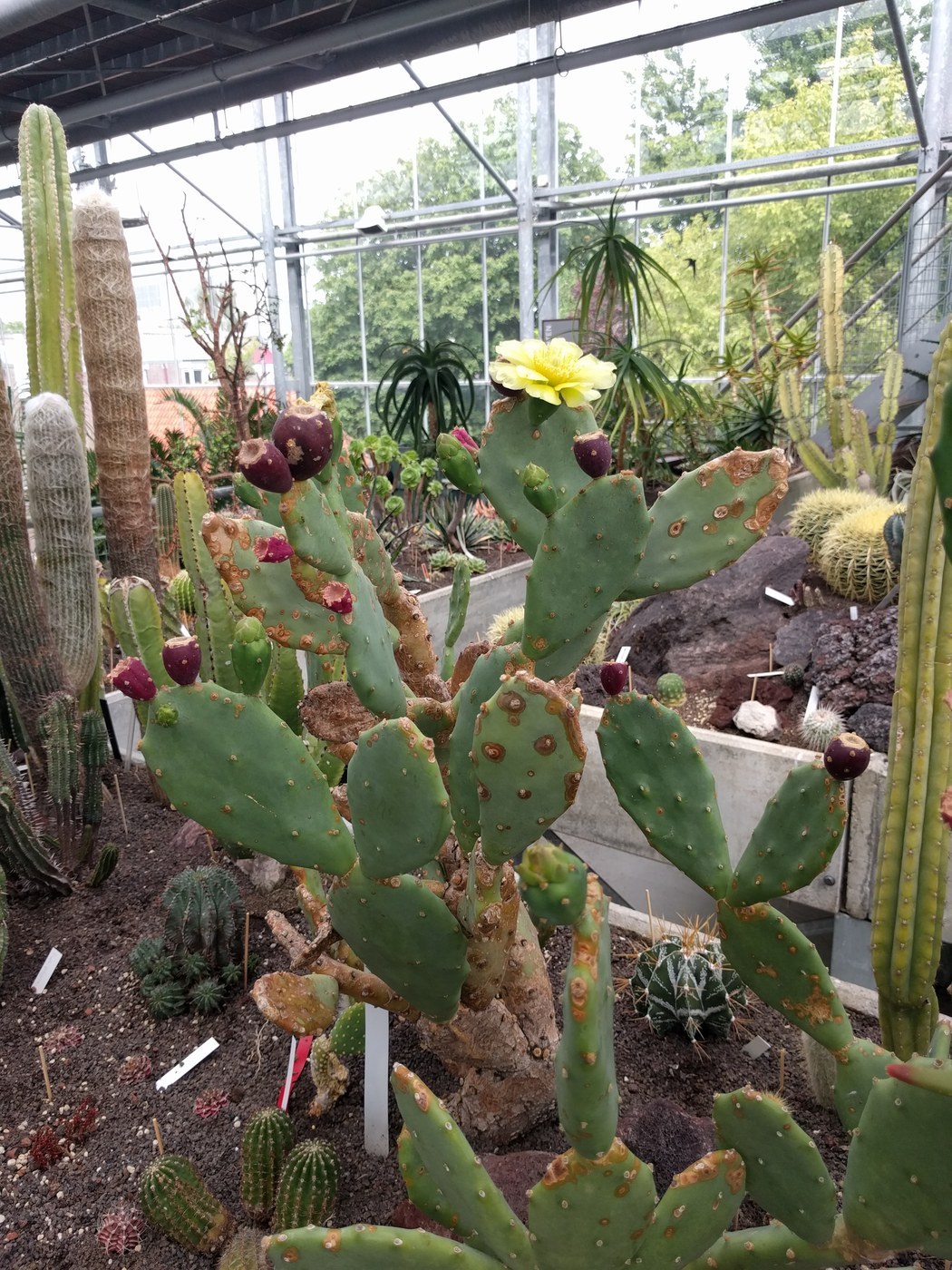
Prickly Pear Cactus
Opuntia ficus-indica
Prickly pear cacti have flat, paddle-shaped pads and produce showy flowers followed by colorful fruit. Tough and drought-hardy, several species are widely grown for landscaping.
- Light
- Full sun
- Water
- Infrequent; drought-tolerant
- Difficulty
- Easy
Got a plant like this?
Identify any plant from a photo, free.
Overview
Prickly pear (Opuntia) is a large genus of flat-padded cacti, of which Opuntia ficus-indica is the best known. The plants form sprawling, shrubby to tree-like clumps.
The jointed segments, called pads or cladodes, are actually modified stems that store water and carry out photosynthesis. They are armed with large spines and tiny barbed bristles called glochids that detach easily into skin.
Exceptionally tough, prickly pears tolerate heat, drought, and poor soil, and some species are cold-hardy enough to survive freezing winters.
How to identify it
- Flat, oval to round paddle-shaped pads (cladodes) joined in branching chains
- Pads bear scattered areoles with large spines and tufts of tiny barbed glochids
- Large, showy flowers in yellow, orange, pink, or red in spring and summer
- Fleshy, often red to purple fruit (tunas) following the flowers
- Can range from low spreading clumps to tree-sized plants over 10 feet
Care & growing
- Light: Full sun for best growth and flowering
- Water: Very drought-tolerant; water infrequently and let soil dry completely
- Soil: Sandy, gravelly, sharply draining soil
- Temperature: Heat-loving; many species tolerate frost, though ficus-indica prefers mild climates
- Feeding: Minimal; occasional light feeding boosts growth
- Propagation: Extremely easy; let a detached pad callus for a few days, then plant it
Habitat & origin
The genus Opuntia is native to the Americas, from Canada through the United States, Mexico, and into South America. Opuntia ficus-indica is believed to originate in Mexico.
Prickly pears grow in deserts, scrublands, and dry grasslands. They have been spread by humans worldwide and have naturalized, sometimes invasively, across the Mediterranean, Africa, and Australia.
Frequently asked questions
What are glochids?
They are the tiny, barbed hair-like bristles clustered at the areoles. They detach easily and lodge painfully in skin, so handle pads with thick gloves.
How do I propagate prickly pear?
Remove a pad, let the cut end callus over for several days, then set it upright in dry, sandy soil. It roots readily.
Can it survive cold winters?
Many Opuntia species are surprisingly cold-hardy and survive freezing temperatures, though the cultivated Opuntia ficus-indica prefers mild, frost-free climates.
Prickly Pear Cactus guides
In-depth guides for identifying, growing, and caring for Prickly Pear Cactus.
How to Care for Prickly Pear Cactus
Grow a sun-loving Opuntia with full sun, sharp drainage, and minimal water. A bold, drought-tough cactus for gardens and containers.
Prickly Pear Cactus Identification Guide
How to identify Prickly Pear cactus by its flat paddle-shaped pads, glochid-bearing spines, and pear-shaped fruit.