
Prickly Pear Cactus Identification Guide
How to identify Prickly Pear cactus by its flat paddle-shaped pads, glochid-bearing spines, and pear-shaped fruit.
Read the full Prickly Pear Cactus encyclopedia entry →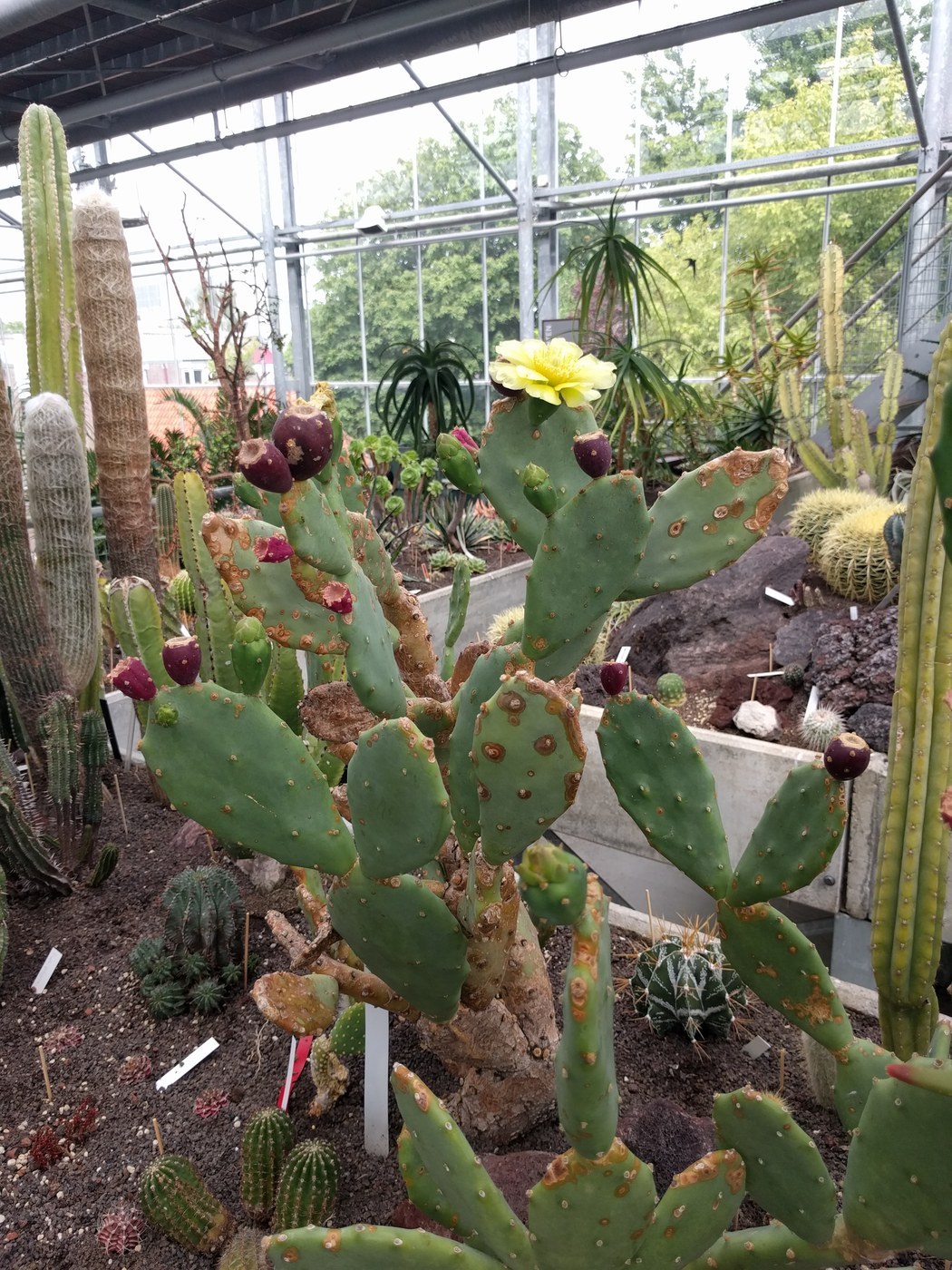
Key Identifying Features
Prickly Pear (genus Opuntia) is instantly recognized by its flat, paddle-shaped stem segments stacked into branching clumps.
- Flat, oval pads (cladodes) instead of round or columnar stems
- Pads bear spines plus tiny barbed glochids
- Showy yellow, orange, or red flowers along pad edges
- Pear-shaped fruit ("tunas") in summer to fall
Pads & Spines
The defining feature is the cladode — a flattened, fleshy green pad usually 4–16 in (10–40 cm) long. New pads sprout from the edges of older ones, building shrubby or sprawling clumps from knee-high to over 6 ft (2 m). Each pad's areoles carry two spine types: longer rigid spines (sometimes absent in cultivated forms) and clusters of glochids — minute, hair-fine barbed bristles that detach at the lightest touch and lodge in skin. The glochids are a near-certain identifier of Opuntia.
Flowers & Fruit
In late spring to summer, large, waxy cup-shaped flowers open along the upper edges of the pads in yellow, gold, orange, pink, or red. Each bloom is 2–4 in (5–10 cm) across with many silky petals and a dense brush of stamens. Flowers mature into barrel- to pear-shaped fruit (tunas), often reddish-purple when ripe, and also covered in glochids.
How to Tell It Apart from Look-Alikes
- Cholla (Cylindropuntia): a close relative but with cylindrical, jointed stems rather than flat pads.
- Barrel and columnar cacti: round or column-shaped bodies, never flat pads.
- Other paddle plants (non-cactus): lack areoles, spines, and glochids.
If it has flat paddle pads with tufts of tiny barbed glochids, it's a prickly pear.
Where You'll Find It
Opuntia is the most widespread cactus genus, native across the Americas from Canada to Argentina and naturalized in dry regions worldwide. Look for it in deserts, grasslands, rocky slopes, roadsides, and dry gardens. It is exceptionally drought- and cold-tolerant — some species survive snowy winters.
Quick ID Checklist
- Flat, oval, paddle-shaped pads
- Pads branch from one another in clumps
- Tufts of tiny barbed glochids at each areole
- Large yellow/orange/red cup-shaped flowers on pad edges
- Pear-shaped fruit (tunas)
- Very drought- and often cold-hardy
Frequently asked questions
What are the tiny hair-like spines that get stuck in my skin?
Those are glochids, minute barbed bristles unique to Opuntia and its relatives. They detach easily and are a reliable way to confirm a prickly pear.
How do I tell prickly pear from cholla?
Both are Opuntia relatives, but prickly pear has flat paddle-shaped pads while cholla has cylindrical, segmented stems.
Can prickly pear survive cold winters?
Many species are remarkably cold-hardy and survive freezing, snowy winters, often shriveling and lying flat to protect themselves, then plumping up in spring.
What do prickly pear flowers look like?
In late spring to summer, large waxy cup-shaped flowers in yellow, gold, orange, pink, or red open along the upper edges of the pads, each 2-4 inches across with many silky petals and a dense brush of stamens.