
Primrose Identification Guide
Identify primroses by their low rosettes of crinkled leaves and clusters of five-petaled, notched flowers borne in early spring. Includes tips to separate true Primula from evening primrose.
Read the full Primrose encyclopedia entry →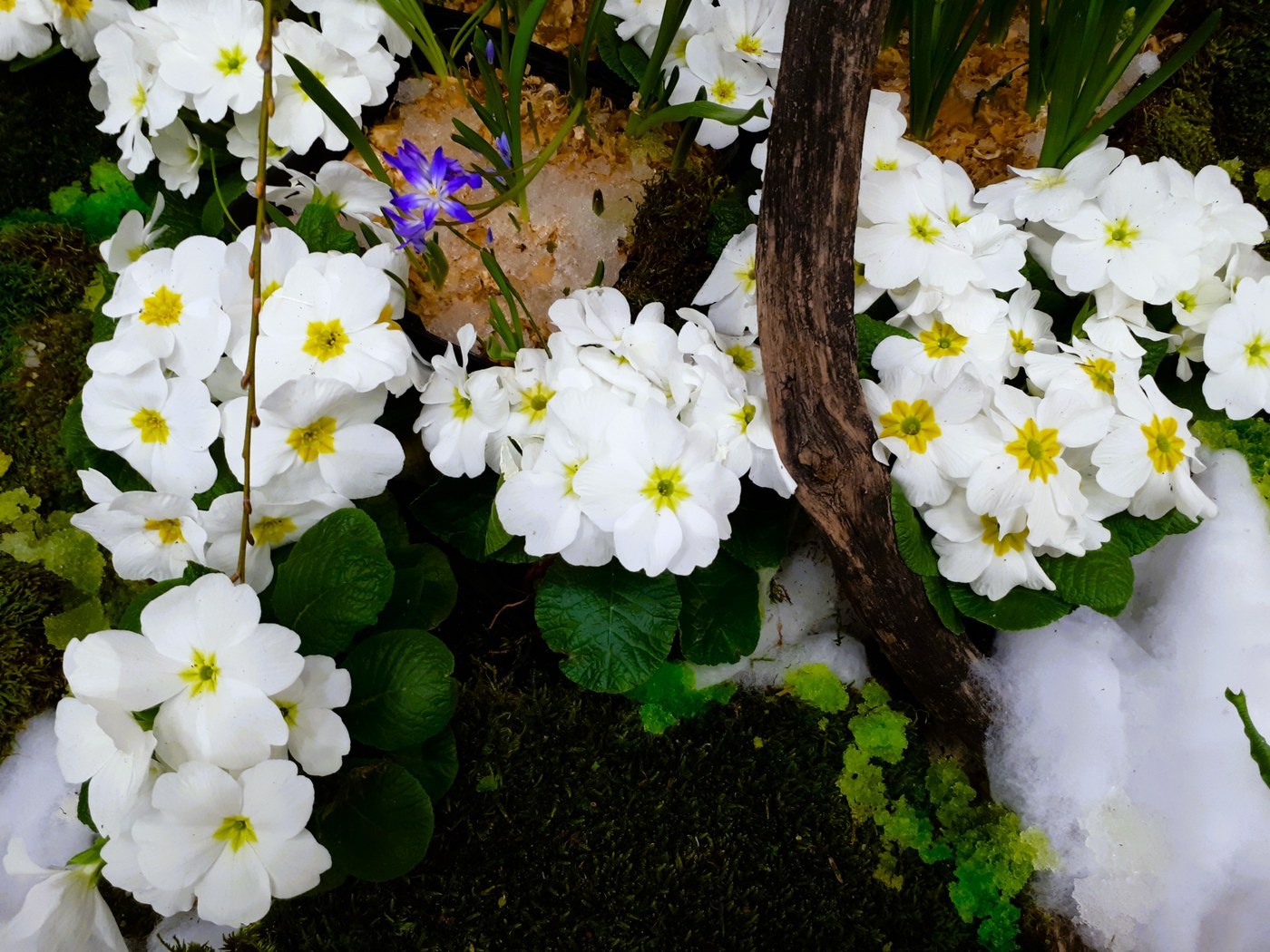
Key Identifying Features
Primroses (genus Primula) are low-growing early-spring perennials that form a flat rosette of leaves with bright flowers held just above. 'Primrose' means 'first rose,' reflecting their very early bloom.
- 5 petals, each notched at the tip (heart-shaped lobes)
- A small contrasting 'eye' (often yellow) in the flower center
- Flowers single or in clusters/umbels on short stalks
- Wide color range: yellow, pink, red, blue, purple, white
Leaves & Stems
Leaves form a ground-hugging rosette and are typically oblong to spoon-shaped with a crinkled (rugose), wrinkled texture and a slightly puckered surface. Margins are scalloped or finely toothed, and the leaf tapers gradually to the base. There is usually no true leafy stem—flower stalks (scapes) rise directly from the rosette center.
Flowers & Fruit
Flowers have a tubular base flaring into 5 flat petal lobes. Many primroses show pin and thrum forms—some plants have a visible stigma at the tube mouth (pin), others visible stamens (thrum)—an aid to cross-pollination. Fruit is a small capsule of seeds. The wild English primrose (Primula vulgaris) is pale yellow; cowslip (P. veris) has nodding clusters of deeper yellow bells.
How to Tell It Apart from Look-Alikes
- Evening primrose (Oenothera): NOT a true primrose; it is a tall summer plant with 4-petaled yellow flowers that open at dusk. True primrose has 5 notched petals and a basal rosette.
- Pansies/violas: also low and early but have distinctly irregular (face-like) flowers, not radially symmetric five-petal blooms.
- African violet: indoor look-alike but has fuzzy rounded leaves and a different flower shape.
- The basal rosette of crinkled leaves plus 5 notched petals is the reliable Primula signature.
Where You'll Find It
Primroses grow in woodlands, meadows, stream banks, and shady gardens across temperate Europe, Asia, and North America. Garden polyanthus and primula hybrids are common bedding and container plants for early color. They prefer moist, humus-rich soil and partial shade.
Quick ID Checklist
- Low rosette of wrinkled, crinkled leaves
- 5 petals, each notched at the tip
- Small contrasting central eye
- Flowers on leafless stalks from rosette center
- Early spring bloom
- Wide color range
A flat rosette of puckered leaves topped by five-petaled, notched flowers with a colored eye in early spring marks a true primrose.
Frequently asked questions
Is evening primrose the same as primrose?
No. Evening primrose (Oenothera) is an unrelated summer plant with four-petaled flowers that open at dusk, while true primrose (Primula) has five notched petals and a basal leaf rosette.
What is the 'eye' of a primrose?
The eye is the small contrasting central zone, often yellow, at the throat of the flower where the petal lobes meet the tube.
What are pin and thrum primroses?
They are two flower forms: pin shows the stigma at the tube mouth and thrum shows the stamens. This arrangement promotes cross-pollination between plants.
When do primroses bloom?
Most primroses flower in early spring, among the first plants to bloom, which is the origin of the name 'first rose.'