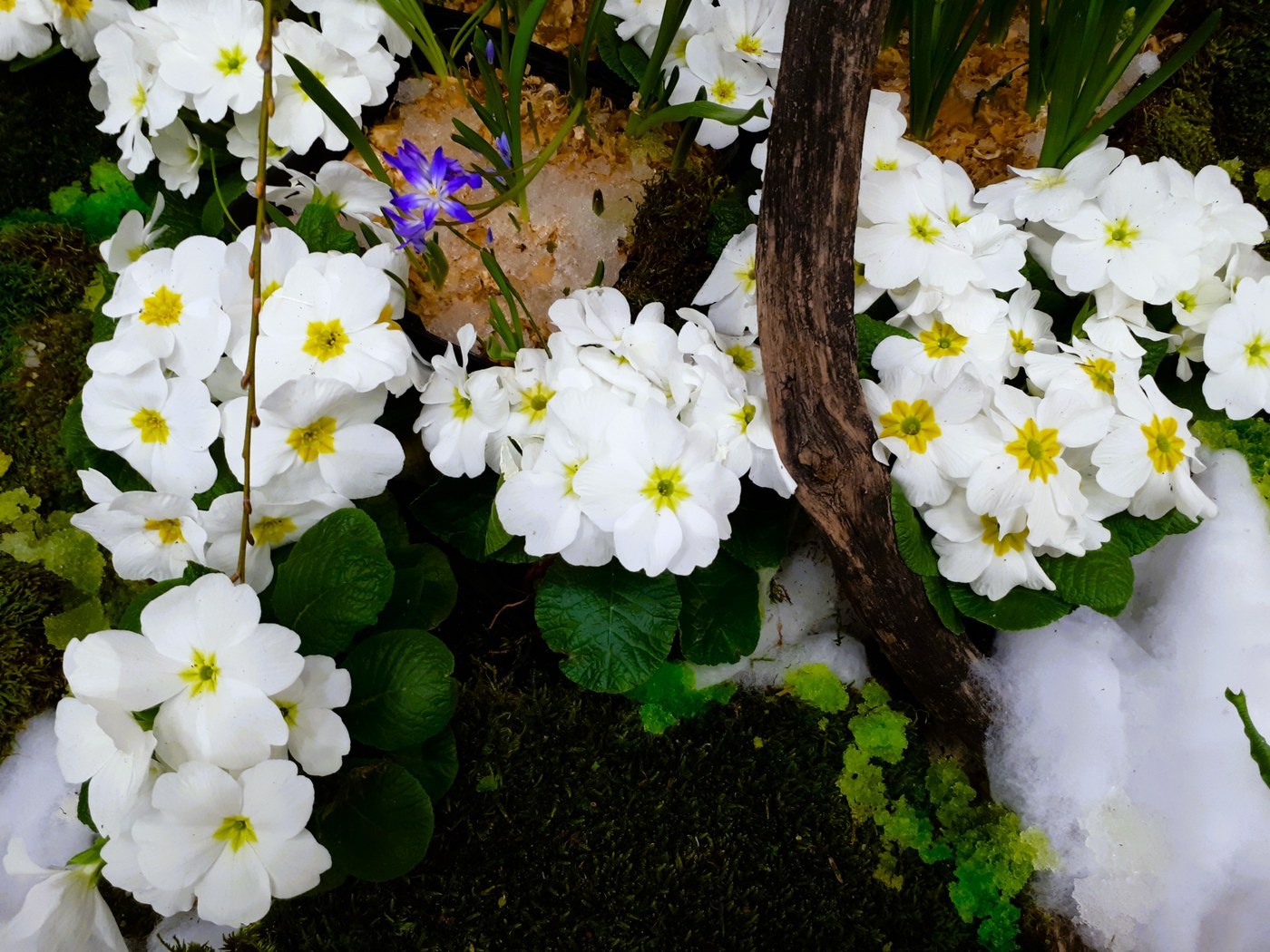
Primrose
Primula vulgaris
Primroses are low, clump-forming perennials that bring some of the earliest color to spring with their soft pastel flowers above rosettes of crinkled leaves. They thrive in cool, moist, partly shaded spots.
- Light
- Part shade to dappled light
- Water
- Keep evenly moist
- Difficulty
- Easy
Got a plant like this?
Identify any plant from a photo, free.
Overview
Primroses belong to the genus Primula in the family Primulaceae, a large group of mostly low-growing perennials valued for their early, cheerful flowers. The common or English primrose (Primula vulgaris) is the classic woodland species with pale yellow blooms.
The name derives from the Latin prima rosa, “first rose,” reflecting their very early bloom. Garden centers also sell brightly colored hybrid primroses and polyanthus types that flower in a rainbow of colors from late winter onward.
With their compact rosettes and abundant flowers, primroses are favorites for spring bedding, containers, and shady borders.
How to identify it
Primroses form neat ground-level rosettes topped with five-petaled flowers.
- Flowers: Flat-faced, five-petaled with a notch in each petal and a contrasting eye; pale yellow in the wild species, many colors in hybrids
- Leaves: Oblong, tongue-shaped, crinkled (rugose) texture, forming a basal rosette
- Flower arrangement: Single blooms on short stalks (vulgaris) or clustered atop a stem (polyanthus and Primula species)
- Height: Low, typically 4-8 in
- Habit: Clump-forming, spreading slowly over time
Care & growing
Primroses thrive in cool, moist, shaded conditions resembling a woodland floor.
- Light: Partial shade or dappled light; protect from hot afternoon sun
- Water: Keep soil consistently moist; they dislike drying out
- Soil: Humus-rich, moisture-retentive but not waterlogged
- Temperature: Cool-loving; hardy in USDA zones 4-8 and resentful of heat
- Feeding: A light feed in spring supports flowering
- Propagation: Divide clumps after flowering; species grow readily from fresh seed
Deadhead spent blooms to prolong flowering, and divide congested clumps every few years to keep plants vigorous.
Habitat & origin
The common primrose is native to western and southern Europe, where it grows in woodlands, hedge banks, and grassy slopes. The wider genus Primula spans temperate and mountain regions of the Northern Hemisphere, with many alpine and Himalayan species.
Primroses are grown across temperate gardens worldwide and naturalize in cool, moist, shaded settings. In the wild, they are a classic feature of European spring woodlands.
Frequently asked questions
Are primroses perennial?
Yes, most primroses are hardy perennials, though the brightly colored bedding hybrids sold in winter are sometimes treated as annuals.
Why are my primrose leaves wilting?
Usually too little water or too much heat and sun; primroses are cool, moisture-loving plants that suffer in hot, dry spots.
Can I plant indoor primroses outside?
Yes, once frost danger passes you can move potted primroses into a shady, moist garden bed where many will return the next spring.
Do primroses spread?
They form slowly expanding clumps and can self-seed in suitable conditions, gradually colonizing a shady area.
Primrose guides
In-depth guides for identifying, growing, and caring for Primrose.
How to Care for Primrose
Grow lush, jewel-toned primroses with cool temperatures, steady moisture, and dappled shade in this complete Primula vulgaris care guide.
Primrose Identification Guide
Identify primroses by their low rosettes of crinkled leaves and clusters of five-petaled, notched flowers borne in early spring. Includes tips to separate true Primula from evening primrose.