
Privet Identification Guide
How to identify privet by its opposite glossy leaves, fragrant white flower clusters, and dense clusters of blue-black berries.
Read the full Privet encyclopedia entry →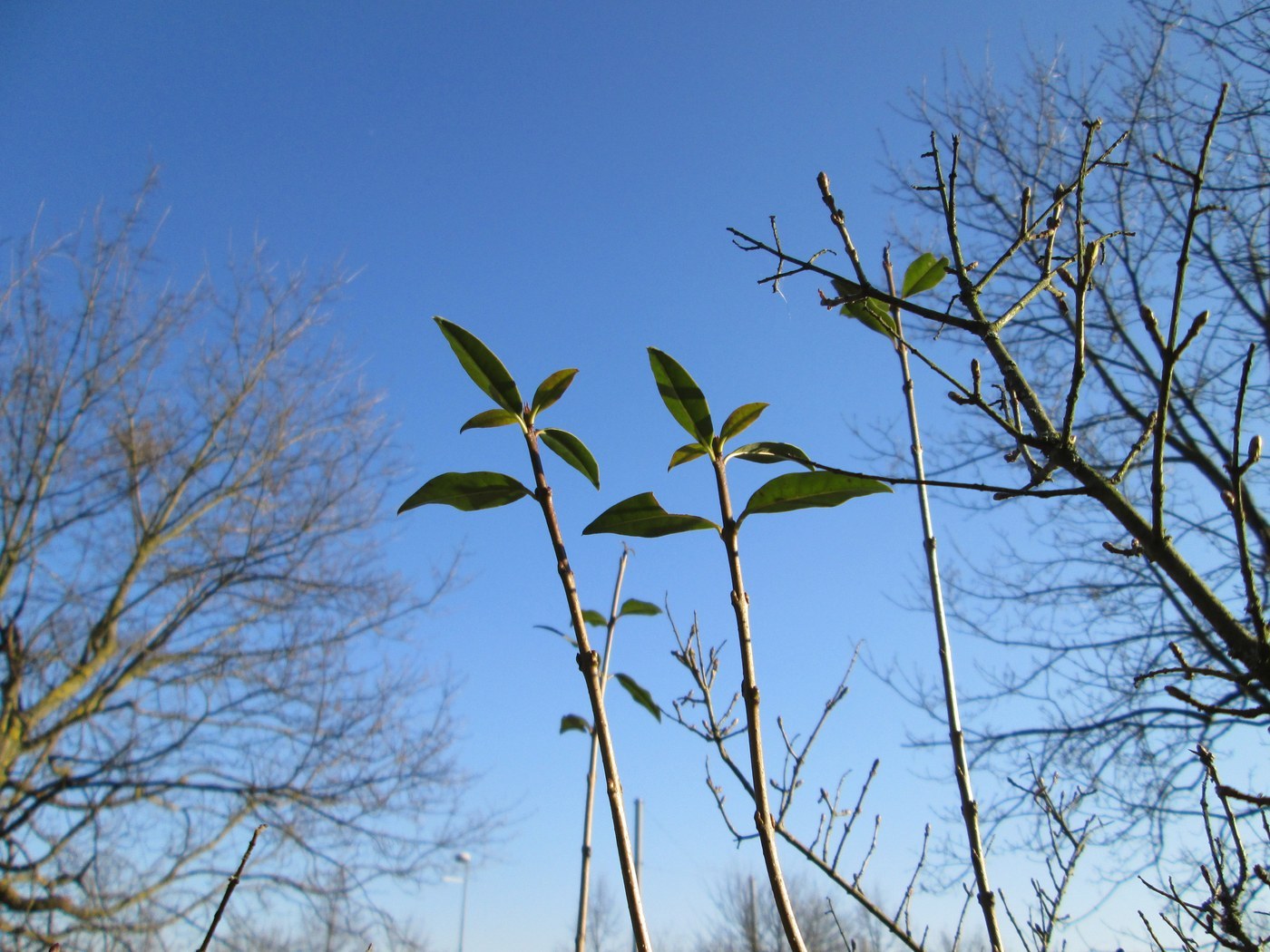
Key Identifying Features
Privet (Ligustrum spp.) is a fast-growing, semi-evergreen to evergreen shrub or small tree, best known as a hedge plant and as an aggressive invasive in many regions. Identify it by its opposite, oval, glossy leaves, dense terminal clusters of small white flowers with a strong (some say unpleasant) fragrance, and clusters of small blue-black berries that persist into winter.
- Opposite, simple, smooth-edged oval leaves, often glossy
- Pyramidal/branched clusters of tiny white tubular flowers
- Round blue-black berries in dense clusters
- Dense, twiggy, hedge-forming growth; pale lenticel-dotted bark
Leaves & Stems
Leaves are opposite, simple, 1-2.5 inches long, oval to elliptical with smooth (untoothed) margins and a short tip. Most are dark, glossy green and leathery; many privets hold leaves through mild winters (semi-evergreen). Stems are slender, gray-brown, with small raised pale dots (lenticels) and opposite branching. Young twigs are often finely hairy. The opposite, glossy, smooth-margined leaf on twiggy hedge-like growth is a strong field signal.
Flowers & Fruit
In late spring to summer, privet produces showy, branched clusters (panicles) of small, white, four-lobed tubular flowers at branch tips. The fragrance is heavy and sweet to some, cloying to others—an aid to ID and a common allergy trigger. Flowers ripen to small, round to oval berries (drupes) that turn glossy blue-black to purple-black in fall and hang in clusters through winter, spread widely by birds.
How to Tell It Apart from Look-Alikes
- Honeysuckle shrubs (Lonicera): opposite leaves too, but flowers are tubular/two-lipped and fruit is red or orange, not blue-black.
- Buckthorn (Rhamnus): similar dark berries but leaves are often sub-opposite/alternate with curved veins and may have a small spine tip.
- Cherry laurel: larger leathery evergreen leaves, often with crushed-leaf almond scent.
- Dogwoods: opposite leaves but produce stretchy leaf latex and have white/blue berries on red stalks.
The opposite glossy smooth leaves + white flower panicles + blue-black berry clusters combination confirms privet.
Where You'll Find It
Privets are planted everywhere as clipped hedges and screens. Several species (Chinese, Japanese, European, glossy privet) have escaped into woodlands, fence rows, stream banks, and disturbed ground across the southern and eastern U.S. and elsewhere, where they form dense invasive thickets that shade out natives.
Quick ID Checklist
- Dense twiggy shrub/small tree, often a hedge
- Opposite, glossy, smooth-edged oval leaves
- White flower panicles with strong fragrance
- Blue-black round berries in clusters into winter
- Pale lenticel dots on gray-brown bark
Frequently asked questions
How do I tell privet from honeysuckle shrubs?
Both have opposite leaves, but privet has white flower panicles and blue-black berries, while bush honeysuckles have paired tubular flowers and red-to-orange berries. Privet's fruit color is the quickest difference.
Is privet invasive?
Several privet species are highly invasive in the southern and eastern United States and elsewhere, forming dense thickets in forests and along streams. Birds spread the seeds widely from garden hedges.
Why does my hedge smell so strong when blooming?
Privet flowers produce a heavy, sweet fragrance that many people find cloying, and the pollen is a common allergen. A strongly scented white-flowered hedge in early summer is very likely privet.
What features confirm a shrub is privet?
Look for opposite, glossy, smooth-edged oval leaves on twiggy stems with pale lenticel dots, branched panicles of small white tubular flowers in summer, and dense clusters of blue-black berries persisting into winter.