
How to Care for Puncturevine
Puncturevine (Tribulus terrestris) is a tough, low-sprawling warm-season annual thriving in hot, dry, sunny sites with poor, gritty soil.
Read the full Puncturevine encyclopedia entry →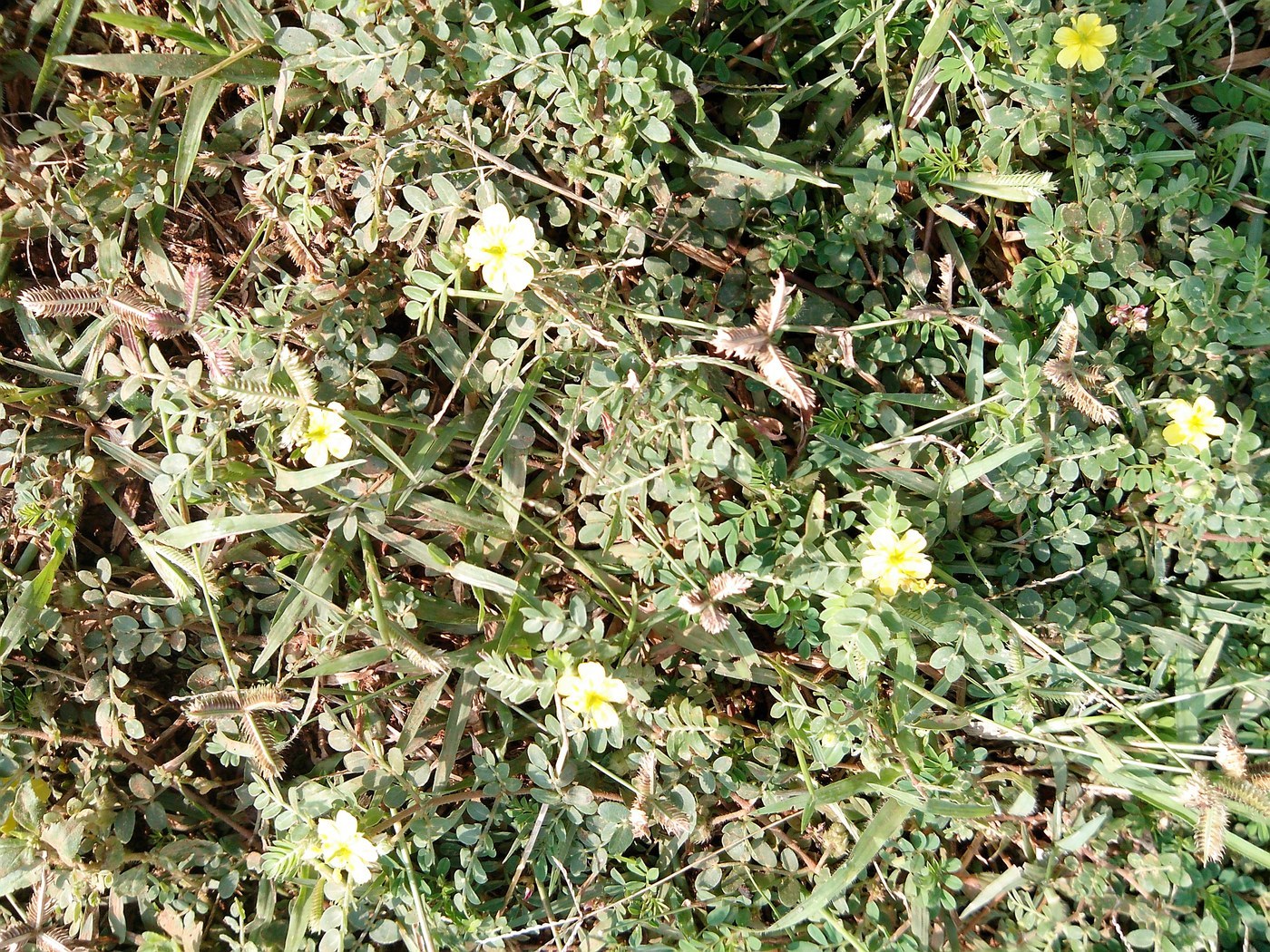
Puncturevine (Tribulus terrestris) is a low, mat-forming warm-season annual with fine ferny leaves, small yellow five-petaled flowers, and spiky seed pods. It is extraordinarily heat- and drought-tolerant, colonizing the poorest, driest ground. Note that it is regarded as an aggressive weed in many regions and spreads readily by its hard-spined seeds, so contain it and remove seed pods before they mature.
Light
Puncturevine wants full, blazing sun. It grows best in the hottest, most exposed positions and does poorly in shade. Strong light drives the flat, spreading growth habit and abundant flowering.
Water
It is very drought-tolerant and needs minimal water once established. A deep taproot lets it survive extended dry spells. Occasional watering speeds early growth, but it thrives on neglect and dislikes wet, heavy conditions. Never overwater.
Soil & Potting
This plant favors poor, sandy or gravelly, well-drained soil and tolerates compacted, disturbed ground where little else grows. It has no need for fertility or amendment. In a container use a gritty, fast-draining mix, and place pots on hard surfaces so escaping seeds do not root into surrounding ground.
Humidity & Temperature
A true warm-season plant, it germinates and grows vigorously in hot weather and low humidity. It is frost-tender and dies back completely at the first hard freeze, having already set seed. It has no cold tolerance and completes its cycle within a single warm season.
Feeding
No feeding is necessary or advisable. Puncturevine is adapted to nutrient-poor soils and grows too rampantly with added fertility.
Propagation
It reproduces solely by seed, produced in hard, sharply spined burrs that split into segments. Seeds are extremely long-lived in soil. Because of its weedy nature, deliberate propagation is discouraged; instead, focus on removing seed pods promptly to prevent spread.
Repotting / Pruning
No pruning is required. The most important maintenance is removing the spiny seed capsules before they ripen and drop, cutting off its only means of reproduction. Pull whole plants by the taproot while young and before they flower to keep them from establishing.
Common Problems & Pests
The plant itself is nearly problem-free, which is exactly why it is a difficult weed. Its spiny burrs cling to shoes, tires and animal fur and can puncture bike tires. Two biological control weevils (a seed weevil and a stem weevil) are used in some regions to suppress it. The main management concern is its rapid, persistent self-seeding.
Seasonal Care Tips
Seedlings emerge as soil warms in late spring and summer. Monitor and remove plants early, before flowering, throughout the warm months. Because seed remains viable for years, repeat removal over several seasons is needed to exhaust the seed bank. Plants die at first frost.
Frequently asked questions
What conditions does puncturevine grow in?
It thrives in full sun, hot temperatures, low humidity, and poor, dry, well-drained soil. It is highly drought-tolerant and colonizes compacted, disturbed ground where most plants struggle.
How does puncturevine spread?
It reproduces only by seed, formed in hard spiny burrs that cling to shoes, tires and fur. The seeds stay viable for years, so removing pods before they mature is key to controlling it.
Does puncturevine need watering or feeding?
Very little of either. Its deep taproot makes it strongly drought-tolerant, and it grows best in lean soil. Extra water or fertilizer only makes it spread more aggressively.
Is puncturevine an annual?
Yes, it is a warm-season annual. It germinates as soil warms, grows and sets seed through summer, and dies back completely at the first hard frost.