Puncturevine
Tribulus terrestris
Puncturevine is a low, mat-forming summer weed notorious for its hard, spiny seed burs that puncture bicycle tires and bare feet. It thrives in hot, dry, disturbed ground and is widespread in warm regions worldwide.
- Light
- Full sun
- Water
- Very drought-tolerant
- Difficulty
- Easy
Got a plant like this?
Identify any plant from a photo, free.
Overview
Puncturevine (Tribulus terrestris) is a low-growing annual native to the warm regions of Europe, Africa, and Asia and now naturalized across much of the world, including the western and southern United States. It is best known for its woody, spiny burs, called goatheads, that can flatten tires and injure feet.
The plant forms flat, spreading mats in hot, dry, disturbed areas and produces small yellow flowers throughout summer. Each fruit splits into several sharp, hard nutlets that scatter and persist in the soil for years.
How to identify it
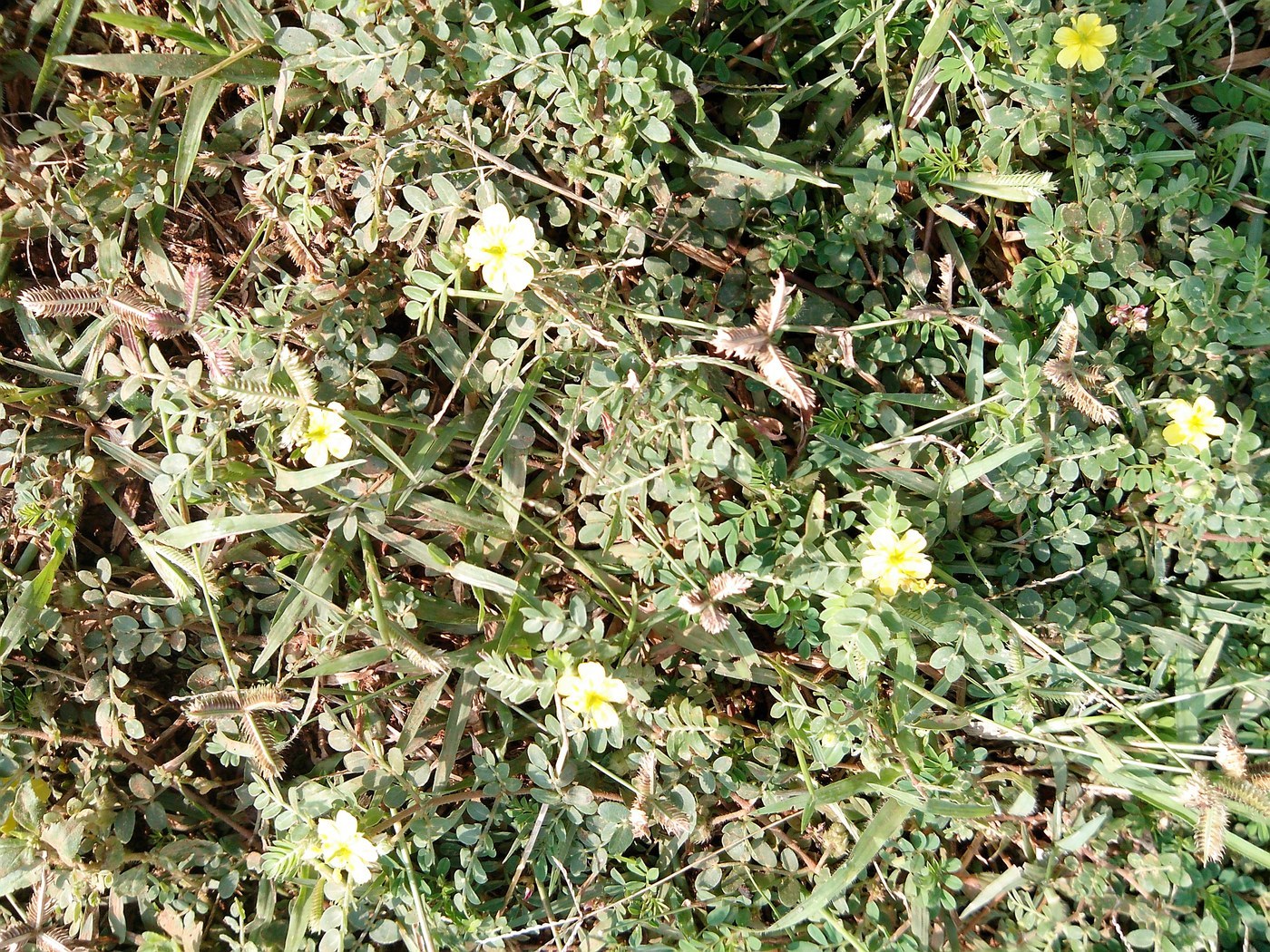
Identify puncturevine by its prostrate, fern-like mats, small yellow flowers, and spiny burs.
- Leaves: Pinnately compound, opposite, with several pairs of small oval leaflets; finely hairy
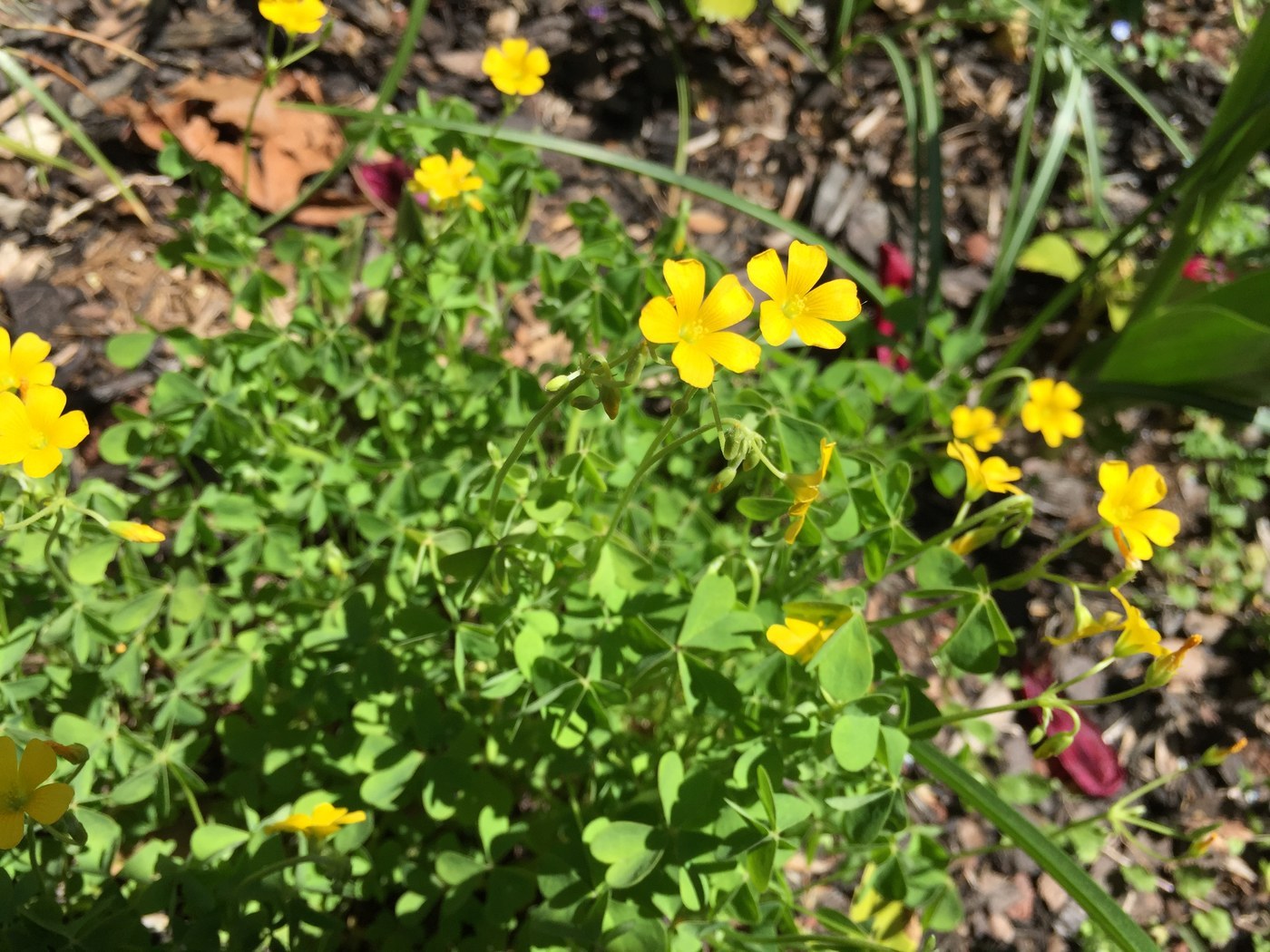
- Flowers: Small, five-petaled, bright yellow, about 1/2 inch across
- Burs: Hard, woody seed pods that split into 4-5 segments, each with two sharp spines (resembling a goat's head)
- Habit: Flat, radiating mats up to several feet wide hugging the ground
- Stems: Trailing, branching from a central taproot, often reddish
Care & growing
Almost always managed as a weed.
- Manual: Pull or hoe young plants before flowers and burs form; wear gloves
- Timing: Remove plants in spring and early summer to prevent seed set
- Persistence: Seeds remain viable in the soil for several years, so control must be repeated
- Biological: Two introduced weevils help suppress it in parts of the western U.S.
- It thrives on neglect in hot, dry, compacted ground; mulching and dense planting discourage it
Habitat & origin
Native to warm parts of southern Europe, Africa, and Asia, puncturevine has spread to the Americas, Australia, and other warm regions. In the U.S. it is most troublesome in the West and South.
It colonizes hot, dry, disturbed ground: roadsides, gravel lots, sidewalks, railways, fields, pastures, and overgrazed land. It tolerates poor, compacted soils and extreme heat and drought.
Frequently asked questions
Why is it called goathead?
Each woody seed bur splits into segments bearing two sharp spines that resemble a goat's horned head, and the burs are hard enough to puncture tires and skin.
How do I get rid of puncturevine?
Pull or hoe the plants before they set burs, repeat over several years to deplete the long-lived seed bank, and consider mulching bare ground.
How can I recognize puncturevine?
Look for flat, radiating mats of trailing reddish stems with paired, fern-like compound leaves, small five-petaled yellow flowers, and hard, woody burs that split into spiny segments.
Where does puncturevine grow?
It colonizes hot, dry, disturbed ground such as roadsides, gravel lots, sidewalks, fields, and pastures, tolerating poor, compacted soils and extreme heat and drought.
Puncturevine guides
In-depth guides for identifying, growing, and caring for Puncturevine.
How to Care for Puncturevine
Puncturevine (Tribulus terrestris) is a tough, low-sprawling warm-season annual thriving in hot, dry, sunny sites with poor, gritty soil.
Puncturevine Identification Guide
Identify puncturevine (Tribulus terrestris) by its flat trailing stems, ferny paired leaflets, small yellow flowers, and sharp two-horned spiny seed burs.