
Purslane Identification Guide
Identify common purslane (Portulaca oleracea) by its fleshy paddle-shaped leaves, smooth reddish prostrate stems, and small yellow flowers.
Read the full Purslane encyclopedia entry →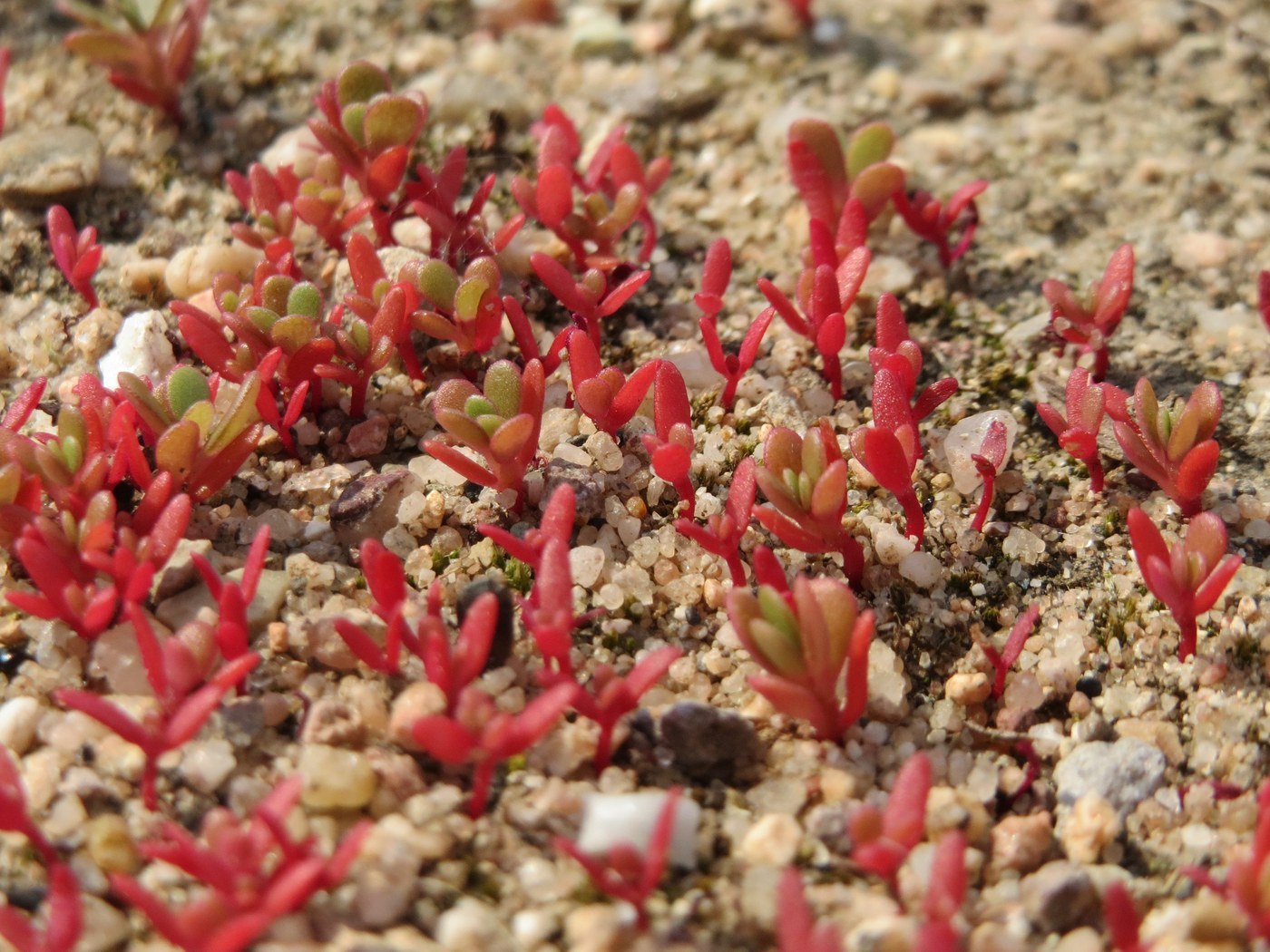
Key Identifying Features
Common purslane (Portulaca oleracea) is a low-growing succulent annual that mats over warm, disturbed ground. Its key marks:
- Thick, fleshy, smooth leaves shaped like small paddles or spoons.
- Smooth, often reddish, succulent stems that radiate flat from a central point.
- Small yellow flowers that open only in bright sun.
The juicy, hairless, mat-forming habit with red-tinged stems is distinctive once learned.
Leaves & Stems
Leaves are fleshy and smooth, 1-3 cm long, rounded at the tip (paddle- or wedge-shaped), and arranged alternately or clustered toward the stem tips. They are flat above and slightly rounded below, with a glossy succulent feel. Stems are prostrate, smooth, and hairless, frequently flushed reddish or purplish, and snap easily, oozing clear (not milky) juice. The plant forms a dense circular mat radiating from a single taproot.
Flowers & Fruit
Flowers are small (under 1 cm) with 5 yellow petals, sitting in the leaf clusters at stem tips and forks. They open only in morning sunshine and close by midday or in cloud. The fruit is a tiny capsule that splits around its middle like a lid (a pyxis), releasing numerous very small black seeds — a helpful confirming detail.
How to Tell It Apart from Look-Alikes
- Spotted spurge / prostrate spurge (Euphorbia maculata) also mats on warm ground with reddish stems, but its leaves are thin (not fleshy), often have a reddish spot, and the broken stem oozes milky white sap — purslane sap is clear. This milky-versus-clear sap test is the most important distinction between the two.
- Pigweed seedlings can grow alongside but have non-succulent leaves and an upright habit.
- Moss rose (Portulaca grandiflora), a garden relative, has narrow needle-like leaves and large showy flowers.
Fleshy paddle leaves, smooth red stems, clear sap, and small yellow flowers confirm common purslane.
Where You'll Find It
Purslane thrives in hot, sunny, disturbed ground: vegetable gardens, cracks in pavement, fields, lawns, and waste places worldwide. It is a warm-season plant most abundant in summer and tolerates poor, dry soils thanks to its succulent water storage.
Quick ID Checklist
- Fleshy, smooth, paddle-shaped leaves
- Smooth, reddish, prostrate succulent stems
- Clear sap (NOT milky) when broken
- Small 5-petalled yellow flowers, open in sun
- Mat-forming on warm, disturbed ground in summer
Frequently asked questions
How do I tell purslane from prostrate spurge?
Break a stem. Purslane has thick fleshy leaves and clear, watery sap, while prostrate spurge has thin leaves and oozes milky white sap. The milky-versus-clear sap test is the most reliable way to tell the two apart.
Why are the flowers sometimes hard to find?
Purslane's small yellow flowers open only in bright morning sunshine and close by midday or in cloudy weather, so you may need to look on a sunny morning to see them.
What does purslane's leaf feel like?
The leaves are noticeably succulent: thick, smooth, glossy, and water-filled, shaped like small paddles or spoons with rounded tips. This fleshiness distinguishes it from flat-leaved weeds.
Where does purslane grow best?
It is a warm-season plant of hot, sunny, disturbed ground, common in vegetable gardens, pavement cracks, fields, and waste places, and it tolerates poor dry soil because it stores water in its fleshy tissues.