
Quackgrass Identification Guide
How to identify quackgrass (Elymus repens) by its clasping leaf auricles, aggressive white rhizomes, and slender wheat-like seed spike.
Read the full Quackgrass encyclopedia entry →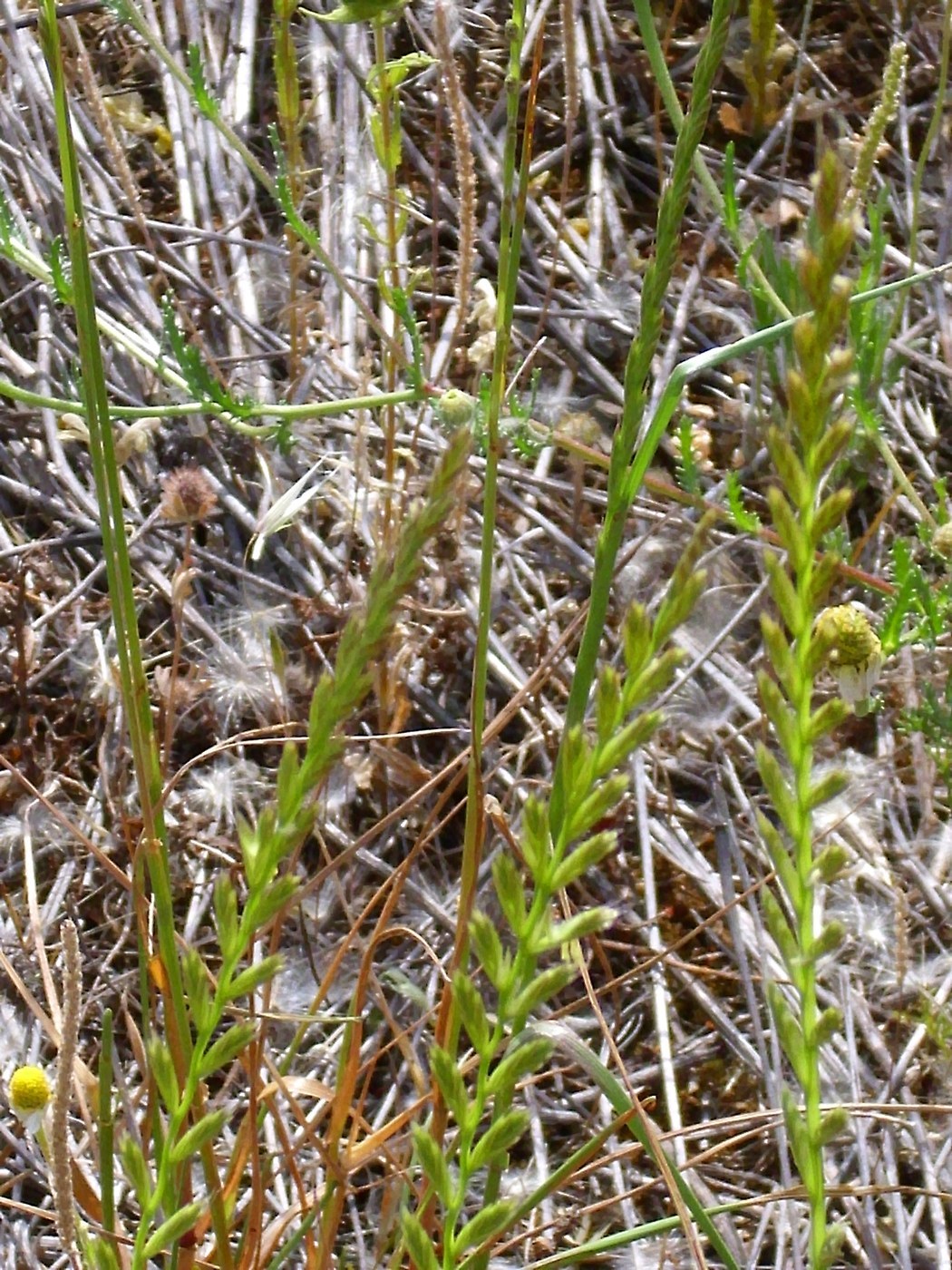
Key Identifying Features
Quackgrass (Elymus repens, formerly Agropyron repens) is a cool-season perennial grass infamous for its spreading roots. Identify it by:
- Clasping auricles — small finger-like projections that wrap around the stem at the leaf base
- Long, white, sharply-pointed rhizomes that spread aggressively underground
- Flat, rough-textured, bluish-green to dull-green blades
- A slender, two-rowed wheat-like seed spike
It forms patches that crowd out turf and crops.
Leaves & Stems
Leaf blades are flat, 4-12 inches long, slightly rough on the upper surface, and taper to a point. The single most reliable vegetative clue is the pair of claw-like auricles that clasp the stem where the blade meets the sheath. There is also a short, membranous ligule. The lower stem and sheaths may be sparsely hairy. Below ground, quackgrass produces extensive, straw-colored to white rhizomes with sharp tips that can pierce through tubers and other roots; these are the primary means of spread and regrowth.
Flowers & Fruit
The seedhead is a narrow, erect spike resembling wheat or rye, typically 3-8 inches long. The spikelets are arranged in two rows, flatwise against the stalk, with their broad side facing the central axis — a feature that helps separate it from ryegrass. Awns (bristles) may be short or absent. Seedheads appear in early to midsummer.
How to Tell It Apart from Look-Alikes
- Tall fescue: Clumping rather than rhizomatous; lacks the long white spreading rhizomes and clasping auricles.
- Annual/perennial ryegrass: Has auricles too, but ryegrass spikelets are attached edgewise to the stalk, and ryegrass lacks aggressive rhizomes.
- Crabgrass: A warm-season annual with finger-like seedheads; quackgrass is a cool-season perennial with a single wheat-like spike.
- Bromegrass: Has a closed sheath and an open panicle, not a two-rowed spike.
The combination of clasping auricles plus long white rhizomes plus a wheat-like spike is diagnostic.
Where You'll Find It
Quackgrass thrives in lawns, gardens, crop fields, pastures, roadsides, and disturbed ground across temperate regions. It tolerates a wide range of soils and is most vigorous in cool, moist conditions. Because it regenerates from even small rhizome fragments, tilling often spreads it further.
Quick ID Checklist
- Clasping auricles wrapping the stem at the leaf base
- Long, white, sharp-tipped rhizomes
- Flat, rough, bluish-green blades
- Wheat-like two-rowed seed spike, spikelets flatwise
- Cool-season perennial forming spreading patches
If you find a cool-season grass with claw-like auricles, a wheat-like spike, and a network of tough white rhizomes, it is quackgrass.
Frequently asked questions
Why is quackgrass so hard to get rid of?
It spreads by long, tough white rhizomes that can regenerate a whole new plant from even a small fragment. Tilling or hoeing often chops the rhizomes and spreads the pieces, making the infestation worse rather than better.
What is the easiest way to confirm quackgrass identification?
Look for the clasping auricles, small claw-like projections that wrap around the stem where the leaf blade meets the sheath, combined with the long white pointed rhizomes underground. Together these are diagnostic.
How do I tell quackgrass from ryegrass?
Both have auricles, but quackgrass spreads by aggressive white rhizomes and its seed spikelets sit flatwise against the stalk, while ryegrass is clumping without spreading rhizomes and its spikelets attach edgewise to the stalk.
Is quackgrass an annual or perennial?
It is a cool-season perennial. It survives winter and persists year after year through its crown and extensive rhizome system, which is why it forms expanding patches.