Quaking Aspen Identification Guide
How to identify quaking aspen (Populus tremuloides) by its fluttering round leaves, smooth white-green bark, and clonal groves.
Read the full Quaking Aspen encyclopedia entry →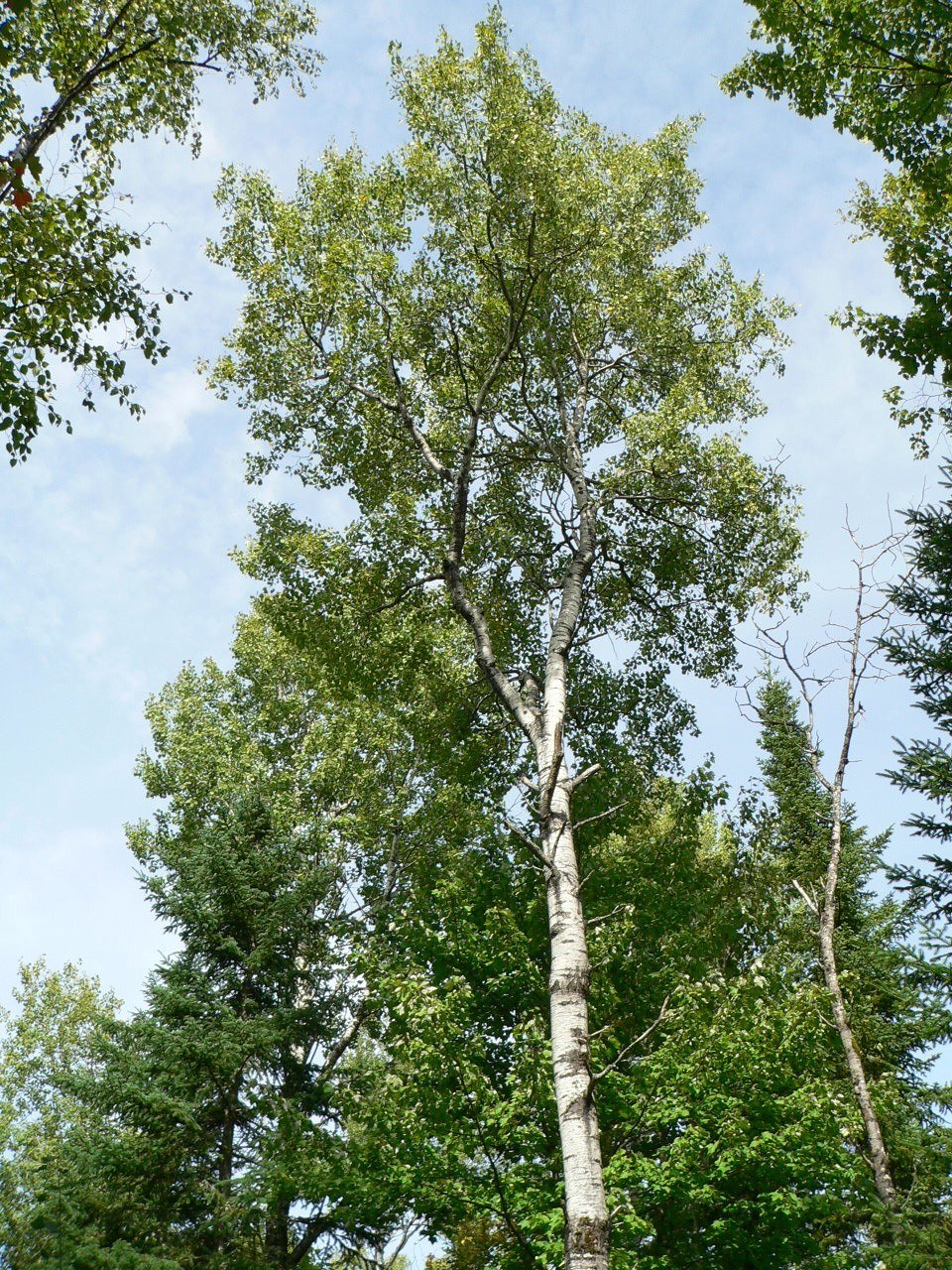
Key Identifying Features
Quaking aspen (Populus tremuloides) is a slender deciduous tree famous for leaves that tremble in the slightest breeze and for smooth, pale greenish-white bark. It is the most widely distributed tree in North America and typically grows 20–50 feet tall in dense, clonal groves of identical-looking stems.
- Round leaves on flattened stalks that flutter constantly
- Smooth, chalky white to pale greenish-gray bark with dark scars
- Clonal groves of many uniform trunks arising from one root system
- Brilliant golden-yellow fall color
Leaves & Stems
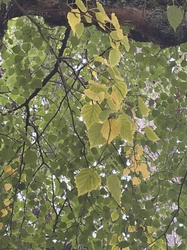
The leaf is the signature: 1.5–3 inches, nearly round (orbicular) with a short pointed tip and small rounded teeth, glossy green above and duller below. The key trait is the flattened leaf stalk (petiole) set at a right angle to the blade, which lets the leaf flutter and "quake" in even light wind. In autumn the foliage turns a clear, brilliant gold (occasionally orange-red). The bark is smooth, thin, and creamy white to pale yellow-green, often powdery, marked with black knots and horizontal scars, and only furrowing dark at the base of very old trunks. Twigs are slender and reddish-brown.
Flowers & Fruit
Aspen is dioecious. In early spring, before the leaves, it produces drooping catkins — silvery-gray and fuzzy. Female catkins develop into strings of small capsules that split to release tiny seeds attached to cottony tufts, dispersed widely by wind. However, aspen reproduces mainly by root suckering, forming extensive clones.
How to Tell It Apart from Look-Alikes
Bigtooth aspen (Populus grandidentata) is similar but has larger, coarsely toothed leaves and grayer bark. Paper birch also has whitish bark but it peels in papery sheets (aspen bark does not peel) and has oval, doubly toothed leaves. Cottonwoods are larger with triangular leaves and deeply furrowed bark. The combination of round fluttering leaves on flat stalks plus smooth non-peeling white-green bark is diagnostic for quaking aspen.
Where You'll Find It
Native across northern and montane North America — from Alaska and Canada through the Rockies and into the northeastern and upper midwestern U.S. — quaking aspen colonizes disturbed ground, burned areas, clearings, and slopes, often as a pioneer. It favors cool climates and full sun and forms famously large clonal stands.
Quick ID Checklist
- Leaves: round, finely toothed, on flat stalks; flutter in wind
- Bark: smooth, chalky white to greenish, non-peeling, dark scars
- Form: slender; dense clonal groves of uniform trunks
- Fall color: brilliant golden-yellow
- Habitat: cool northern and mountain forests, disturbed sites
A slender white-barked tree with round, constantly fluttering leaves is quaking aspen.
Frequently asked questions
Why do quaking aspen leaves tremble?
The leaf stalk is flattened and attached at a right angle to the blade, so even a light breeze sets the leaves fluttering or quaking, which gives the tree its name.
How is quaking aspen different from paper birch?
Both have pale bark, but aspen bark is smooth and does not peel, while paper birch bark peels off in papery sheets. Aspen leaves are round on flat stalks; birch leaves are oval and doubly toothed.
Why do aspens grow in such uniform groves?
Aspen reproduces largely by sending up suckers from a shared root system, creating clonal groves where many trunks are genetically identical and leaf out and change color together.
What color do aspens turn in fall?
They turn a brilliant, clear golden-yellow, occasionally with orange or red tints, producing the famous autumn displays across mountain landscapes.
Quaking Aspen identified by the community
Recent Quaking Aspen specimens identified with Plant Identifier.