How to Care for Queen of the Night
A dramatic night-blooming epiphytic cactus; give it bright indirect light, airy soil, and let the topsoil dry between waterings.
Read the full Queen of the Night encyclopedia entry →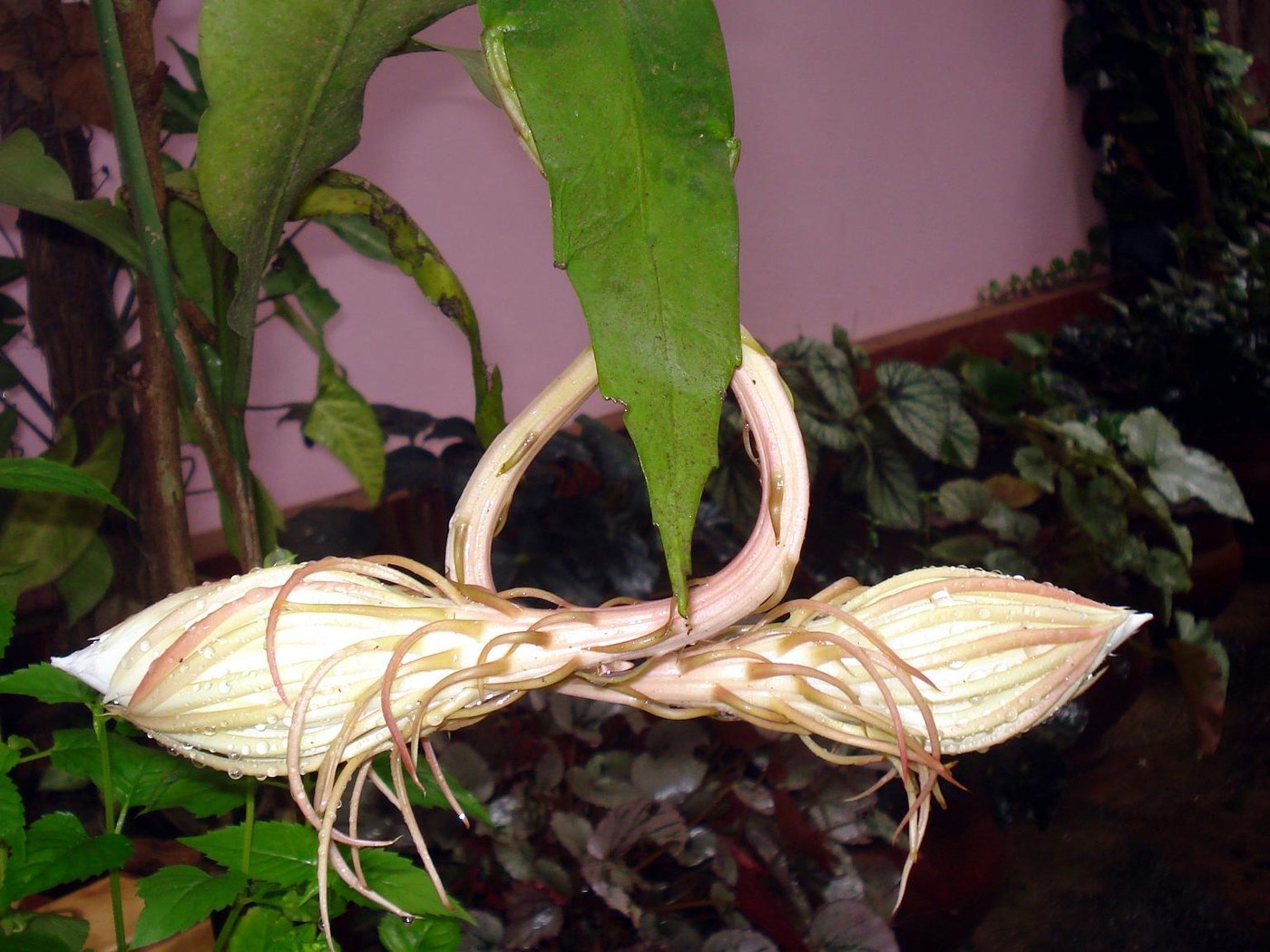
Queen of the Night (Epiphyllum oxypetalum) is a sprawling epiphytic orchid cactus famous for its enormous, luminous white flowers that open for a single night and release a heady fragrance before closing by morning. Grown for its flat, arching stems and once-a-year spectacle, it is a moderately easy plant that rewards patience and the right light.
Light
Give Queen of the Night bright, indirect light. As a jungle epiphyte that grows on tree branches, it dislikes harsh, direct midday sun, which scorches and yellows the stems. An east-facing window, a bright spot with filtered light, or dappled shade outdoors is ideal. Too little light produces weak, thin stems and few or no flowers, so aim for the brightest spot that avoids direct burning rays. Good light is the single biggest factor in getting it to bloom.
Water
Water moderately and let the top of the soil dry out between waterings. During the active growing season (spring through early fall), water thoroughly when the top inch or two feels dry, then let excess drain fully. Never leave the pot sitting in water—the fleshy stems and roots rot in soggy conditions. In winter, reduce watering significantly to give the plant a cool, drier rest, which helps trigger the next bloom cycle. When in doubt, underwater rather than overwater.
Soil & Potting
Use a light, fast-draining, airy mix. A blend made for cactus or orchids, or a homemade mix of potting soil with plenty of perlite, bark, and coarse sand, mimics the loose organic matter it grows in on tree limbs. Always plant in a container with drainage holes. This cactus actually flowers better when slightly root-bound, so resist the urge to over-pot; a snug container in a well-draining medium suits it best.
Humidity & Temperature
Being tropical, it enjoys moderate to high humidity and warm temperatures. Average indoor humidity is usually acceptable, but it appreciates a more humid, sheltered spot in dry homes. Keep it warm during the growing season and protect it from cold—it is not frost-hardy and should be brought indoors or sheltered when temperatures drop. A cooler (but not cold), drier winter rest supports flowering, but avoid chilling drafts and frost entirely.
Feeding
Feed during the growing season with a diluted balanced fertilizer, or a low-nitrogen, higher-phosphorus formula to encourage blooms, roughly every few weeks from spring through summer. Avoid high-nitrogen feeds, which push soft leafy stem growth at the expense of flowers. Stop feeding in late fall and winter while the plant rests.
Propagation
Queen of the Night is very easy to propagate from stem cuttings. Take a healthy segment of flattened stem, let the cut end callus over for several days to a week in a dry, shaded spot, then insert it into slightly moist, well-draining mix. Roots form readily. Cuttings are the reliable way to reproduce this plant; seed is slow and less common in cultivation. Newly rooted cuttings take a few years to reach blooming size.
Repotting / Pruning
Repot only every few years, and only when clearly crowded, since it blooms best when root-bound. Spring is the best time. Handle the brittle stems carefully. Prune to control the plant's sprawling, sometimes ungainly shape and to remove damaged or overly long stems; pruning also yields cuttings for propagation. A support or trellis helps manage the long, arching branches.
Common Problems & Pests
Overwatering and poor drainage are the leading causes of trouble, leading to soft, blackened, rotting stems—err on the dry side and use airy mix. Failure to bloom usually traces to insufficient light, too much nitrogen, over-potting, or lack of a cool winter rest. Watch for mealybugs, scale, and spider mites, especially indoors; wipe them off or treat as needed. Sunburn shows as bleached or scorched patches from too much direct sun.
Seasonal Care Tips
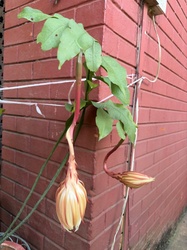
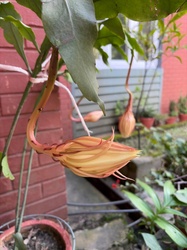
In spring and summer, keep it in bright indirect light, water when the topsoil dries, and feed regularly to build strong stems and flower buds. In late summer, watch for the swelling buds—blooms open at night, so check in the evening to catch the show. In fall, taper feeding and watering. In winter, give it a cooler, drier rest to encourage the following year's flowers, and protect it from any cold. Move outdoor plants to shelter before frost.
Frequently asked questions
Why won't my Queen of the Night bloom?
The most common reasons are too little light, too much nitrogen fertilizer, over-potting, or the lack of a cool, drier winter rest. Give it bright indirect light, keep it slightly root-bound, use a bloom-supporting feed, and let it rest cool and dry in winter.
How long do the flowers last?
Each spectacular flower opens for a single night, releasing a strong fragrance, and wilts by the next morning. The plant often produces several buds that open over a short window, so watch for swelling buds in the evening to catch the display.
Why are the stems turning soft, yellow, or black?
Soft, discolored, or blackening stems almost always signal overwatering or poor drainage leading to rot. Use a fast-draining cactus or orchid mix, water only when the topsoil dries, and never let the pot sit in water.
How do I propagate Queen of the Night?
Take a healthy stem cutting, let the cut end callus for several days, then plant it in slightly moist, well-draining mix. It roots easily. New plants take a few years to mature enough to flower.
Queen of the Night identified by the community
Recent Queen of the Night specimens identified with Plant Identifier.