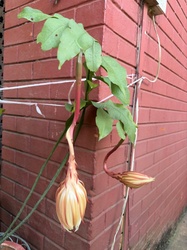
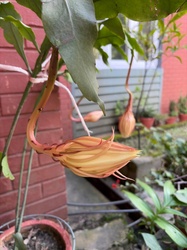
Queen of the Night Identification Guide
Identify Queen of the Night (Epiphyllum oxypetalum) by its flat, leaf-like climbing stems and huge, fragrant white flowers that bloom for a single night.
Read the full Queen of the Night encyclopedia entry →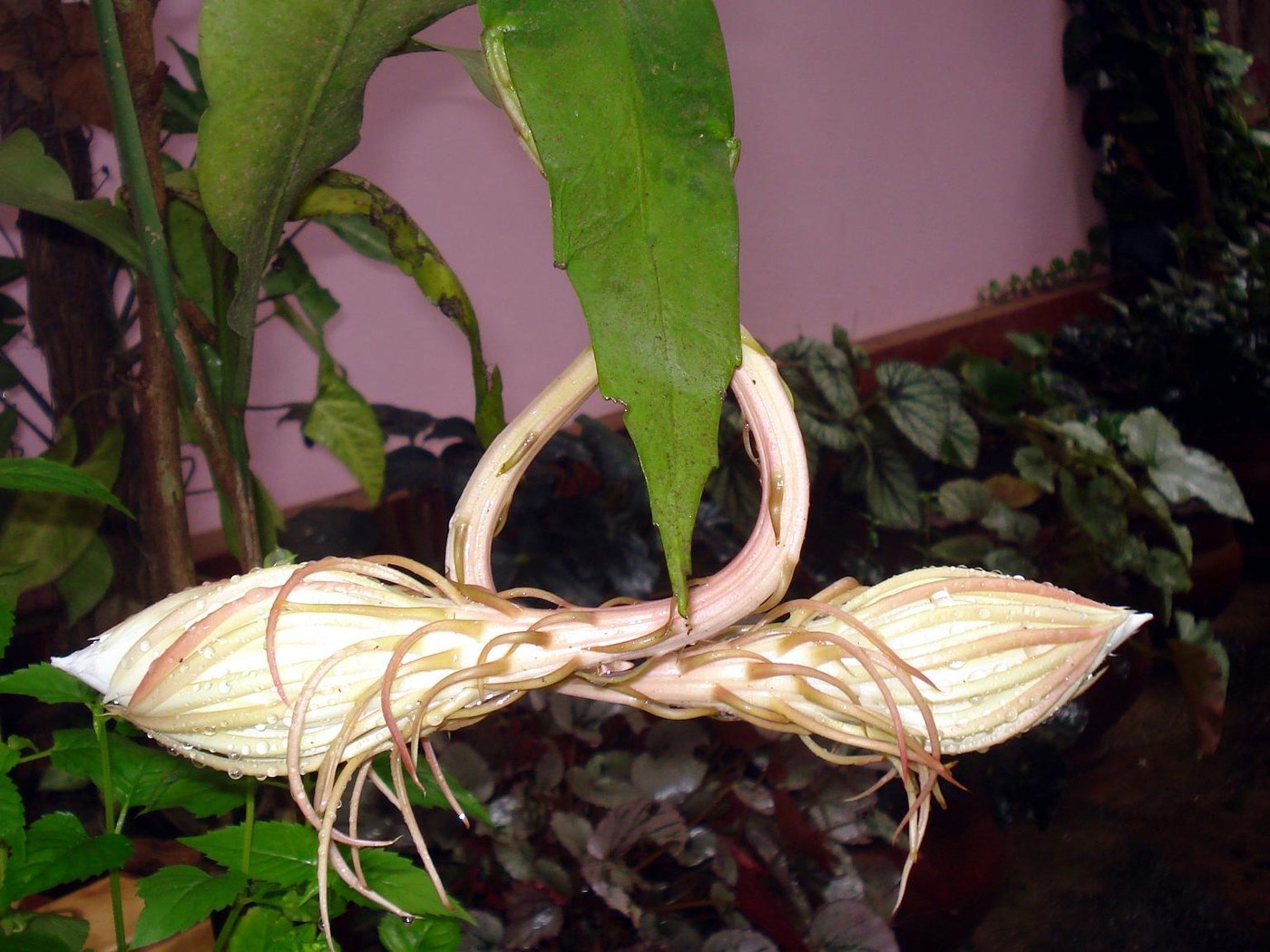
Key Identifying Features
Queen of the Night (Epiphyllum oxypetalum) is a sprawling epiphytic cactus grown for its spectacular, large white nocturnal flowers that open for just one night a year and release a powerful sweet fragrance. The plant itself is leggy with flattened, strap-like green stems.
- Flat, broad, leaf-like stems (cladodes) with scalloped or notched edges
- Stems are green, thin, and spineless (true leaves are absent)
- Huge white, funnel-shaped flowers up to 10+ inches across
- Strongly fragrant, night-blooming, lasting only one night
Leaves & Stems
What look like leaves are actually flattened photosynthetic stems. A woody, rounded main stem supports these broad flat green branches with wavy, notched margins; flower buds and new growth emerge from the notches (areoles) along the edges. The plant is essentially spineless and tends to grow lax and sprawling, often needing support. As an epiphyte it naturally grows perched on trees.
Flowers & Fruit
The flowers are the showstopper: very large, pure white, many-petaled, funnel-shaped blooms with creamy outer segments, opening after dark and wilting by morning. They are intensely fragrant and pollinated by moths/bats in the wild. Blooming is brief and seasonal — often a single night, which fuels its mystique. Fruit, when it forms, is an elongated reddish berry.
How to Tell It Apart from Look-Alikes
- Other night-blooming 'Queen of the Night' (e.g., Selenicereus / Cereus): Many unrelated cacti share the common name; Epiphyllum oxypetalum is distinguished by its flat, leaf-like spineless stems rather than ribbed or columnar stems.
- Christmas/Holiday cactus (Schlumbergera): Much smaller, segmented flat stems with showy day flowers; Queen of the Night is far larger with white night flowers.
- Selenicereus grandiflorus: Has slender, angled, spiny climbing stems, unlike the broad flat stems here.
Where You'll Find It
Native to southern Mexico and Central/South America, growing as an epiphyte in tropical forests. Worldwide it is a beloved houseplant and patio container plant, grown in bright, indirect light, in a well-drained, humus-rich mix. It is frost-tender (about USDA zones 10–11) and best given warmth and moderate humidity.
Quick ID Checklist
- Flat, strap-like, scalloped green stems (no true leaves, no spines)
- Sprawling, epiphytic, leggy habit
- Enormous white, fragrant flowers
- Blooms at night, lasting a single night
- Tropical American origin; tender houseplant
Frequently asked questions
Why does it bloom for only one night?
Epiphyllum oxypetalum flowers are moth/bat-pollinated and open after dark, then wilt by the next morning. Each spectacular bloom truly lasts just one night.
Those flat green parts are stems, not leaves?
Correct. The broad, leaf-like green structures are flattened photosynthetic stems (cladodes). The plant has no true leaves, and buds emerge from notches along the stem edges.
Is this the same as the columnar 'Queen of the Night' cacti?
No. Several unrelated cacti share the name. Epiphyllum oxypetalum is identified by its flat, spineless, leaf-like stems rather than ribbed or columnar spiny stems.
How do I get it to flower?
Give it bright indirect light, let it mature and become slightly pot-bound, provide a cooler/drier rest in winter, and avoid over-fertilizing with nitrogen. Mature plants then bloom in the warm season.
Queen of the Night identified by the community
Recent Queen of the Night specimens identified with Plant Identifier.