
How to Care for Queen Victoria Agave
A slow, sculptural succulent, Queen Victoria Agave thrives on bright sun, gritty soil and very sparing water.
Read the full Queen Victoria Agave encyclopedia entry →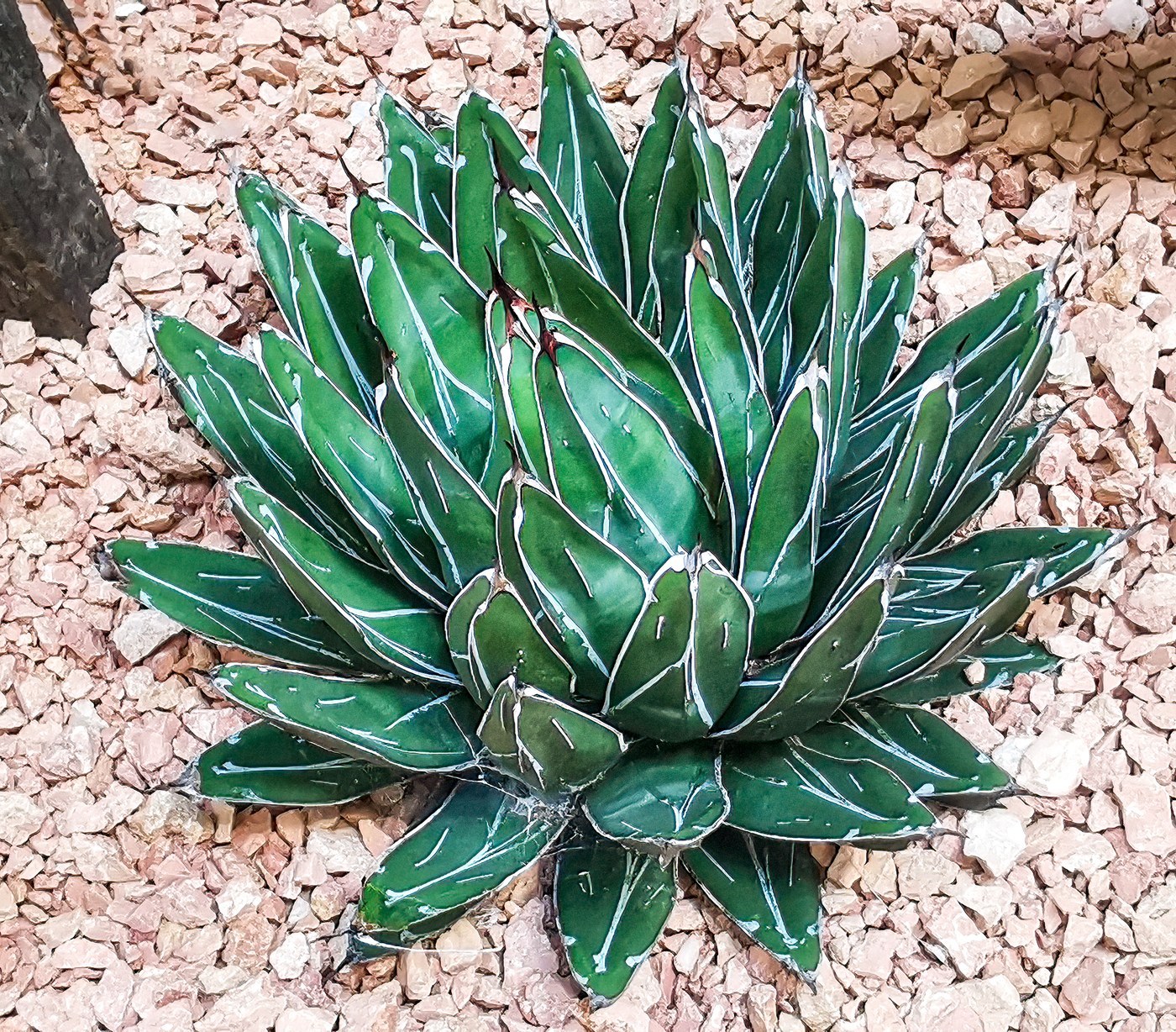
Queen Victoria Agave (Agave victoriae-reginae) is a compact, geometrically perfect succulent forming a tight dome of stiff, dark green leaves edged in striking white markings. Slow-growing and endlessly architectural, it is an easy, low-maintenance plant that asks only for sun, sharp drainage and restraint with the watering can.
Light
Give this agave the brightest light you can - full, direct sun is ideal and produces the tightest, most compact rosette with the boldest markings. Indoors, place it at your sunniest window, ideally south-facing, and rotate it occasionally for even growth. Insufficient light causes the rosette to loosen and stretch, spoiling its symmetry.
Water
Water sparingly; this is a very drought-tolerant plant that stores moisture in its thick leaves. Use the soak-and-dry method: water thoroughly, then let the soil dry out completely before watering again. In summer that may mean watering every couple of weeks, while in winter it needs little to no water. Overwatering is by far the quickest way to lose it.
Soil & Potting
Sharp drainage is non-negotiable. Use a gritty cactus and succulent mix, or amend regular potting soil heavily with pumice, perlite or coarse sand. A terracotta pot with ample drainage holes helps excess moisture escape and the rootball breathe. Choose a snug container - this agave grows slowly and dislikes sitting in a large volume of damp soil.
Humidity & Temperature
Queen Victoria Agave prefers warm, dry air and thrives in low humidity. It handles high heat with ease and tolerates cool temperatures down to near freezing when kept dry, but it should be protected from hard frost and damp cold. Good air circulation helps keep the compact rosette dry and healthy.
Feeding
This agave needs very little feeding. A single dilute application of a low-nitrogen or cactus fertilizer in spring or early summer is plenty. Overfeeding pushes soft, uncharacteristic growth and undermines the plant's tight, sculptural form, so err firmly on the side of lean conditions.
Propagation
Queen Victoria Agave produces few or no offsets, so it is most often propagated from seed - a slow process requiring patience over several years. When offsets (pups) do appear at the base, they can be carefully separated once rooted and potted individually in gritty mix.
Repotting / Pruning
Repot only every few years, when the plant has clearly outgrown its pot, moving up just one size into fresh, gritty mix. Handle carefully, as the leaf tips carry a sharp terminal spine. No pruning is needed beyond gently removing the occasional dried, papery leaf from the base of the rosette.
Common Problems & Pests
The overwhelming risk is rot from overwatering or poorly drained soil, which shows as soft, browning or mushy leaves at the center or base - keep it lean and dry to avoid it. Watch for agave snout weevil in outdoor plants and for scale or mealybugs sheltering between the tightly packed leaves; treat pests promptly with isopropyl alcohol on a swab or an appropriate insecticide.
Seasonal Care Tips
In the warm growing season, provide maximum sun and water occasionally once the soil is fully dry. As days shorten in autumn, taper watering right back and keep the plant cool and dry through winter, when it is essentially dormant. Move container plants under cover before hard frost, and resume light watering and feeding only when active growth returns in spring.
Frequently asked questions
Why is my Queen Victoria Agave rotting in the center?
Central rot almost always comes from water sitting in the tight rosette or from soggy soil. Water only at the base, ensure very sharp drainage, and let the soil dry completely between waterings.
How fast does Queen Victoria Agave grow?
Very slowly. It takes many years to reach its full compact size, which is part of its appeal as a long-lived, sculptural specimen plant.
Can I grow it indoors?
Yes, as long as you give it the brightest possible window. Insufficient light causes the rosette to loosen and lose its distinctive tight symmetry.
How often should I water it in winter?
Very rarely, if at all. The plant is essentially dormant in winter and prefers to stay cool and dry, which greatly reduces the risk of rot.