Quince Tree Identification Guide
Identify the quince tree (Cydonia oblonga) by its crooked form, woolly leaf undersides, large solitary pink-white flowers, and fragrant golden pear-apple fruit.
Read the full Quince Tree encyclopedia entry →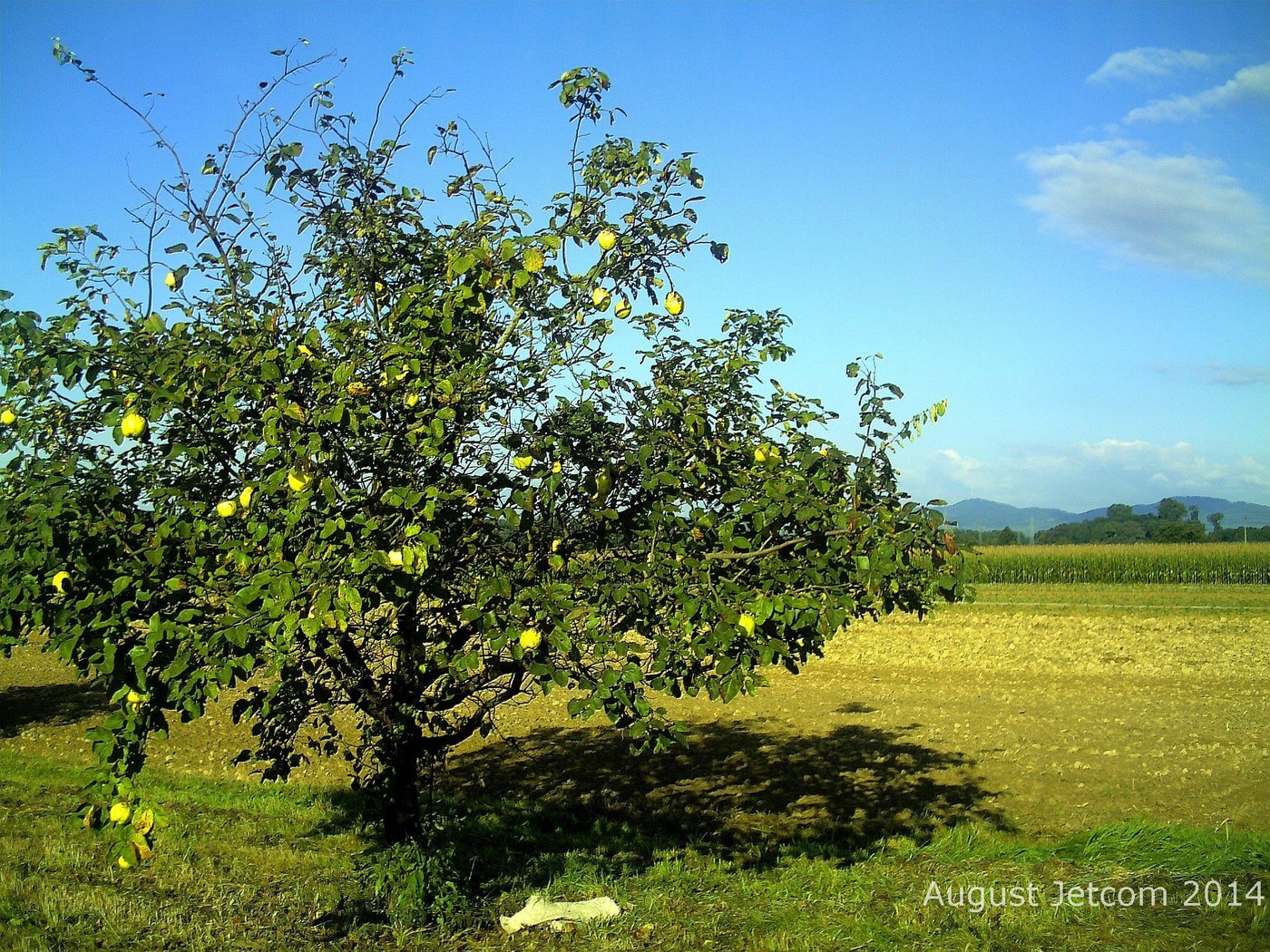
Key Identifying Features
Quince (Cydonia oblonga) is a small, often crooked deciduous tree or large shrub, 10-20 ft tall, with a gnarled, twisting habit. It is identified by its large solitary pale-pink to white spring flowers, woolly-backed oval leaves, and the distinctive hard, golden-yellow, intensely fragrant fruit shaped like a lumpy pear-apple, often covered in gray down when young.
- Small crooked, twisted tree with a rounded irregular crown
- Large, solitary pink-white flowers (one per twig tip)
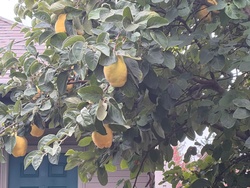
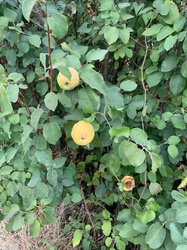
- Fragrant, hard, golden pear- or apple-shaped fruit
- Leaves gray-woolly beneath
Leaves & Stems
Leaves are alternate, simple, oval to elliptic, 2-4 in. long, with smooth (untoothed) margins, dull green above and densely gray-felted/woolly on the underside. Young twigs and buds are also woolly. The branches are crooked and often tangled, and the bark is thin, gray-brown, and flaky on older trunks. The plant is usually thornless (distinguishing it from flowering quince, Chaenomeles, which is spiny).
Flowers & Fruit
Quince flowers in late spring, later than apples and pears, with large (1.5-2 in.), solitary, cup-shaped flowers of pale pink to white with yellow stamens — borne singly at the tips of short leafy shoots (not in clusters). The fruit is the standout: a hard, golden-yellow pome, pear- or apple-shaped, 3-5 in., often knobbly and lopsided, covered with fine gray fuzz when immature that rubs off as it ripens. It is extremely aromatic and too hard and astringent to eat raw, usually cooked.
How to Tell It Apart from Look-Alikes
- Flowering quince (Chaenomeles): A spiny ornamental shrub with red/orange clustered flowers and smaller fruit; true quince is thornless with solitary pink-white flowers.
- Pear: Has glossy, finely toothed leaves and flowers in clusters; quince leaves are woolly-backed and untoothed, flowers solitary.
- Apple: Clustered pink-white flowers and round fruit; quince blooms singly and fruit is lumpier and harder.
- Medlar: Related, but has larger lance-shaped leaves and brown, open-ended fruit.
The solitary flowers, woolly leaf undersides, and fuzzy hard golden fragrant fruit together confirm true quince.
Where You'll Find It
Quince is native to the Caucasus and southwest/central Asia and is cultivated and naturalized across temperate Europe, the Mediterranean, the Middle East, and parts of North and South America. Look for it in old orchards, gardens, hedgerows, and as a rootstock for pears. It prefers full sun and deep, moist, well-drained soil but tolerates a range of conditions.
Quick ID Checklist
- Small crooked deciduous tree, 10-20 ft, thornless
- Oval leaves, untoothed, gray-woolly underneath
- Large solitary pink-white flowers in late spring
- Hard golden pear/apple-shaped fruit, fuzzy when young
- Strong fruit fragrance
- Old orchard, garden, or hedgerow setting
Frequently asked questions
How is true quince different from flowering quince?
True quince (Cydonia) is a thornless small tree with large solitary pink-white flowers and big fragrant fruit, while flowering quince (Chaenomeles) is a spiny shrub with clustered red-orange flowers and smaller fruit.
Why is the fruit fuzzy?
Immature quince fruit is covered in a fine gray down or wool that gradually rubs off as the fruit ripens to a smooth golden-yellow.
Can you eat quince raw?
Most varieties are too hard, astringent, and sour to eat raw and are cooked into jellies, pastes, and preserves, which also brings out their aroma.
How do I tell quince from a pear tree?
Quince has woolly-backed, untoothed leaves and large solitary flowers, while pear has glossy, finely toothed leaves and flowers borne in clusters.
Quince Tree identified by the community
Recent Quince Tree specimens identified with Plant Identifier.