Quince Tree
Cydonia oblonga
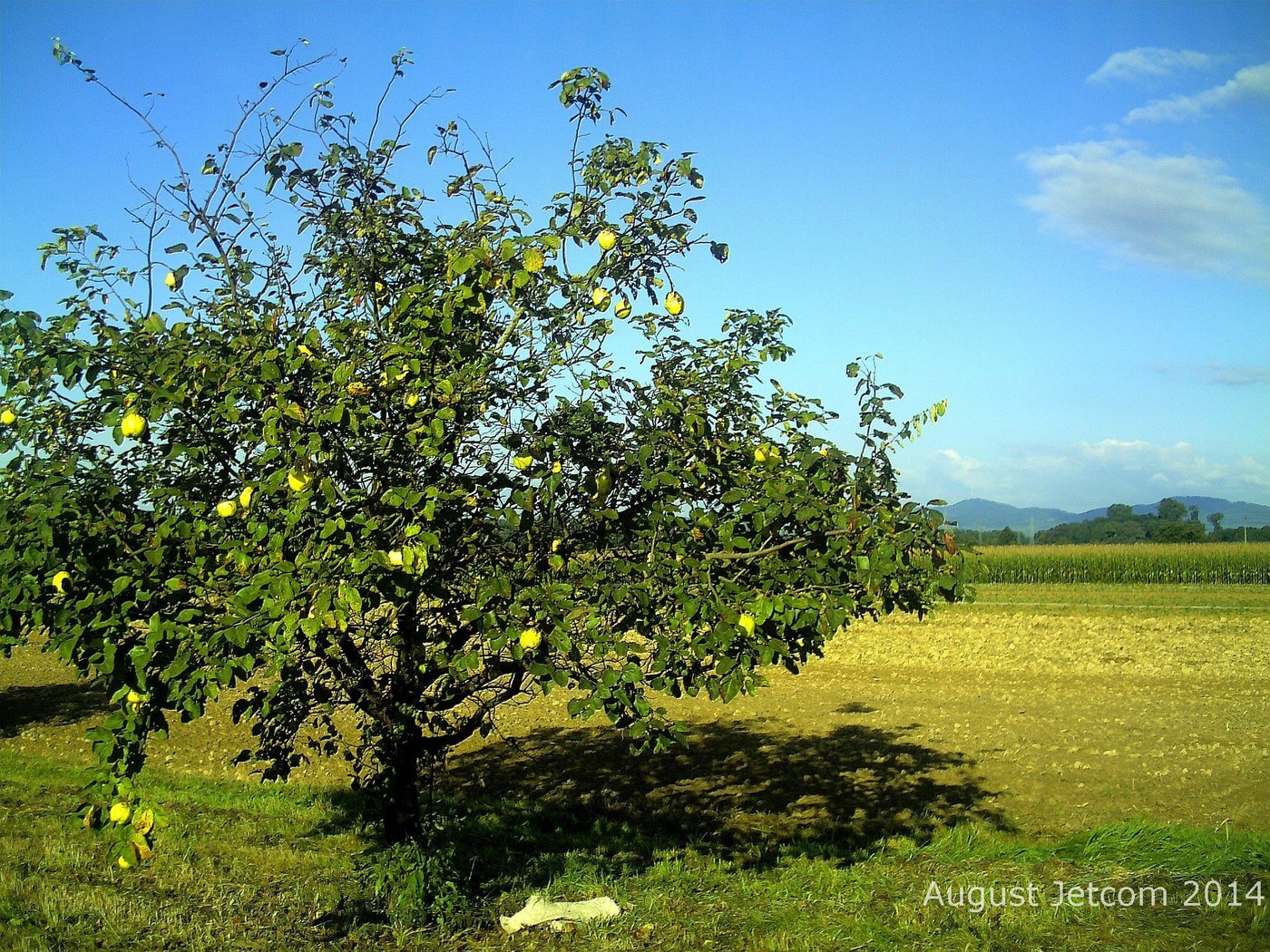
A small deciduous tree bearing fragrant, golden, pear-shaped fruit, also valued for its lovely white-to-pink spring blossom and twisted, gnarled form.
- Light
- Full sun
- Water
- Moderate; water during dry spells
- Difficulty
- Easy
Got a plant like this?
Identify any plant from a photo, free.
Overview
The quince is a small deciduous tree in the rose family and the sole species in the genus Cydonia. It is grown for its intensely aromatic, golden-yellow fruit.
The fruit is hard and often downy, and the tree develops a characteristically crooked, gnarled habit with age.
An ancient cultivated tree predating the apple in many cultures, the quince is enjoying a revival among home growers for both its fruit and its ornamental spring flowers.
How to identify it
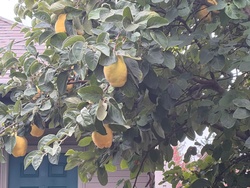
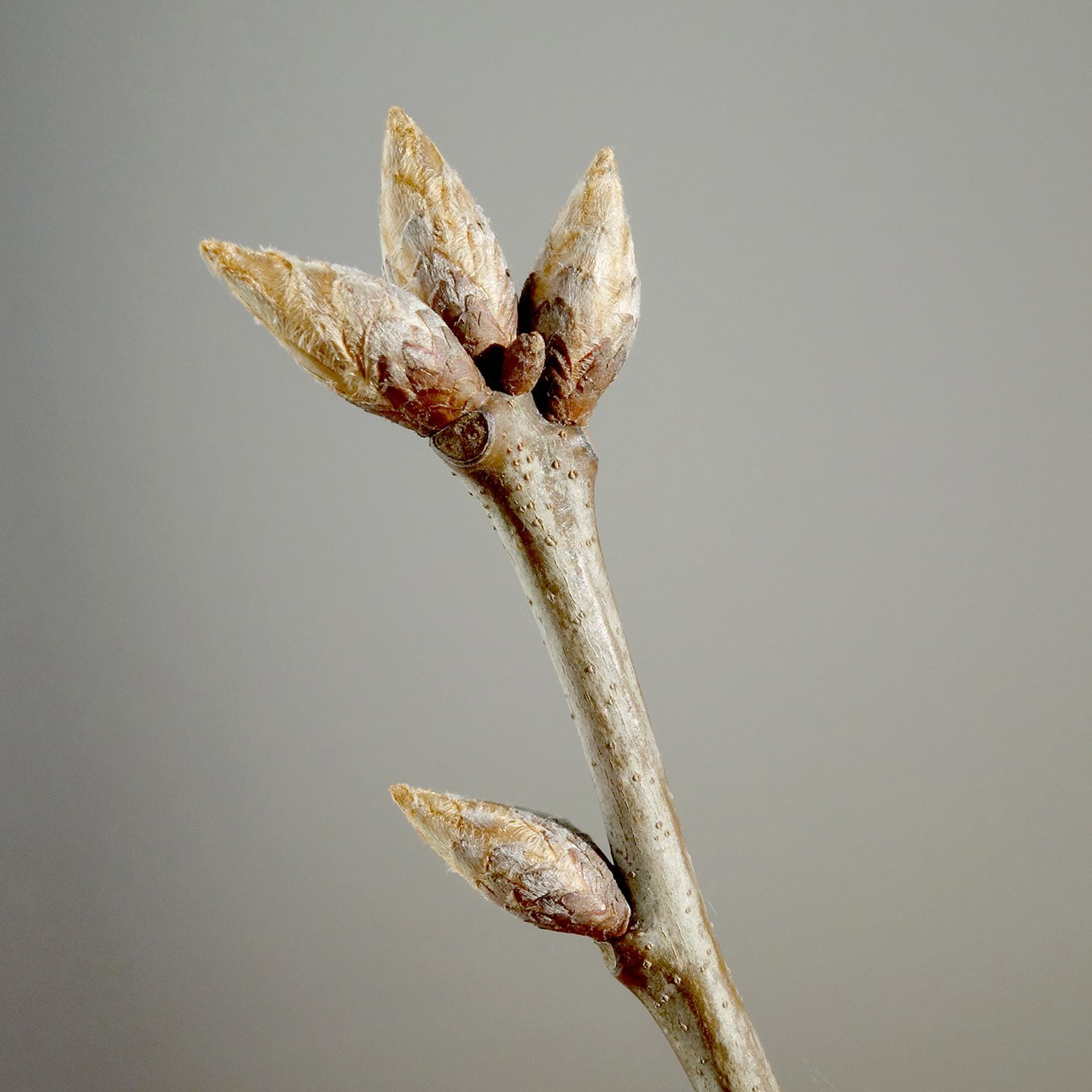
A small, crooked tree with woolly young growth and large fragrant fruit.
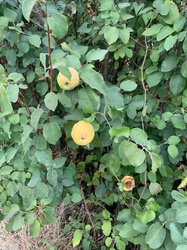
- Leaves: Oval, 6-11 cm, dark green above and woolly-white beneath
- Bark: Often twisted and gnarled with age
- Flowers: Large, solitary, white to pale pink, 5 cm across, in late spring
- Fruit: Pear- or apple-shaped, 7-12 cm, bright golden-yellow, often downy, intensely fragrant
- Size: Typically 3-6 m tall, often shrubby
Care & growing
One of the easiest tree fruits to grow, tolerant and undemanding.
- Light: Full sun for best fruiting and ripening
- Water: Moderate; water during prolonged dry spells, especially while fruit develops
- Soil: Tolerates most soils but prefers deep, moisture-retentive, fertile ground
- Temperature: Hardy in cool-temperate climates; needs winter chill and a long, warm autumn to ripen fruit
- Feeding: Light annual feeding; avoid excess nitrogen
- Propagation: Cuttings, layering or grafting; usually self-fertile, so a single tree will fruit, and it is also used as a dwarfing rootstock for pears
Habitat & origin
Cydonia oblonga is native to the Caucasus region, northern Iran and Central Asia.
One of the oldest cultivated trees, it spread through the ancient Mediterranean and is now grown across temperate Europe, the Middle East, the Americas and Asia. It thrives in regions with cold winters and long, warm summers.
Frequently asked questions
Do quince trees need a pollinator?
They are generally self-fertile, so a single tree will set fruit, though a nearby tree can improve yields.
Is quince related to the apple and pear?
Yes, all three are in the rose family, and quince is even used as a dwarfing rootstock for pear trees.
How big does a quince tree get?
It is a small tree, typically 3-6 m tall, and often grows in a shrubby, crooked, gnarled form.
When does the quince tree flower?
It produces large solitary white-to-pale-pink blossoms in late spring, followed by golden-yellow fruit later in the season.
Quince Tree guides
In-depth guides for identifying, growing, and caring for Quince Tree.
How to Care for Quince Tree
Growing guide for Cydonia oblonga, an easy, ornamental small tree with pale spring blossom and a picturesque gnarled habit.
Quince Tree Identification Guide
Identify the quince tree (Cydonia oblonga) by its crooked form, woolly leaf undersides, large solitary pink-white flowers, and fragrant golden pear-apple fruit.
Quince Tree identified by the community
Real specimens identified with Plant Identifier.