
Radicchio Identification Guide
Identify radicchio by its compact heads of deep wine-red to burgundy leaves with bright white veins and ribs, a bitter chicory grown for fall and winter.
Read the full Radicchio encyclopedia entry →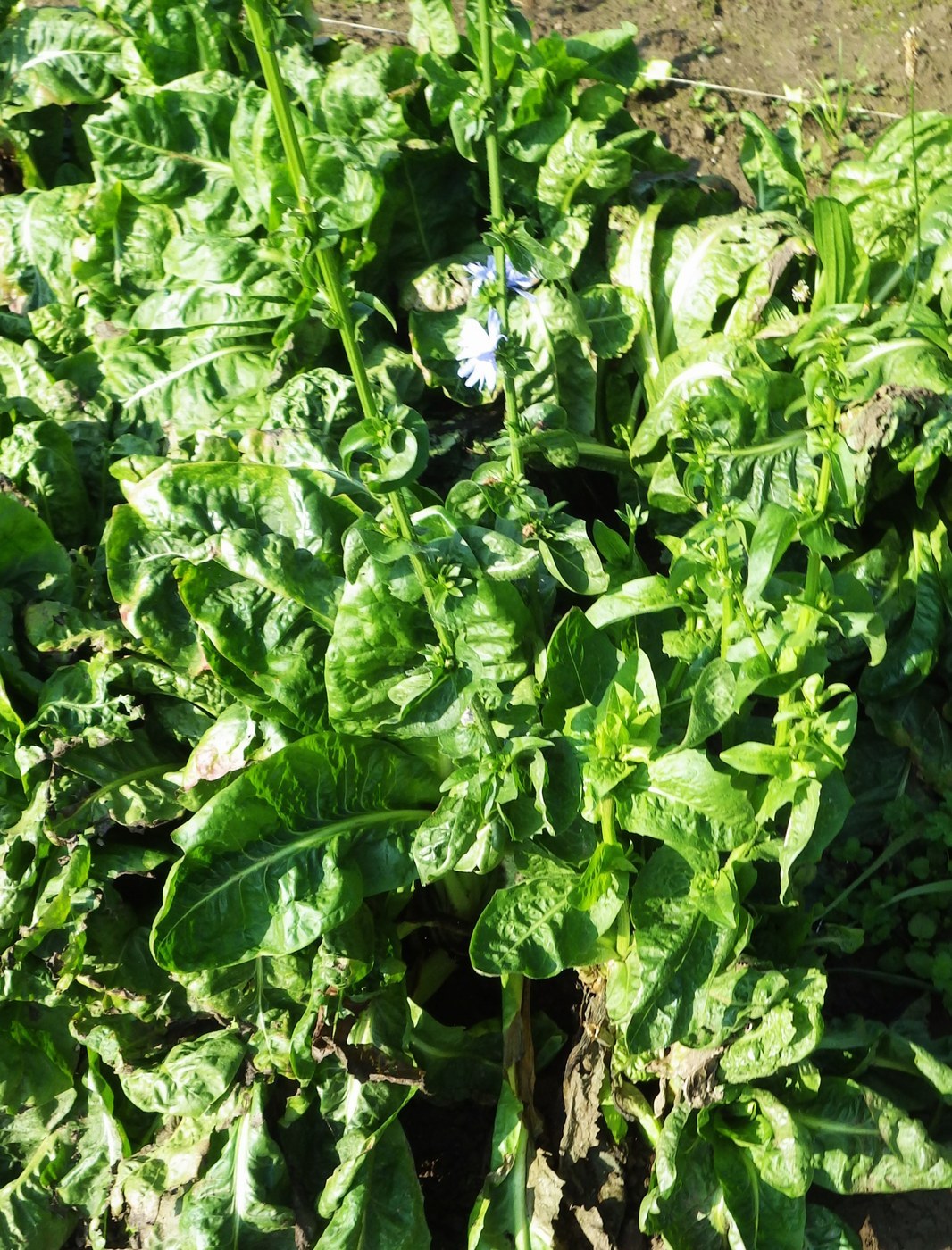
Key Identifying Features
Radicchio (Cichorium intybus var. foliosum) is a leafy chicory in the daisy family (Asteraceae), grown as a cool-season vegetable. It is unmistakable when mature: a firm, compact head of striking deep red to burgundy-maroon leaves boldly streaked with crisp, bright white midribs and veins. The leaves are crunchy and notably bitter.
- Growth habit: forms a dense, often round head (cabbage-like) or an upright head depending on type
- Color: wine-red/purple-red leaves with white ribs — the signature look
Leaves & Stems
Leaves are broad, smooth, and crisp, with rounded to oval blades and prominent, thick white central ribs that branch into a white vein network against the red blade. Color deepens to its rich burgundy as temperatures drop in fall; in warm weather or early growth the same plant can look green or green-and-red mottled before coloring up. Chicago/Chioggia types form round, cabbage-like heads; Treviso types form elongated, upright, romaine-like heads with pointed red leaves. Cutting the head reveals tightly packed, white-ribbed red leaves.
Flowers & Fruit
If left to bolt in its second year, radicchio (like wild chicory) sends up a tall, branched, wiry stalk bearing bright blue (occasionally pink or white) daisy-like ray flowers that open in the morning. Seeds are small achenes. Most plants are harvested as heads well before flowering.
How to Tell It Apart from Look-Alikes
- Red cabbage: also a red head, but cabbage leaves are smooth, waxy, and uniformly purple-red without the bright white branching ribs, and the head is much denser and heavier; cabbage is in the mustard family.
- Red-leaf lettuce: softer, frillier leaves with reddish edges fading to green, not a firm white-ribbed burgundy head; lettuce is mild, not bitter.
- Endive/escarole: close chicory relatives, but they form loose green heads with frilly or broad leaves, not the compact red head.
- Treviso radicchio vs. red romaine: Treviso's pure burgundy color with brilliant white midribs and bitter taste distinguishes it.
The firm red-burgundy head with bold white ribs + bitter crunch confirms radicchio.
Where You'll Find It
Native to the Mediterranean and especially associated with northern Italy, radicchio is grown in cool-season vegetable gardens and farms; cold weather is what triggers its red color and improves flavor. Look for it in fall and winter gardens and as compact red heads in produce markets.
Quick ID Checklist
- Compact head (round Chioggia or upright Treviso type)
- Deep red to burgundy leaves with bright white ribs and veins
- Crisp, firm texture and bitter taste
- Color intensifies in cold weather (may be greenish when young/warm)
- Blue daisy-like flowers if it bolts (chicory family)
Frequently asked questions
How do I tell radicchio from red cabbage?
Radicchio has bright white branching ribs and veins running through its burgundy leaves and a bitter taste, while red cabbage is a denser, heavier head of smooth, waxy, uniformly purple-red leaves without prominent white veining.
Why is my radicchio green instead of red?
Radicchio develops its deep red color in response to cold weather. In warm conditions or early growth it can stay green or green-and-red mottled until temperatures drop in fall.
Is radicchio related to lettuce?
No — radicchio is a chicory (Cichorium intybus) in the daisy family, the same group as endive and escarole. Its bitterness and blue daisy-like flowers reflect that, unlike mild lettuce.
What's the difference between round and long radicchio?
Round, cabbage-like heads are Chioggia-type radicchio, while the elongated, upright heads with pointed leaves are Treviso-type. Both share the red color and white ribs.