
How to Care for Rainbow Cactus
Grow the Rainbow Cactus (Echinocereus rigidissimus): a compact hedgehog cactus banded in pink and white spines with bright magenta blooms.
Read the full Rainbow Cactus encyclopedia entry →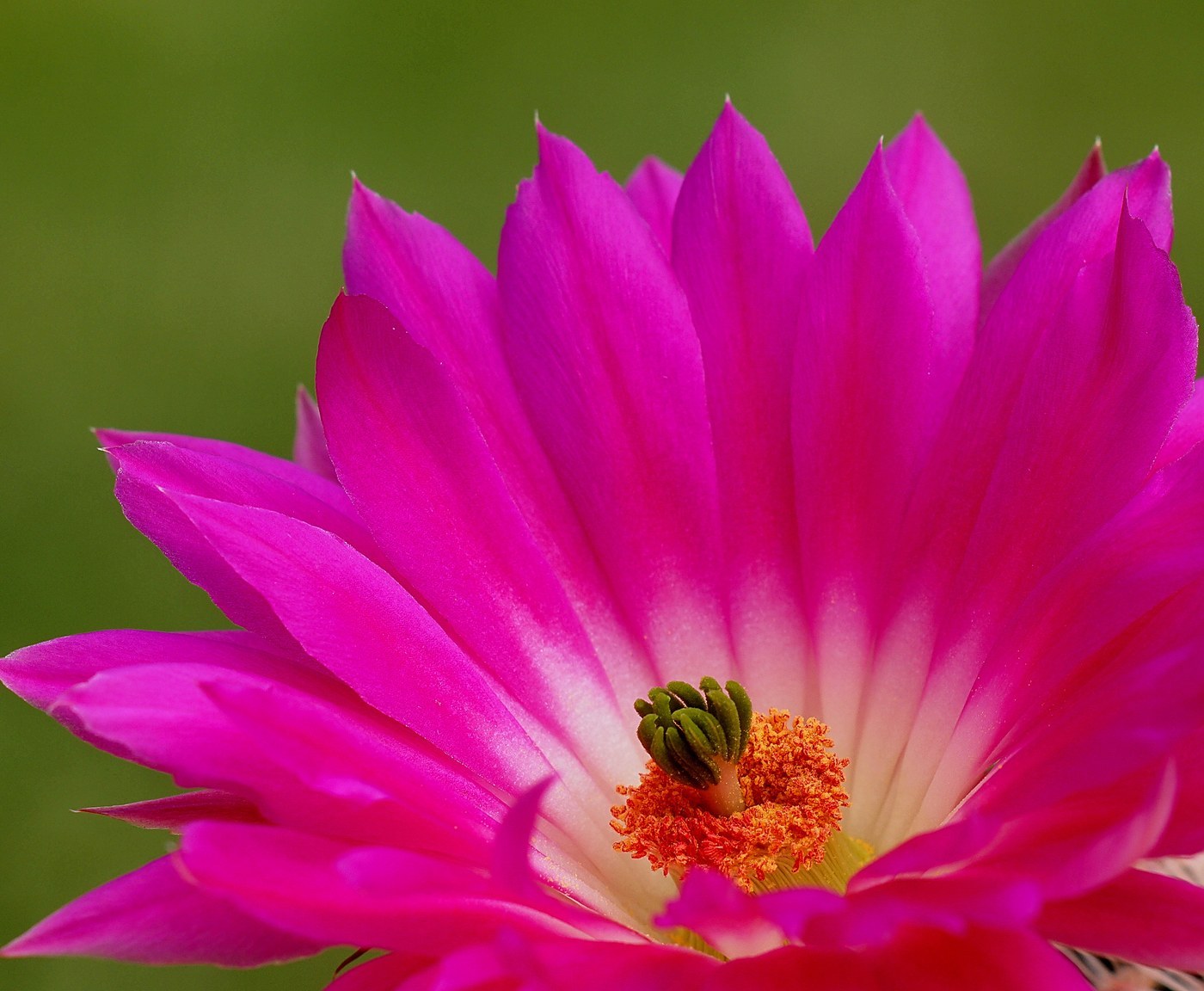
The Rainbow Cactus (Echinocereus rigidissimus) is a beautiful, compact hedgehog cactus famous for the horizontal bands of pink, white, and rust-colored spines that ring its cylindrical body. It is a slow grower that rewards bright light and careful, sparing watering with large, vivid magenta flowers in early summer.
Light
Give the Rainbow Cactus the brightest light you can, including several hours of direct sun daily. Strong light is what develops the intense spine coloration and encourages flowering. Indoors, a south-facing window is best. Acclimate gradually to full outdoor sun to avoid scorching the epidermis, and provide light afternoon shade in the most intense desert heat.
Water
Water sparingly and always let the soil dry completely between waterings. During the active growing season in spring and summer, a thorough soak every couple of weeks is usually enough. This cactus is extremely sensitive to overwatering and rot, so err on the dry side. In winter, keep it nearly dry to encourage next season's blooms.
Soil & Potting
Use a fast-draining mineral cactus mix, ideally a gritty blend of cactus soil cut heavily with pumice, perlite, or coarse sand. Excellent drainage is non-negotiable. Plant in a shallow, well-drained pot with drainage holes; unglazed terracotta helps wick away excess moisture and reduces the risk of root rot.
Humidity & Temperature
This is a warm, dry-climate cactus that dislikes humidity. It thrives in hot summers and needs a cool, dry winter rest around 45 to 55 degrees Fahrenheit to trigger blooming. It tolerates brief light frost when bone dry but should be protected from hard freezes. Good air circulation helps prevent fungal issues.
Feeding
Feed lightly during the growing season with a diluted low-nitrogen cactus fertilizer, roughly once a month from spring through midsummer. Too much fertilizer causes soft, distorted growth. Do not feed at all during the winter dormancy.
Propagation
Rainbow Cactus is usually propagated from seed, as it tends to stay solitary and offsets sparingly. Sow fresh seed on a gritty mix kept warm and lightly moist until germination. When a plant does produce offsets, they can be carefully removed, allowed to callus for several days, and potted in dry cactus mix.
Repotting / Pruning
Repot only every few years, in spring, when the plant outgrows its pot. Handle with folded newspaper or thick gloves to avoid the dense spines. Let the plant sit dry for a week after repotting before watering to let disturbed roots heal. No pruning is needed for this naturally tidy, columnar cactus.
Common Problems & Pests
Overwatering and poor drainage leading to root and stem rot are the main killers; soft, brown, or mushy tissue signals trouble. Mealybugs and spider mites can attack, especially in dry indoor air; treat promptly with a targeted insecticide or alcohol swab. Corky scarring or a bleached look on the sunniest face indicates sunburn from too-rapid exposure.
Seasonal Care Tips
In spring, resume watering gradually and enjoy the magenta blooms; this is the time to repot if needed. Through summer, provide bright light and water only when dry. In fall, taper watering as growth slows. In winter, give the plant a cool, dry rest with minimal to no water, which is essential for a strong flowering display the following year.
Frequently asked questions
Why won't my Rainbow Cactus bloom?
It usually needs a cool, dry winter rest. Withholding water and keeping temperatures around 45 to 55 degrees Fahrenheit in winter triggers the magenta spring flowers.
How often should I water a Rainbow Cactus?
Only when the soil is fully dry, roughly every two weeks in the growing season, and almost never in winter. Overwatering is the most common cause of failure.
Why are the spines losing their color?
Insufficient light dulls the pink and white banding. Move the cactus to the brightest possible spot with direct sun to restore vivid spine coloration.
What soil is best for a Rainbow Cactus?
A very gritty, fast-draining mineral mix, such as cactus soil heavily amended with pumice, perlite, or coarse sand, in a pot with drainage holes.