Rainbow Cactus
Echinocereus rigidissimus
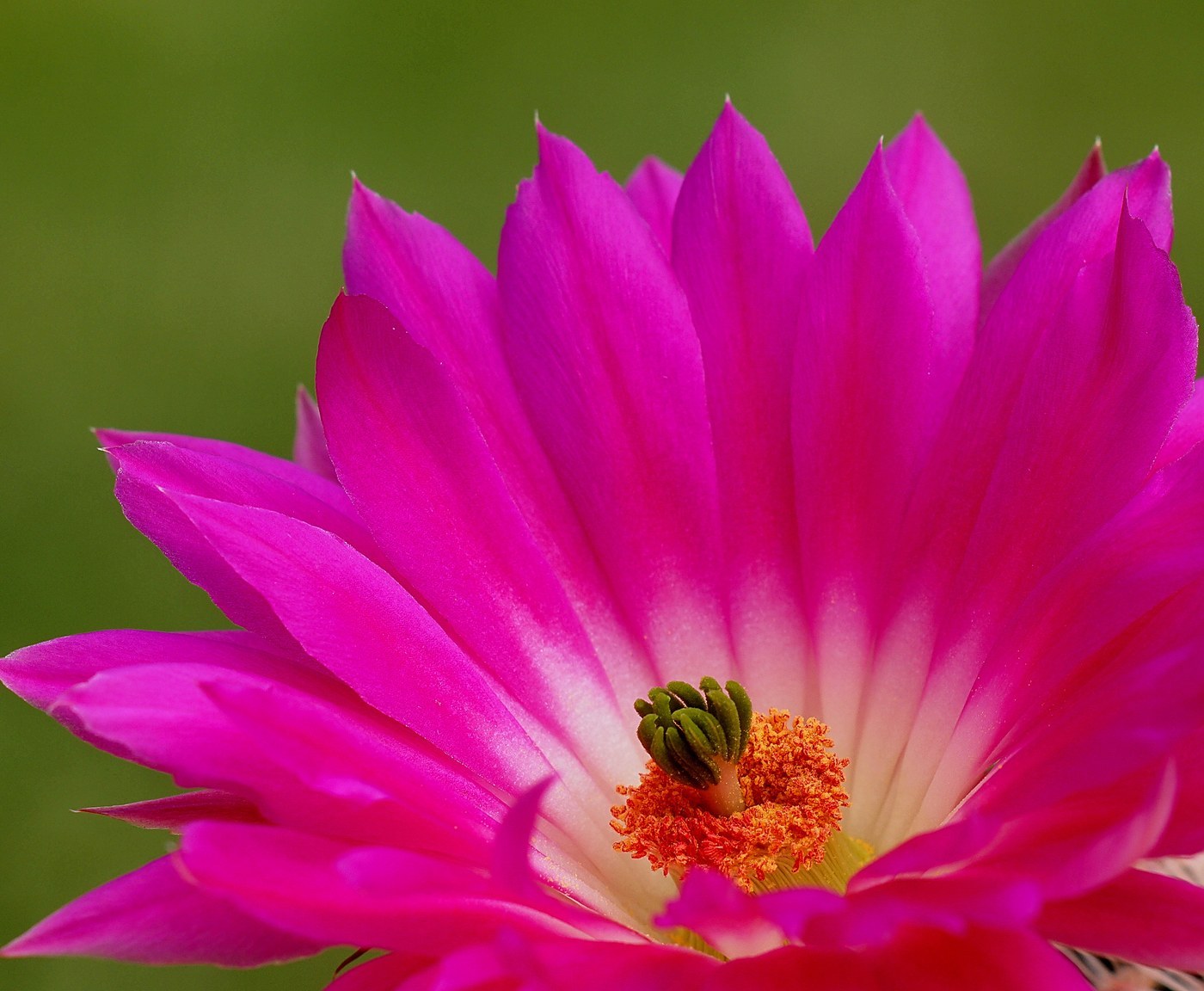
A small barrel cactus whose closely set spines form colored bands of pink, white, and red that wrap the stem like a rainbow. Crowned in spring with large, vivid magenta flowers.
- Light
- Bright light, direct sun
- Water
- Sparingly; dry between waterings
- Difficulty
- Moderate
Got a plant like this?
Identify any plant from a photo, free.
Overview
Rainbow Cactus is a compact hedgehog cactus famous for the horizontal bands of differently colored spines, pink, red, white, and tan, that ring its cylindrical body, giving a striped rainbow effect. The bands reflect seasonal changes in spine color as the plant grows.
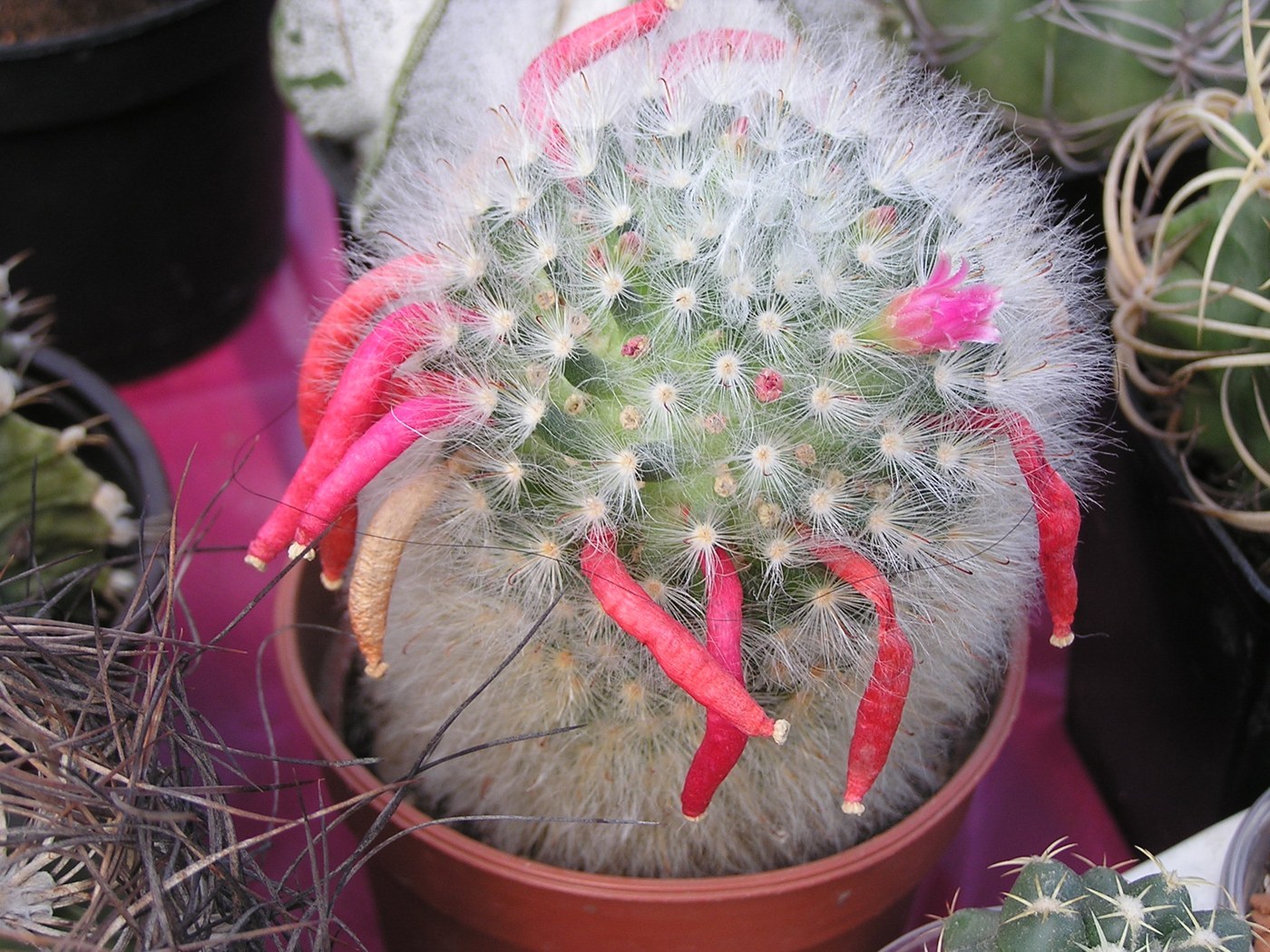
The spines are short, comb-like (pectinate), and lie flat against the ribbed stem, almost obscuring the green body. In late spring it produces large, showy flowers in brilliant magenta-pink with paler throats.
It is a prized but somewhat exacting collector's cactus, needing strong light and very careful watering.
How to identify it
- Body: Single, short, cylindrical to barrel-shaped green stem with many ribs
- Spines: Short, comb-like, pressed flat against the body, in horizontal bands of pink, red, white, and tan (the 'rainbow')
- Flowers: Large, funnel-shaped, vivid magenta-pink with a paler or whitish center, in late spring
- Size: Typically 4-12 in tall, slowly clumping with age
Care & growing
Light: Bright light with full direct sun for good spine color and flowering.
Water: Water sparingly during the growing season and let soil dry completely; keep dry and cool in winter. It is very rot-prone if overwatered.
Soil: Extremely well-draining, mineral-rich gritty cactus mix.
Temperature: Tolerates heat and a cold, dry winter rest, which aids flowering.
Feeding: Minimal; a dilute low-nitrogen cactus feed in summer.
Propagation: From seed, or from offsets on clumping plants.
Habitat & origin
Native to the southwestern United States (southern Arizona, New Mexico) and northern Mexico, where it grows on rocky limestone slopes and grassland in the Sonoran and Chihuahuan desert regions.
It grows in hot, sunny, well-drained sites and is cultivated as a collector's specimen in cactus gardens and pots worldwide.
Frequently asked questions
Why is it called rainbow cactus?
Its spines grow in horizontal bands of pink, red, white, and tan that wrap around the stem like the stripes of a rainbow.
Is it hard to grow?
It is moderately challenging because it is sensitive to overwatering; it needs full sun and a very fast-draining, gritty mix.
When does it flower?
In late spring, producing large magenta-pink flowers, especially after a cool, dry winter rest.
Why did the spine color fade?
Insufficient light dulls the banding; give it full sun to maintain vivid spine colors.
Rainbow Cactus guides
In-depth guides for identifying, growing, and caring for Rainbow Cactus.
How to Care for Rainbow Cactus
Grow the Rainbow Cactus (Echinocereus rigidissimus): a compact hedgehog cactus banded in pink and white spines with bright magenta blooms.
Rainbow Cactus Identification Guide
Identify the Rainbow Cactus (Echinocereus rigidissimus) by the colorful horizontal bands of spines that ring its short, ribbed cylindrical body.