
Rainbow Cactus Identification Guide
Identify the Rainbow Cactus (Echinocereus rigidissimus) by the colorful horizontal bands of spines that ring its short, ribbed cylindrical body.
Read the full Rainbow Cactus encyclopedia entry →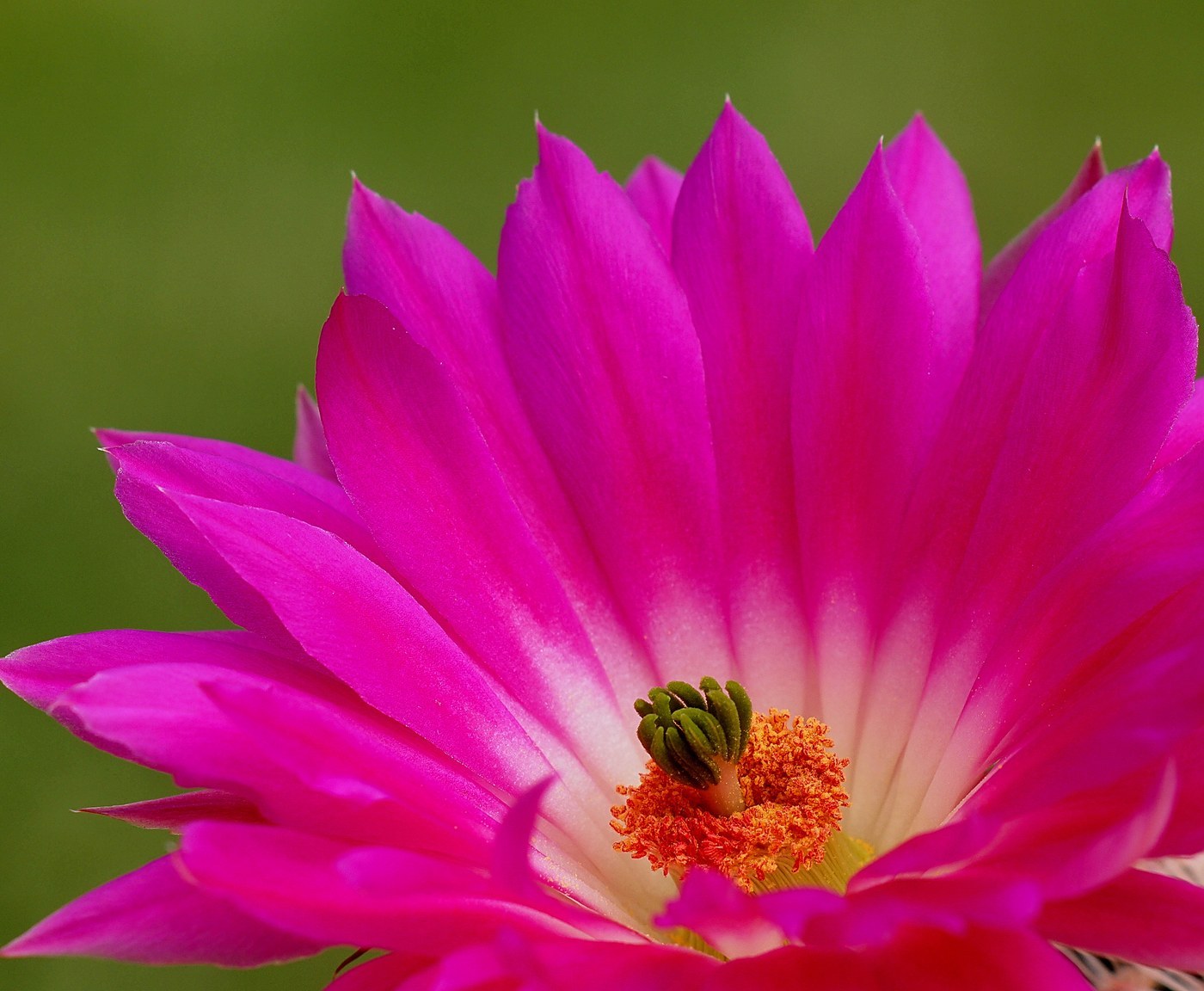
Key Identifying Features
The Rainbow Cactus (Echinocereus rigidissimus, especially var. rubispinus) is named for the bands of differently colored spines — pink, red, white, and tan — that ring its body in horizontal stripes, creating a rainbow-like effect as the plant grows through seasons of varying spine color.
- Short, cylindrical to barrel-shaped ribbed stem
- Spines lie flat (appressed) against the body, hiding the green surface
- Horizontal bands of color (pink, magenta, white, tan) up the stem
- Comb-like (pectinate) spine arrangement along the ribs
Leaves & Stems
No leaves; the stem is the plant. The body is a single or few short columns, typically 4-12 inches tall and 2-4 inches wide, with numerous low ribs. The defining feature is the spination: short radial spines that press flat against the stem in a neat comb (pectinate) pattern, almost completely covering the body. Because spine color shifts as new growth forms, the stem develops alternating horizontal bands of pink/red and white/tan, the "rainbow" effect. The variety rubispinus has especially vivid pink-to-magenta banding.
Flowers & Fruit
Rainbow Cactus produces showy, large funnel-shaped flowers near the top of the stem, usually in spring to early summer. Blooms are bright magenta-pink with a paler or white throat, often 2-3 inches across — large relative to the plant. The flowers open in daylight. Fruit is a small spiny green-to-pinkish berry. These big magenta blooms on a compact banded body are a strong confirmation.
How to Tell It Apart from Look-Alikes
- Other Echinocereus (hedgehog cacti): many have longer, projecting spines; Rainbow Cactus is distinguished by short, flat, comb-like spines pressed tight to the body and the color banding.
- Mammillaria pincushions: have tubercles, not continuous ribs; Rainbow Cactus has true ribs with pectinate spines.
- Thelocactus / Coryphantha: generally have stouter, more spreading spines and lack the tidy horizontal color bands.
Where You'll Find It
Native to the Sonoran Desert and sky-island regions of southern Arizona and northern Mexico, Rainbow Cactus grows wild on rocky slopes. It is a popular collector's container cactus worldwide and a landscape plant in warm, dry climates (USDA zones 8b-11). Look for it among rocks in habitat and in bright sunny pots in cultivation.
Quick ID Checklist
- Short cylindrical, ribbed body
- Spines flat and comb-like, hugging the stem
- Horizontal color bands (pink/red/white/tan)
- Green body mostly hidden by dense spines
- Large magenta-pink flowers with paler throat in spring
- Small spiny berry fruit
Tip: The combination of comb-like flat spines and horizontal color banding is unique; if spines stick out far from the body, look at other Echinocereus species.
Frequently asked questions
Why does the Rainbow Cactus have colored bands?
As the plant grows, the spines produced in different seasons vary in color (pink, red, white, tan). Because growth is layered upward, these colors form horizontal bands that look like a rainbow around the stem.
What do the flowers look like?
It produces large, showy, funnel-shaped flowers, usually bright magenta-pink with a paler throat, around 2-3 inches across, typically in spring to early summer.
How is it different from other hedgehog cacti?
Rainbow Cactus has short spines that lie flat against the body in a comb-like pattern and shows horizontal color banding, whereas many other Echinocereus species have longer, projecting spines.
Where does the Rainbow Cactus grow wild?
It is native to rocky slopes of the Sonoran Desert region of southern Arizona and northern Mexico.