
How to Care for Rambutan Tree
A lush tropical evergreen for warm, humid gardens or large containers. Demanding of heat, moisture, and shelter, it rewards patient growers.
Read the full Rambutan Tree encyclopedia entry →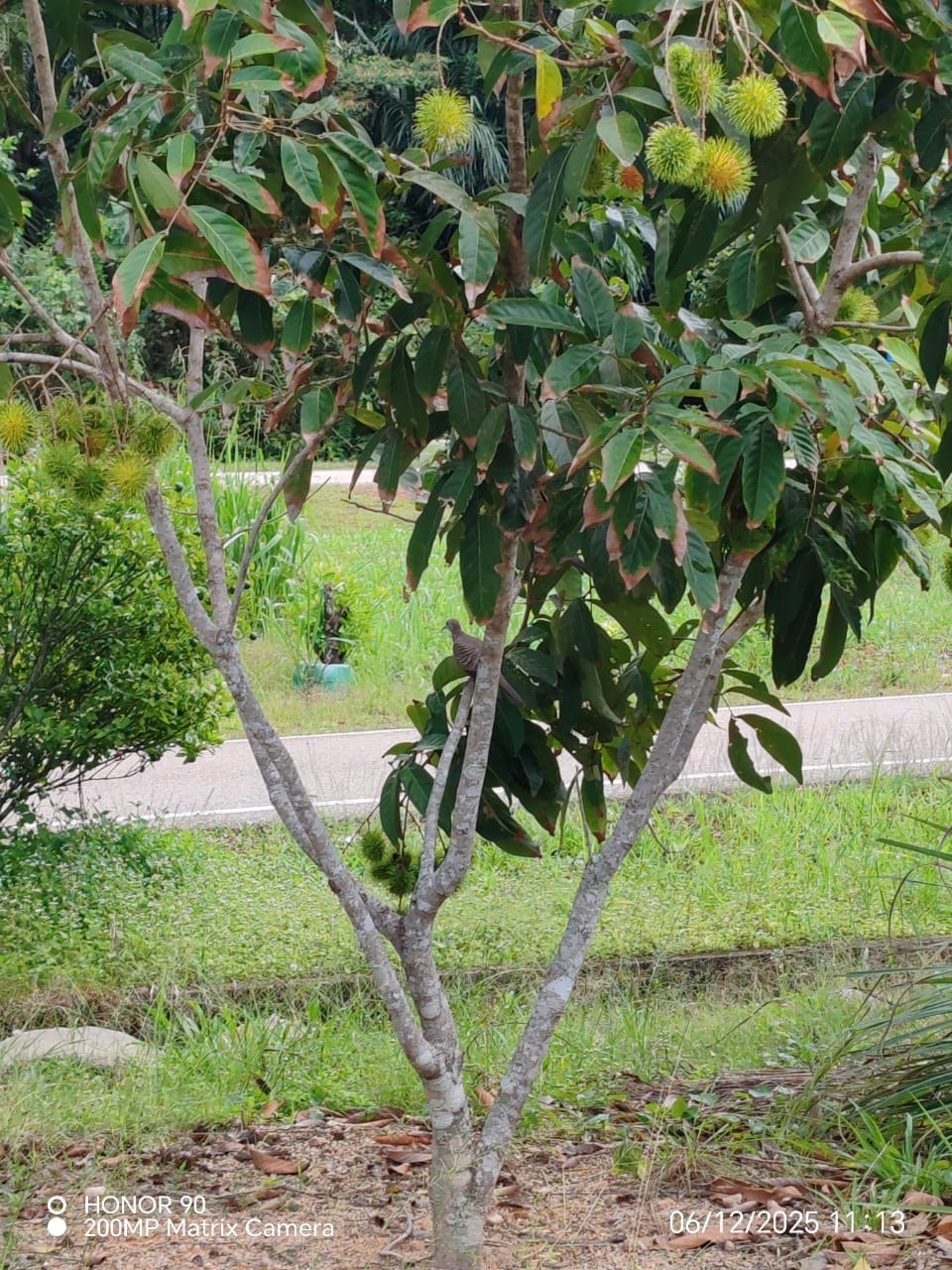
Rambutan Tree (Nephelium lappaceum) is a handsome evergreen tropical tree with glossy compound leaves and a dense, spreading canopy, grown in warm climates as an ornamental and orchard specimen. It is a demanding plant that needs consistent tropical warmth, high humidity, and steady moisture, making it a challenging but rewarding grow outside its native range.
Light
Rambutan wants full sun for strong, well-branched growth, though young seedlings benefit from light shade in their first year or two while they establish. Mature trees develop the fullest canopy and best form in bright, direct tropical sunlight. In cooler or container settings, give it the sunniest position available.
Water
Keep the soil consistently moist — rambutan is not drought-tolerant and needs regular, ample water alongside high humidity. Water deeply and frequently, never allowing the root zone to dry out, but ensure drainage so roots are not left standing in water. During any dry season, irrigation is essential to keep the tree healthy.
Soil & Potting
Plant in deep, fertile, well-drained soil rich in organic matter, ideally slightly acidic. Good drainage is critical despite the plant's love of moisture, since stagnant water causes root problems. In containers, use a rich, free-draining potting mix and a large pot, and top-dress with compost to sustain vigorous growth.
Humidity & Temperature
This is a strictly tropical tree thriving in hot, humid lowland climates (roughly USDA zones 10–12) and intolerant of cold — even brief exposure near or below freezing causes serious damage. It prefers temperatures consistently above 22°C (72°F) with high humidity. In marginal climates, grow it in a container to move into a warm greenhouse or indoors over winter, and keep humidity high with misting or a humidity tray.
Feeding
Rambutan is a heavy feeder. Apply a balanced fertilizer regularly through the warm growing season, supplemented with organic matter such as compost or well-rotted manure. Young trees benefit from frequent light feeding to build a strong framework; established trees appreciate periodic applications to sustain their dense canopy.
Propagation
Rambutan is commonly grown from fresh seed, which loses viability quickly and should be sown promptly in a warm, humid environment where it germinates in one to three weeks. Named selections and reliable forms are propagated by grafting or budding onto seedling rootstock, which also produces sturdier, better-formed trees than seedlings alone.
Repotting / Pruning
Prune young trees to establish a strong central framework and to shape an open, well-lit canopy; afterward, prune lightly to remove dead, weak, or crossing branches and to control size. Container specimens need repotting into larger pots as they grow, ideally in the warm season, refreshing the mix and root-pruning modestly if pot-bound.
Common Problems & Pests
The biggest risk is cold damage, so protect from any chill. Watch for scale insects, mealybugs, and mites, especially on stressed or indoor plants, and for fungal leaf spots and root rot in poorly drained or overly wet conditions. Leaf browning and drop usually signal cold, dry air, or inconsistent watering — stabilize warmth, humidity, and moisture to recover.
Seasonal Care Tips
Grow rambutan actively through the warm season with generous water and feeding. In climates with any cool weather, move container trees to shelter well before temperatures drop, keep them warm and humid indoors, and reduce watering slightly while growth slows. Resume full care as warmth returns in spring, and shield the tree from cold drafts year-round.
Frequently asked questions
Can I grow a Rambutan Tree outside the tropics?
Only with protection. It is extremely cold-sensitive, so in non-tropical climates grow it in a large container and overwinter it in a warm, humid greenhouse or indoors.
Why are my rambutan's leaves browning and dropping?
The usual causes are cold exposure, dry air, or inconsistent watering. Keep the tree warm, maintain high humidity, and water consistently to stabilize it.
How do I propagate rambutan?
Sow fresh seed promptly since it loses viability fast, or use grafting/budding for named forms and stronger, better-shaped trees.
How much humidity does a Rambutan Tree need?
A lot. It is a lowland tropical species that wants consistently high humidity; indoors, use misting, grouping, or a humidity tray to keep the air moist.