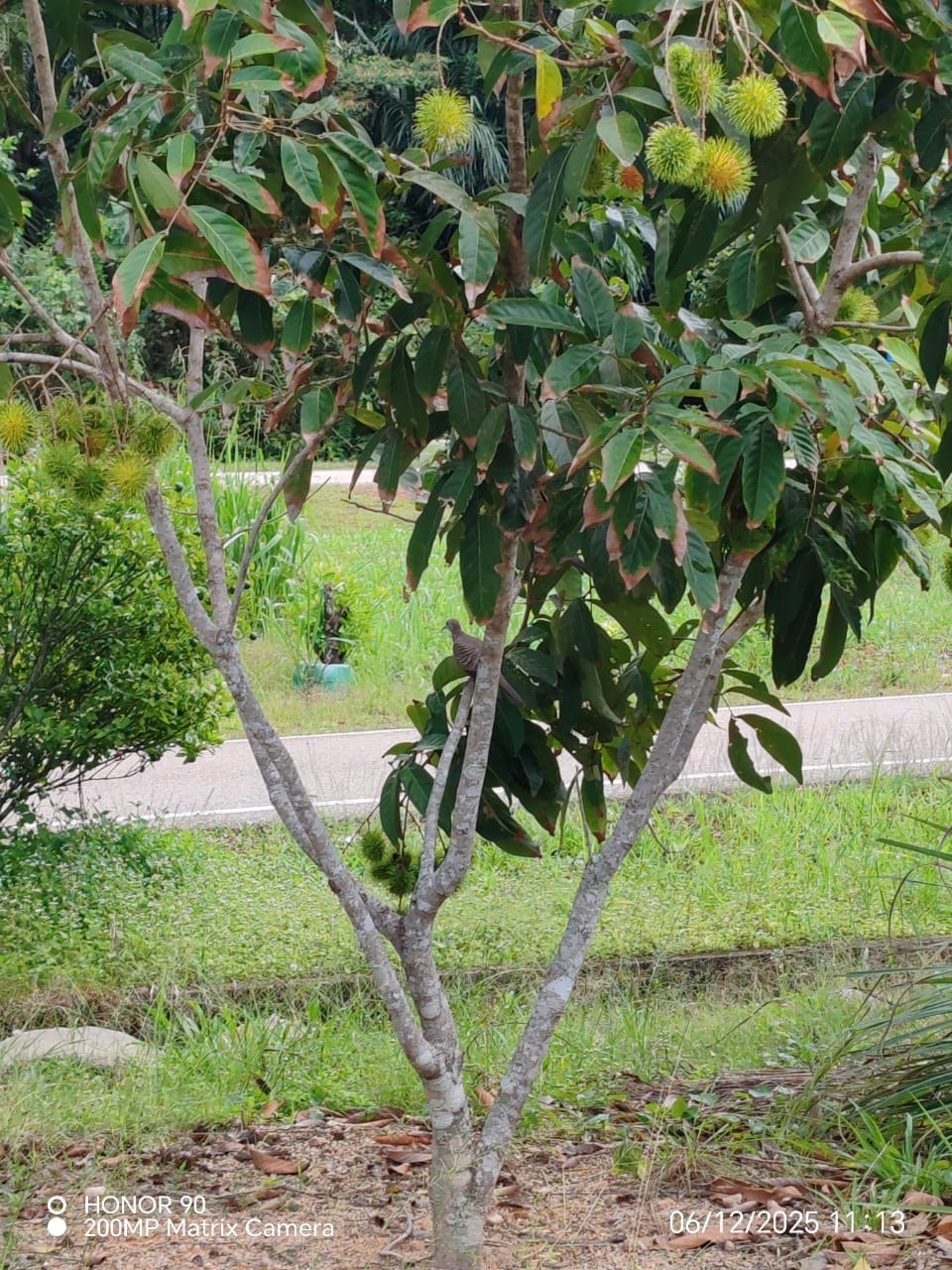
Rambutan Tree
Nephelium lappaceum
The rambutan is a tropical evergreen tree bearing showy clusters of red, soft-spined fruit. It demands hot, humid, frost-free conditions.
- Light
- Full sun
- Water
- Keep consistently moist; high humidity
- Difficulty
- Hard
Got a plant like this?
Identify any plant from a photo, free.
Overview
The rambutan (Nephelium lappaceum) is a medium to large tropical evergreen tree in the soapberry family, native to Southeast Asia. Its name comes from the Malay word for 'hairy', describing the soft, spiky red rind of the fruit.
Inside the striking hairy shell is a translucent white aril surrounding a single seed, closely related in structure to lychee and longan. The fruit grows in showy clusters and is a major commercial crop across tropical Asia.
Rambutan is strictly tropical, requiring consistent warmth, high humidity, and abundant rainfall. It does not tolerate cold or drought, making it difficult to grow outside true tropical climates.
How to identify it
- Fruit: Oval, 1.5–2 in, with a red (sometimes yellow) leathery rind covered in soft, fleshy spines (spinterns)
- Flesh: Translucent white-to-pink aril surrounding a single seed
- Leaves: Pinnately compound, glossy, dark green leaflets
- Flowers: Small, greenish, in large terminal clusters
- Size: Typically 30–60 ft tall in the tropics, with a dense, spreading crown
Care & growing
Light: Full sun for mature trees; young trees benefit from light shade.
Water: Needs consistently moist soil and high humidity; it is intolerant of drought but also dislikes waterlogging.
Soil: Deep, well-draining, fertile, slightly acidic loam rich in organic matter.
Temperature: Strictly tropical; thrives in USDA zones 10b–11 and is damaged below about 50°F. Frost is fatal.
Feeding: Regular feeding with a balanced fertilizer supports its heavy fruiting.
Propagation: Usually by grafting or budding for reliable fruiting and known sex; seed-grown trees are variable and slow, and many are non-fruiting males.
Habitat & origin
Rambutan is native to the tropical lowlands of Southeast Asia, particularly Malaysia and Indonesia. It is now widely cultivated throughout Thailand, the Philippines, Vietnam, Sri Lanka, and other tropical regions, with some production in Central America, Hawaii, and Australia.
It grows in hot, humid lowland rainforest climates and is a significant commercial and home-garden fruit tree across tropical Asia.
Frequently asked questions
Can rambutan grow outside the tropics?
Only with great difficulty. It needs constant heat, humidity, and rainfall and is killed by frost, so outside the tropics it must be grown in a warm greenhouse.
What does the rambutan fruit look like?
Each fruit is oval, about 1.5-2 in, with a red or sometimes yellow leathery rind covered in soft, fleshy spines, and a translucent white-to-pink aril around a single seed.
How big does a rambutan tree get?
In the tropics it typically reaches 30-60 ft tall with a dense, spreading crown and glossy, pinnately compound evergreen leaves.
How is rambutan propagated?
It is usually grafted or budded for reliable fruiting and known sex; seed-grown trees are slow and variable, and many turn out to be non-fruiting males.
Rambutan Tree guides
In-depth guides for identifying, growing, and caring for Rambutan Tree.
How to Care for Rambutan Tree
A lush tropical evergreen for warm, humid gardens or large containers. Demanding of heat, moisture, and shelter, it rewards patient growers.
Rambutan Tree Identification Guide
Recognizing the rambutan tree and its hairy red fruit, with tips to distinguish it from lychee and longan relatives.