
Rambutan Tree Identification Guide
Recognizing the rambutan tree and its hairy red fruit, with tips to distinguish it from lychee and longan relatives.
Read the full Rambutan Tree encyclopedia entry →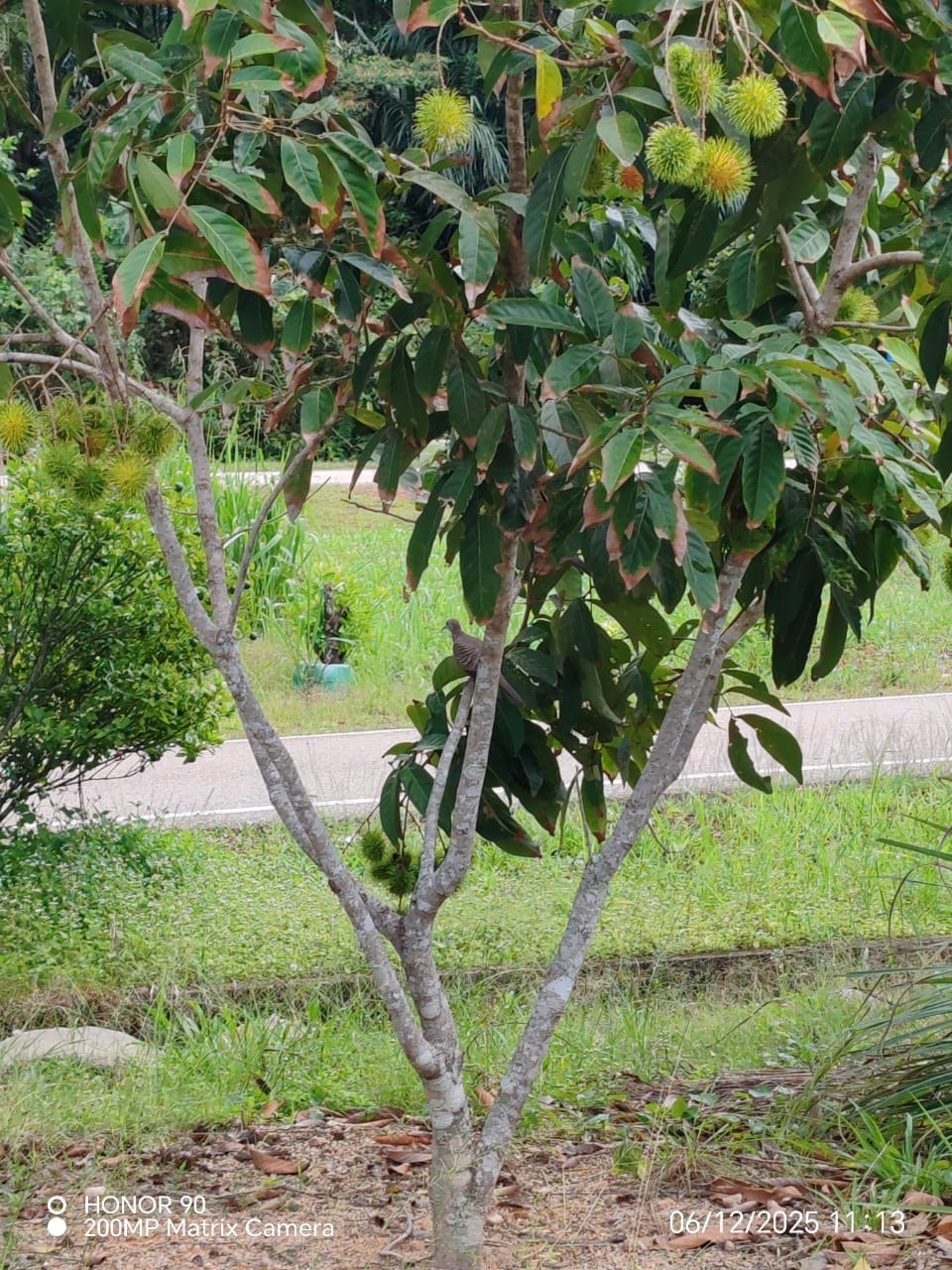
Key Identifying Features
The rambutan (Nephelium lappaceum) is a tropical evergreen tree in the soapberry family (Sapindaceae), famous for its bright red fruit covered in soft, fleshy hair-like spines. The hairy fruit (the name comes from Malay rambut, "hair") is the single most recognizable feature in all of tropical fruit identification.
- Medium evergreen tree, 10–20 m tall, dense rounded canopy
- Fruit oval, red (or yellow), covered in soft curving spinterns (hairs)
- Translucent white juicy flesh around a single seed
Leaves & Stems
Leaves are alternate, pinnately compound, 10–30 cm long, with 2–4 pairs of leathery, elliptical leaflets that are dark glossy green above and dull beneath, with smooth or slightly wavy margins. The bark is gray-brown and the crown is dense and spreading. New growth and flushes can have a reddish or bronzy tint.
Flowers & Fruit
Flowers are small, greenish-white or yellowish, petalless, and fragrant, borne in large branched terminal clusters (panicles); they are inconspicuous individually. The fruit is the giveaway: an oval drupe 3–6 cm long, ripening to crimson red (some cultivars yellow), the leathery rind densely covered in soft, pliable, hooked or curving hairs (spinterns) up to 1–2 cm long. Inside is translucent, whitish, juicy, sweet flesh (an aril) clinging to a single oval seed. Fruit hangs in clusters.
How to Tell It Apart from Look-Alikes
- Lychee (Litchi chinensis): fruit is red but covered in hard, bumpy, warty scales, not soft hairs; rind is brittle. Rambutan's spines are soft and bend.
- Longan (Dimocarpus longan): fruit is tan-brown and smooth-skinned, smaller; no hairs.
- Pulasan (Nephelium ramboutan-ake): a close relative with thick, blunt, stiff spines rather than long soft hairs.
- The soft, long, curving hairs on a red oval fruit + compound leaves make the rambutan unmistakable.
Where You'll Find It
Native to Southeast Asia (Malaysia, Indonesia, the Philippines, Thailand), now grown across the humid tropics including Central America and Sri Lanka. It is strictly tropical and frost-intolerant, needing high humidity and rainfall, and is found in home gardens, orchards, and plantations in lowland tropics.
Quick ID Checklist
- Medium evergreen tropical tree with pinnate compound leaves (2–4 leaflet pairs)
- Small greenish-white petalless flowers in panicles
- Red oval fruit covered in soft, pliable curving hairs
- Translucent juicy white flesh around one seed
- Fruit borne in clusters; strictly tropical climate
Frequently asked questions
How do I tell a rambutan from a lychee?
Rambutan fruit is covered in soft, long, flexible hairs, while lychee has a hard, bumpy, warty rind with no hairs. Both are red with white translucent flesh, but the skin texture is the giveaway.
Are the hairs on a rambutan sharp?
No. The hair-like spines (spinterns) are soft and pliable and bend easily — they're harmless to touch, unlike the stiff spines of its relative the pulasan.
What color is a ripe rambutan?
Most cultivars ripen to a bright crimson red, though some varieties turn orange or yellow. The hairs often remain greenish at their tips even on fully ripe fruit.
Can rambutan grow outside the tropics?
Not really. It is strictly tropical, requiring warm temperatures, high humidity, and ample rainfall, and is killed by frost, so it is confined to humid lowland tropical regions.