
Raspberry Identification Guide
How to identify raspberry (Rubus) by its prickly arching canes, white-backed toothed leaflets, and hollow-cored berries.
Read the full Raspberry encyclopedia entry →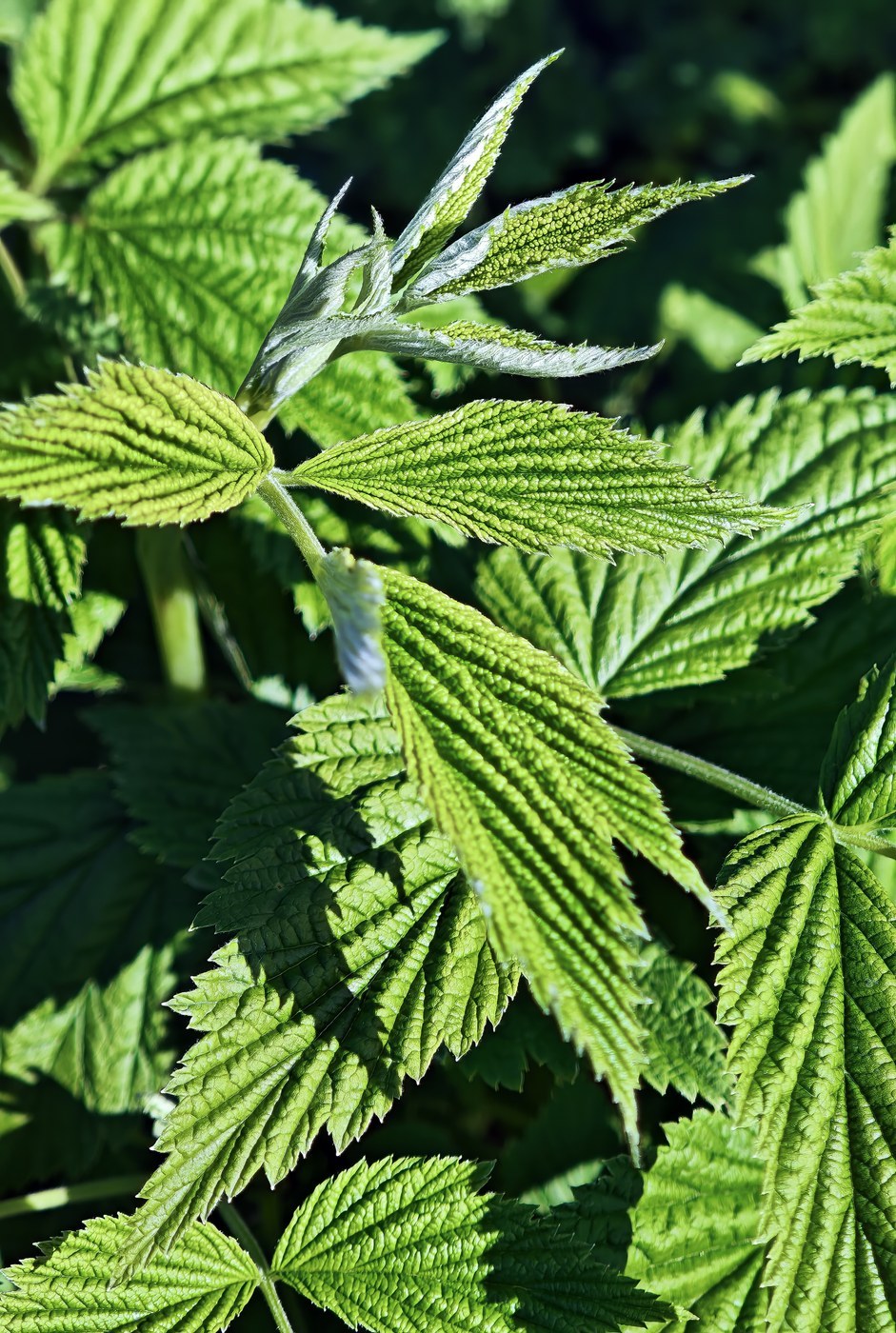
Key Identifying Features
Raspberries are bramble shrubs in the genus Rubus (e.g., R. idaeus red raspberry, R. occidentalis black raspberry). Identify them by arching biennial canes with small prickles, compound leaves with white-felted undersides, and the defining fruit: a cluster of small drupelets that pulls free as a hollow cup, leaving the core (receptacle) behind on the plant.
- Arching or upright thorny canes (brambles), often forming thickets
- Compound leaves of 3-5 toothed leaflets, silvery-white underneath
- Small white five-petaled flowers in loose clusters
- Berry that detaches hollow, like a thimble
Leaves & Stems
Canes are biennial: first-year primocanes grow vegetatively, second-year floricanes flower and fruit, then die. Stems bear scattered small prickles or fine bristles (weaker than blackberry thorns); red raspberry canes are round and bristly, while black raspberry canes are distinctly blue-white waxy (glaucous) and arch over to root at the tips. Leaves are compound (pinnate or palmate), with 3-5 (sometimes 7) leaflets, each oval, sharply toothed, deep green above and notably whitish/silvery-hairy underneath, a key field mark.
Flowers & Fruit
Flowers are small, white (occasionally pale pink), with five petals and many stamens, borne in small drooping clusters in late spring to summer. The fruit is an aggregate of many tiny drupelets, red, black, purple, or golden depending on type. The signature trait: when ripe, the berry separates cleanly from its white core and comes off hollow, leaving a cup-like thimble shape. This hollow detachment is the single best way to tell raspberries from blackberries.
How to Tell It Apart from Look-Alikes
- Blackberries: the most common confusion. Blackberry fruit keeps its white core inside and comes off solid; blackberry canes are thicker, more angular/ridged, with stouter thorns, and leaf undersides are greener. Raspberry = hollow; blackberry = solid core.
- Wineberry (Rubus phoenicolasius): has reddish glandular hairs densely covering the canes; raspberries lack that fuzzy red coating.
- Thimbleberry (Rubus parviflorus): thornless with large maple-like single leaves; raspberries have compound, white-backed leaflets and prickles.
Where You'll Find It
Grown in gardens and berry farms on trellises; wild raspberries thrive in forest edges, clearings, old fields, roadsides, and disturbed ground, often forming dense thickets. They favor sun to part shade and cool temperate climates across the Northern Hemisphere.
Quick ID Checklist
- Arching prickly canes, sometimes blue-white waxy (black raspberry)
- Compound leaves, 3-5 toothed leaflets, silvery underneath
- Small white 5-petaled flowers
- Berry comes off hollow like a thimble (core stays behind)
- Thicket-forming in sunny edges and clearings
Frequently asked questions
How do I tell a raspberry from a blackberry?
Pick a ripe berry and look at the base. A raspberry pulls free hollow, leaving its white core (receptacle) behind on the plant like a little cup. A blackberry keeps that core inside and comes off solid. The leaf undersides also help: raspberries are silvery-white beneath, blackberries greener.
Why are some raspberry canes covered in a blue-white powder?
That waxy blue-white coating is typical of black raspberry canes (Rubus occidentalis). It rubs off and is a natural glaucous bloom that helps distinguish black raspberries from red raspberries and from blackberries.
Are all raspberries red?
No. Depending on the species and cultivar, raspberries can be red, black, purple, or golden-yellow. The hollow-detaching fruit and white-backed compound leaves identify them regardless of color.
Is it normal that some canes have berries and others don't?
Yes. Raspberry canes are biennial: first-year primocanes usually just grow leaves, while second-year floricanes flower and fruit before dying back. Some types do fruit on first-year canes in late summer.