Rat Tail Cactus Identification Guide
Identify the Rat Tail Cactus (Disocactus flagelliformis) by its long, trailing rope-like stems and bright pink-magenta tubular flowers.
Read the full Rat Tail Cactus encyclopedia entry →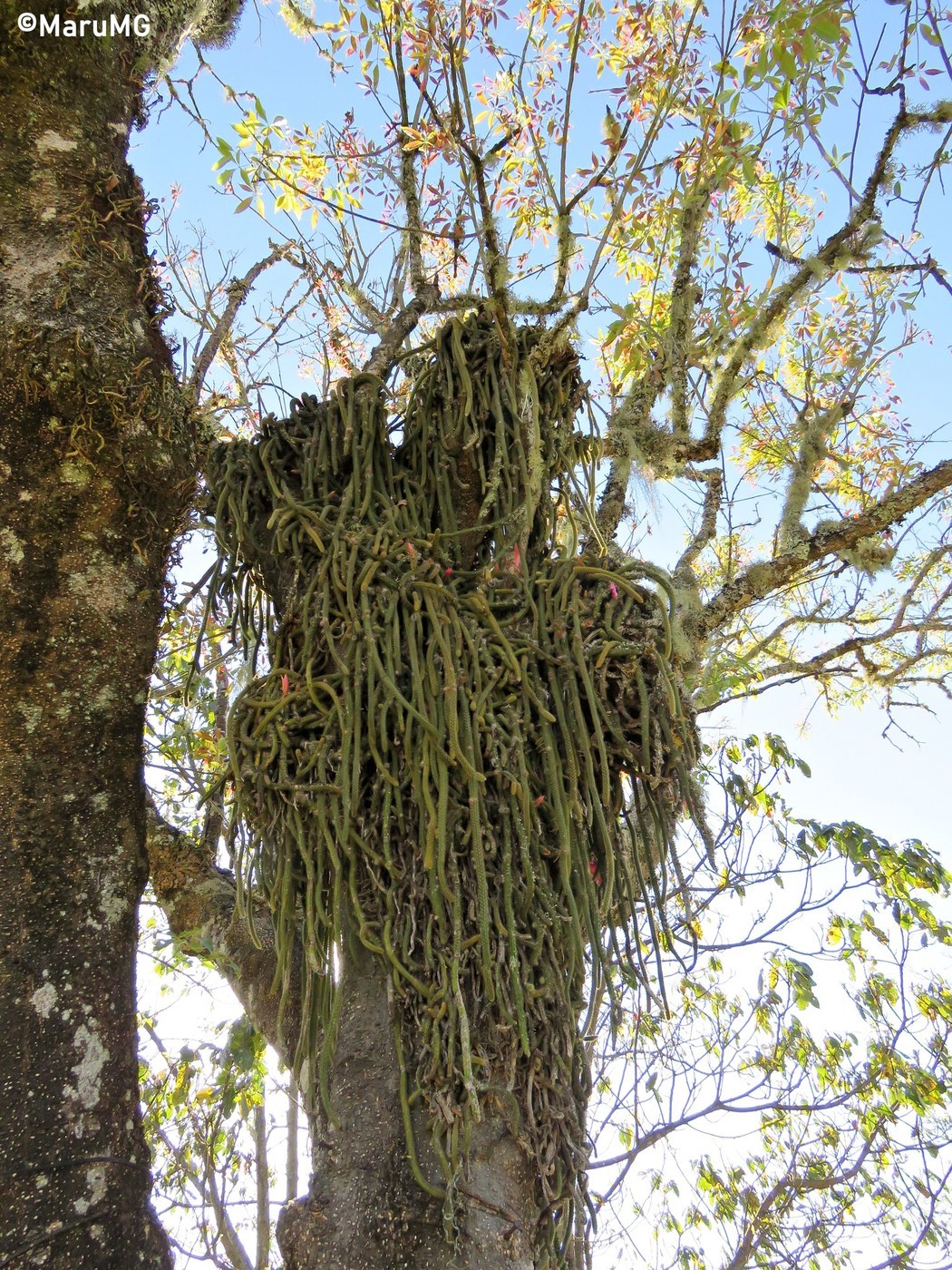
Key Identifying Features
The Rat Tail Cactus (Disocactus flagelliformis, formerly Aporocactus flagelliformis) is a trailing, hanging cactus whose long, slender stems dangle like ropes or rats' tails, making it a classic hanging-basket plant. Stems can reach 3–6 ft long while staying only about ½ inch thick.
- Long, slim, cylindrical stems that trail and hang downward
- Stems start upright then arch and cascade over the pot
- Many small ribs densely covered in short golden to reddish-brown bristly spines
- Showy pink to magenta tubular flowers in spring
Leaves & Stems
Leafless. The whip-like stems are flexible and ropy, covered all around with fine, short spines that give a fuzzy, bristled texture (not dangerously sharp but they can prick). New stems are bright green and slim; older stems thicken slightly and may turn grayer. The trailing habit and thin diameter are the giveaway.
Flowers & Fruit
In spring, mature plants produce a profusion of vivid pink-to-magenta, funnel-shaped flowers about 2–3 inches long that emerge along the sides of the hanging stems. The blooms are tubular and slightly zygomorphic (irregular), lasting several days. Small reddish fruits may follow. The bright flowers against the trailing stems are highly diagnostic.
How to Tell It Apart from Look-Alikes
- Peanut Cactus (Echinopsis chamaecereus): Short, stubby finger-stems forming low mats, with orange-red flowers — not long trailing tails.
- Rhipsalis (mistletoe cactus): Also trailing, but stems are typically spineless or near-spineless and flowers are tiny and white.
- Aporocactus hybrids / Disocactus martianus: Similar trailing form; flower color and stem thickness help distinguish, but all share the rat-tail look.
Where You'll Find It
Native to central and southern Mexico, where it grows as an epiphyte/lithophyte on rocks and trees. It is one of the most popular hanging-basket cacti worldwide, grown in bright, indirect light with well-drained soil. Hardy to about USDA zones 10–11; elsewhere a houseplant. As an epiphyte it likes a bit more moisture and humidity than desert cacti.
Quick ID Checklist
- Long, thin, trailing rope-like stems (rat tails)
- Densely covered in short golden-brown bristly spines
- Cascading hanging-basket habit
- Bright pink/magenta tubular flowers in spring
- Epiphytic origin (Mexico), likes bright indirect light
Frequently asked questions
How long do the stems get?
Mature stems commonly trail 3–6 feet long while staying about half an inch thick, which is why it's a favorite hanging-basket cactus.
Why isn't it blooming?
Rat Tail Cactus needs bright light and a cooler, drier winter rest to flower well in spring. Young plants and those in low light or constant warmth often skip blooming.
Is it an epiphyte?
Yes. In the wild it grows on rocks and trees in Mexico, so it appreciates a freely draining mix, bright indirect light, and a little more humidity than desert cacti.
Are the spines painful?
The short bristly spines are not as fierce as desert cactus spines, but they can still prick and detach into skin, so handle with care.
Rat Tail Cactus identified by the community
Recent Rat Tail Cactus specimens identified with Plant Identifier.