
How to Care for Rattlesnake Master
Rattlesnake Master is a tough, sun-loving prairie native with yucca-like foliage and globe-shaped flowers that thrives on neglect.
Read the full Rattlesnake Master encyclopedia entry →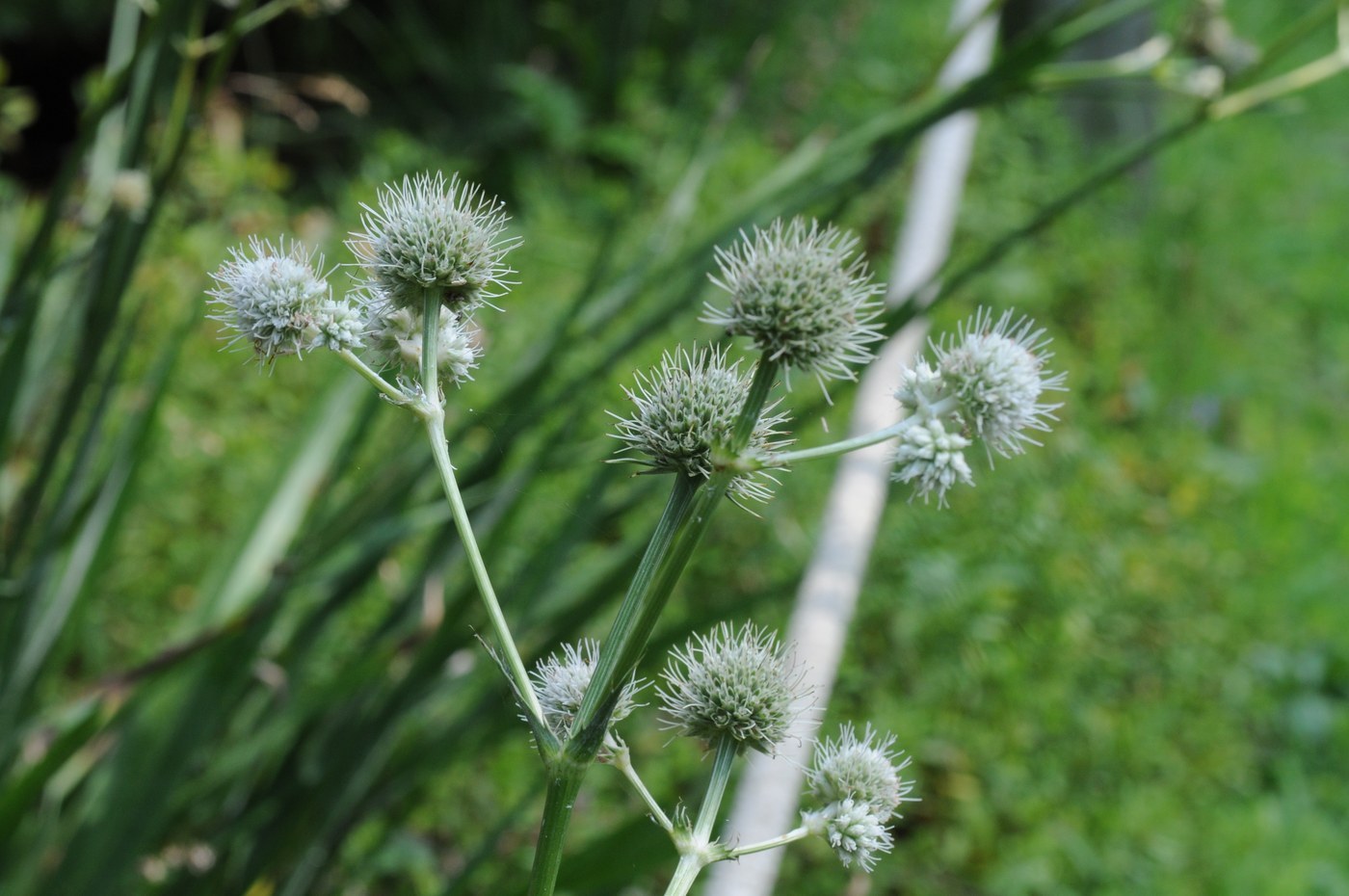
Eryngium yuccifolium, or Rattlesnake Master, is a striking North American prairie perennial with stiff, blue-green, yucca-like leaves and unusual spherical, greenish-white flower heads. It is exceptionally low-maintenance and well suited to gardeners who want architectural interest with minimal fuss.
Light
Grow Rattlesnake Master in full sun for best form and flowering. It needs at least six hours of direct sunlight daily to stay compact and upright. In too much shade the tall flower stalks stretch, weaken, and flop. As a native of open prairies and glades, it is built for bright, exposed sites.
Water
This is a drought-tolerant plant that prefers low water once established. Its deep taproot draws moisture from far below the surface, so it rarely needs supplemental irrigation in the ground. Water new plantings during their first season to help roots settle in, then reduce to occasional deep soakings only during prolonged dry spells. Avoid overwatering, which can rot the crown.
Soil & Potting
Rattlesnake Master thrives in lean, well-draining soil and tolerates poor, rocky, or sandy ground where many perennials fail. It dislikes rich, fertile, or heavy clay soils that stay wet. A neutral to slightly alkaline pH is fine. Because of its long taproot, it establishes best when planted young and directly in its permanent spot; mature plants resent disturbance.
Humidity & Temperature
As a hardy prairie native, it tolerates a wide range of temperatures and shrugs off summer heat and cold winters alike. It has no special humidity needs and performs well in typical open-garden conditions. Good air circulation around the stiff foliage helps keep it healthy.
Feeding
Rattlesnake Master needs little to no fertilizer. Overly rich conditions produce weak, floppy growth and reduce its characteristic sturdy, upright habit. If your soil is extremely poor, a light top-dressing of compost in spring is more than enough. In most gardens, skip feeding entirely.
Propagation
Propagate primarily from seed, which benefits from a period of cold, moist stratification to break dormancy. Sow in fall or cold-stratify seeds for several weeks before spring sowing. Division is difficult and often unsuccessful because of the deep taproot, so seed is the reliable route. Self-sown seedlings may appear near established plants and can be transplanted while young.
Repotting / Pruning
Little pruning is required. Leave the sculptural flower heads standing through fall and winter for structure and interest, then cut the plant back to the base in late winter or early spring before new growth emerges. If grown in a container, choose a deep pot to accommodate the taproot and disturb the roots as little as possible when repotting.
Common Problems & Pests
Rattlesnake Master is remarkably trouble-free and rarely bothered by pests or disease. The most common issue is flopping, caused by too much shade, overly rich soil, or excess water; correcting the growing conditions solves it. Root or crown rot can occur in soggy, poorly drained ground, so ensure sharp drainage.
Seasonal Care Tips
In spring, cut back last year's stems and allow new rosettes to emerge. Through summer, enjoy the unusual flower globes with almost no intervention. In fall, leave the seed heads standing for winter structure and to allow self-seeding. In late winter, tidy up the previous year's growth before the new cycle begins.
Frequently asked questions
Why is my Rattlesnake Master flopping over?
Flopping is usually a sign of too little sun, soil that is too rich, or too much water. Grow it in full sun in lean, well-drained soil and hold back on fertilizer and irrigation to keep stems sturdy.
Can I divide Rattlesnake Master to make more plants?
Division is difficult because of the deep taproot and often fails. Propagate from seed instead, ideally after cold, moist stratification, or transplant young self-sown seedlings.
How often should I water it?
Water regularly only during the first growing season to establish it. After that it is drought tolerant and needs supplemental water only during extended dry spells.
Does Rattlesnake Master need fertilizer?
No. It thrives in poor soil and rich feeding actually weakens it, causing floppy growth. Skip fertilizer, or add just a light layer of compost in spring if your soil is very lean.