Rattlesnake Master
Eryngium yuccifolium
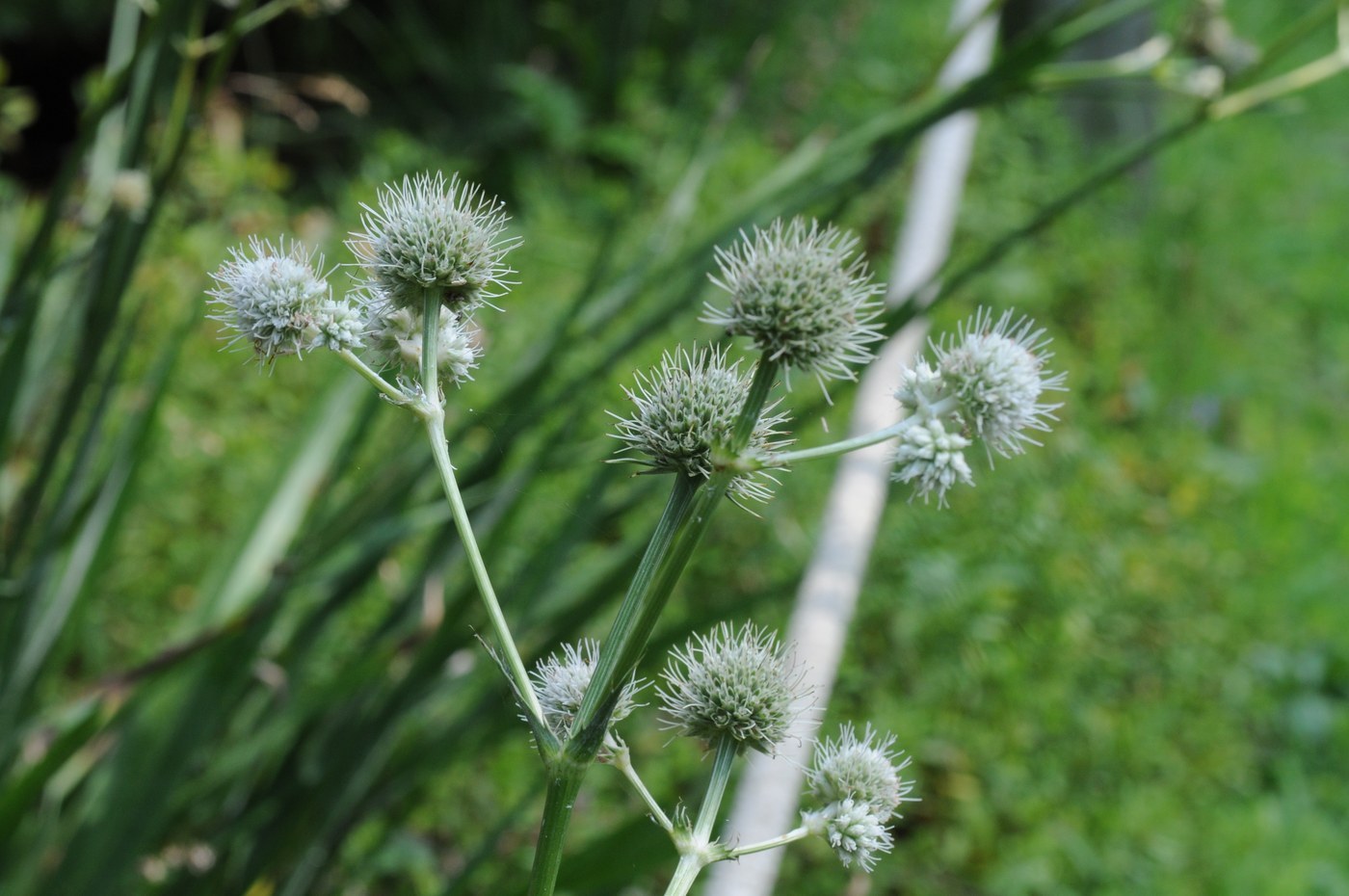
A distinctive prairie perennial with yucca-like, spiny-edged leaves and greenish-white, golf-ball-shaped flower heads. Despite its name, it is a member of the carrot family.
- Light
- Full sun
- Water
- Low; drought tolerant
- Difficulty
- Easy
Got a plant like this?
Identify any plant from a photo, free.
Overview
Rattlesnake master is an unusual and architectural native of North American prairies. Its stiff, sword-shaped, blue-green leaves resemble those of a yucca, an unexpected look for a member of the carrot family.
In summer it produces branching stems topped with spherical, thistle-like heads of tiny greenish-white flowers. These globe-shaped clusters are a magnet for a wide range of pollinators and give the plant strong vertical and textural interest in the garden.
How to identify it
- Flowers: Greenish-white, tiny, packed into spiny, golf-ball-sized globular heads on branching stems
- Leaves: Long, narrow, stiff, yucca-like, blue-green, with soft bristly teeth along the edges
- Stems: Stout, smooth, 3-5 feet tall
- Habit: Upright clump-forming perennial with a basal rosette
- Bloom time: Mid to late summer
Care & growing
Rattlesnake master is tough and low maintenance once established.
- Light: Full sun
- Water: Low; deeply taprooted and very drought tolerant
- Soil: Well-drained soil of average to poor fertility; tolerates clay and sandy soils
- Temperature: Hardy in USDA zones 3-8
- Feeding: None needed
- Propagation: Best from seed (cold stratify); the deep taproot makes division difficult, so transplant young
Habitat & origin
Eryngium yuccifolium is native to the tallgrass prairies and open woodlands of central and eastern North America, from the Great Plains east to the Atlantic states.
It grows in prairies, savannas, glades, and moist to dry open meadows. It is an important component of high-quality remnant prairie communities and is widely used in prairie restorations.
Frequently asked questions
Is it really in the carrot family?
Yes, despite its yucca-like leaves and thistle-like flower heads, it belongs to the carrot family (Apiaceae), as shown by the tiny flowers clustered into compound heads.
Is rattlesnake master good for pollinators?
Very much so; its globular flower heads attract an exceptional variety of bees, wasps, beetles, flies, and butterflies.
How do I propagate it?
Grow it from seed with cold stratification. Its deep taproot makes division and transplanting of mature plants difficult, so move it while young.
Rattlesnake Master guides
In-depth guides for identifying, growing, and caring for Rattlesnake Master.
How to Care for Rattlesnake Master
Rattlesnake Master is a tough, sun-loving prairie native with yucca-like foliage and globe-shaped flowers that thrives on neglect.
Rattlesnake Master Identification Guide
Identify Rattlesnake Master by its yucca-like spiny-edged leaves and globe-shaped greenish-white flower heads, an unusual prairie member of the carrot family.