How to Care for Rattlesnake Plant
Grow Rattlesnake Plant (Goeppertia insignis), a striking calathea with wavy, spotted foliage that demands humidity, warmth, and pure water.
Read the full Rattlesnake Plant encyclopedia entry →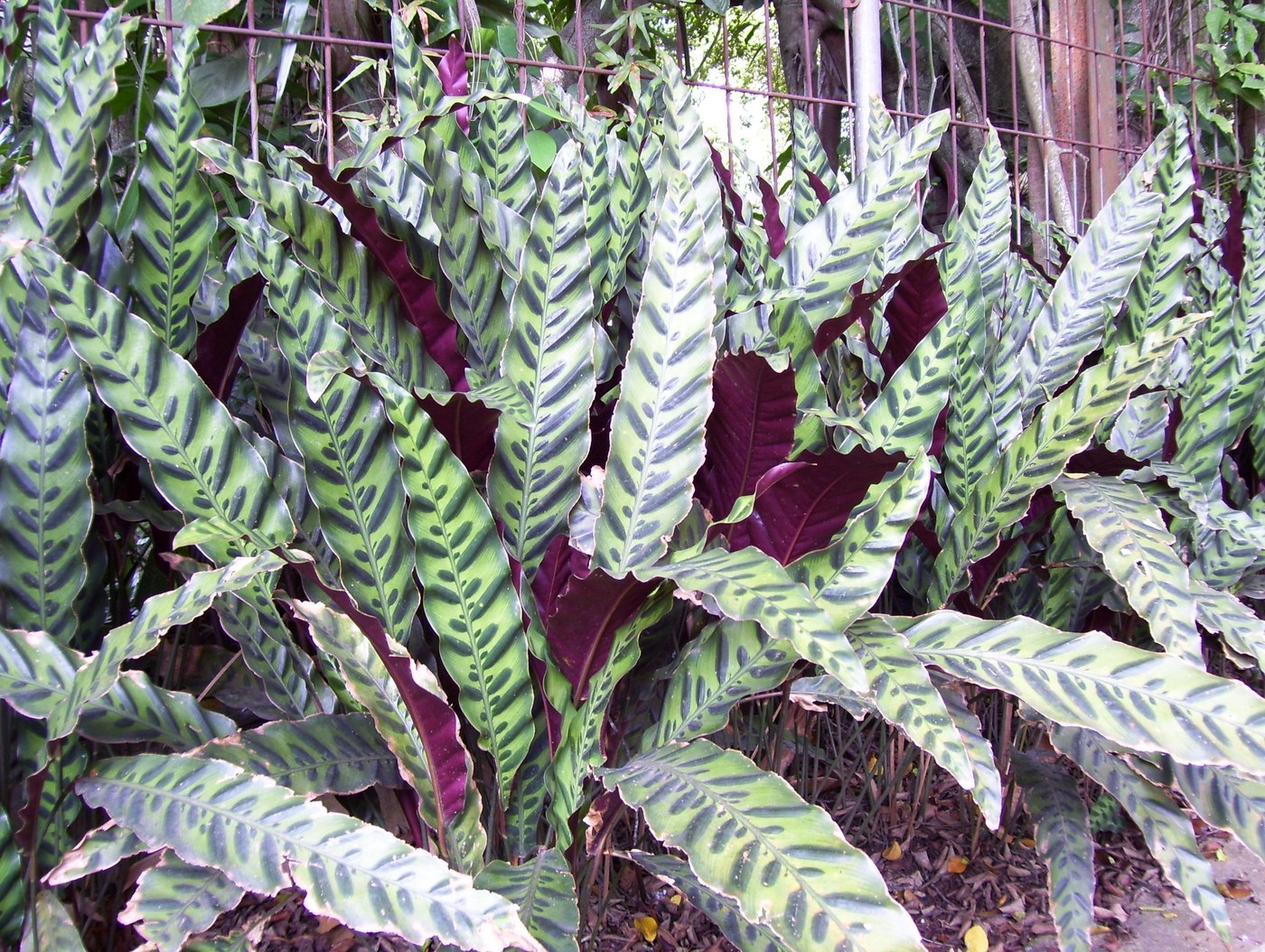
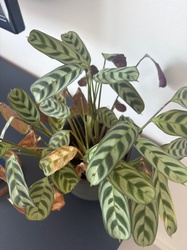
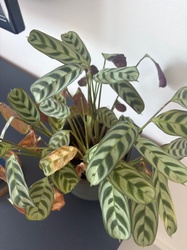
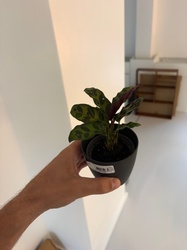
Rattlesnake Plant (Goeppertia insignis, formerly Calathea lancifolia) is a dramatic tropical foliage plant with long, wavy-edged leaves patterned in alternating dark and light green spots and rich maroon undersides. It is a rewarding but demanding houseplant that folds its leaves upward at night in the characteristic prayer-plant motion, and it insists on humidity, warmth, and clean water.
Light
Give it medium to bright indirect light. This plant evolved on tropical forest floors, so it dislikes direct sun, which fades the patterning and scorches the leaf edges. A spot near an east or north window, or a few feet back from a brighter window, is ideal. Too little light dulls the markings and slows growth.
Water
Keep the soil evenly moist at all times, never fully dry and never soggy. This is a thirsty, moisture-loving plant that browns quickly if it dries out. Crucially, Rattlesnake Plant is very sensitive to minerals and chemicals in tap water; use filtered, distilled, or rainwater, or let tap water sit out, to prevent the crispy brown leaf edges these plants are notorious for. Water when the top layer just begins to dry and let excess drain away.
Soil & Potting
Use a rich but airy, well-draining mix that retains moisture, such as a peat- or coir-based potting soil amended with perlite and a bit of orchid bark. The blend should hold consistent moisture without becoming waterlogged. Always pot in a container with drainage holes.
Humidity & Temperature
High humidity is non-negotiable; this is the single biggest reason people find it difficult. Aim for 60 percent humidity or more, using a humidifier, pebble tray, or a naturally humid room. Keep temperatures warm and steady, roughly 65 to 80 degrees Fahrenheit, and shield it from cold drafts, sudden temperature swings, and heating or cooling vents, all of which trigger browning and curling.
Feeding
Feed lightly during the growing season, spring through summer, with a balanced liquid fertilizer diluted to half strength about once a month. These plants are sensitive to fertilizer salts, so under-feeding is safer than over-feeding. Flush the soil occasionally to clear salt buildup, and stop feeding in autumn and winter.
Propagation
Propagate by division at repotting time. Gently separate the plant into clumps, each with healthy roots and several leaves, and pot them individually. Keep the divisions warm, humid, and evenly moist while they recover, as they can sulk briefly after being disturbed. Stem cuttings are not a viable method for this plant.
Repotting / Pruning
Repot every one to two years in spring, moving up only one pot size, as it prefers to be slightly snug. Refresh the mix at the same time. Trim away browned leaf edges or fully damaged leaves at the base to keep the plant looking its best; you can follow the natural leaf contour when snipping crispy margins.
Common Problems & Pests
Crispy brown leaf edges are the classic complaint, caused by low humidity, inconsistent watering, or minerals in tap water; switch to filtered water and raise humidity. Curling or dull leaves signal underwatering or dry air. Yellowing can mean overwatering. Spider mites are the most common pest, thriving in dry air, so keep humidity high and inspect the undersides of leaves regularly; fungus gnats appear if the soil stays too wet.
Seasonal Care Tips
In spring, repot or divide if needed and resume light monthly feeding as new growth begins. Through summer, maintain high humidity, keep the soil consistently moist with clean water, and watch for spider mites in warm weather. In autumn, reduce feeding as growth slows. In winter, keep it warm and away from cold windows and heating vents, run a humidifier to counter dry indoor air, and ease back slightly on watering while keeping the mix from drying out.
Frequently asked questions
Why does my Rattlesnake Plant have crispy brown edges?
The usual causes are low humidity, inconsistent watering, or minerals in tap water. Use filtered, distilled, or rainwater, keep the soil evenly moist, and raise humidity to 60 percent or higher.
What humidity does a Rattlesnake Plant need?
High humidity, ideally 60 percent or more. A humidifier is the most reliable solution; pebble trays and grouping plants help but often aren't enough on their own in dry indoor air.
Why do the leaves move up and down?
It's a natural prayer-plant behavior called nyctinasty. The leaves fold upward in the evening and open again by day, driven by changes in light. It's a sign of a healthy, responsive plant.
How do I propagate a Rattlesnake Plant?
By division at repotting time. Separate the plant into clumps, each with roots and several leaves, pot them up individually, and keep them warm, humid, and evenly moist while they recover.
Rattlesnake Plant identified by the community
Recent Rattlesnake Plant specimens identified with Plant Identifier.