Rattlesnake Plant
Goeppertia insignis
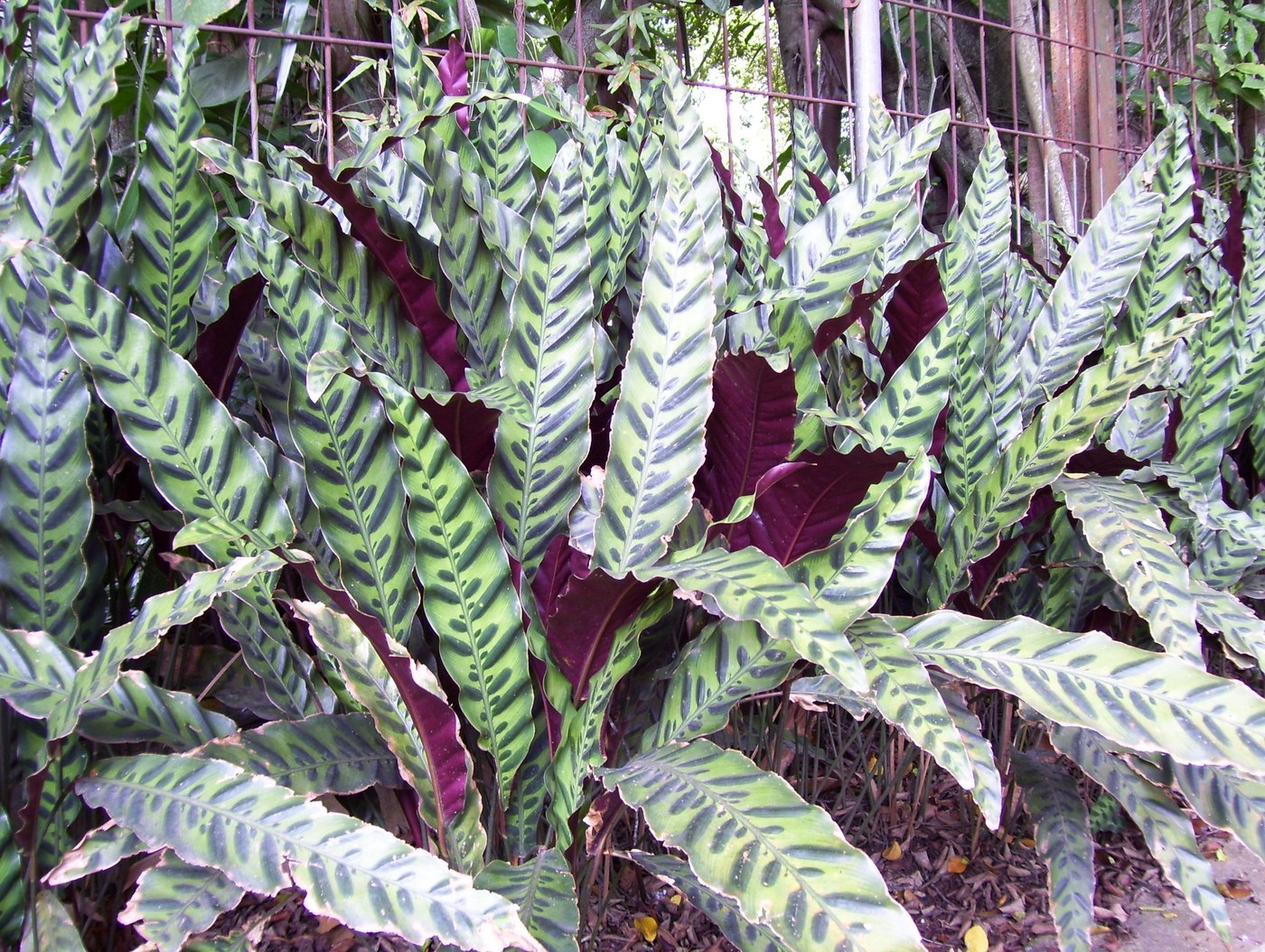
A prayer plant with long, wavy leaves patterned in alternating dark and light green spots and rich purple undersides. Its dramatic markings come with calathea-typical demands for humidity and clean water.
- Light
- Medium to bright indirect light
- Water
- Keep evenly moist
- Difficulty
- Hard
Got a plant like this?
Identify any plant from a photo, free.
Overview
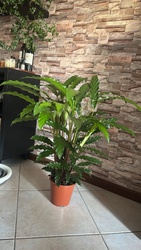
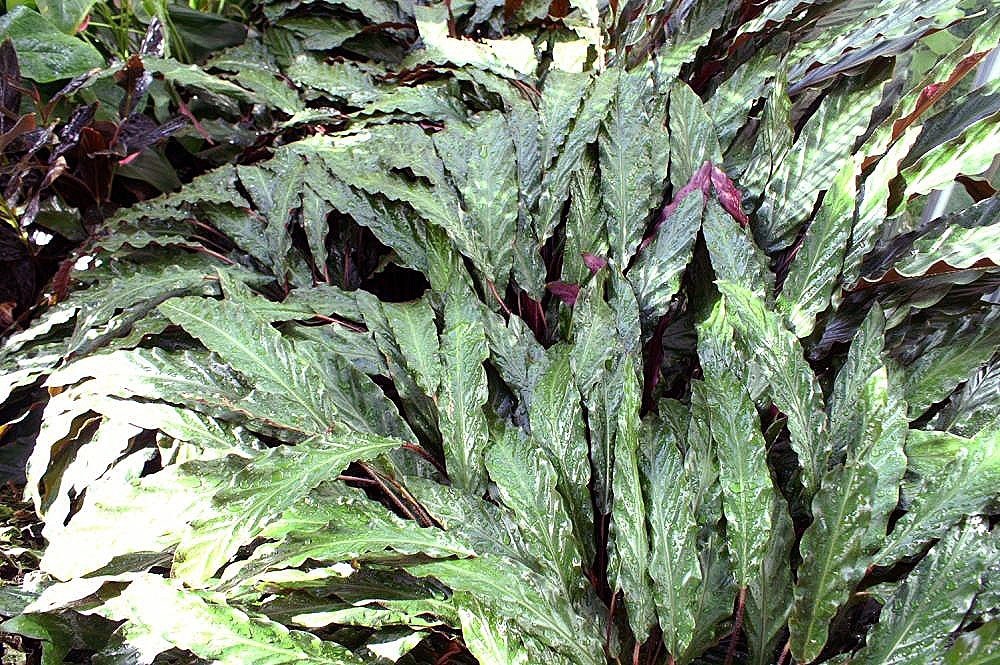
The Rattlesnake Plant is a prayer-plant-family species often sold as Calathea lancifolia, now placed in Goeppertia. Its name comes from the bold, snakeskin-like markings running along its narrow, wavy leaves.
Each leaf bears alternating large and small dark-green blotches on a paler green field, with a deep purple-red reverse. Like its calathea cousins it raises and lowers its foliage on a daily rhythm and rewards attentive humidity and watering with a vivid, patterned display.
How to identify it
Recognize it by long, wavy-edged leaves with alternating dark green spots and purple undersides.
- Leaves: narrow, lance-shaped, with strongly rippled margins
- Pattern: alternating large and small dark green markings on light green, resembling snakeskin
- Underside: deep purple-maroon
- Movement: folds upright at night, opens by day
- Size: upright clumps reaching about 1.5-2.5 ft tall
Care & growing
Light: Medium to bright indirect light; direct sun bleaches the markings.
Water: Keep evenly moist but never waterlogged. Use filtered, distilled, or rainwater to avoid brown, crispy edges from fluoride and salts.
Soil: Rich, moisture-retentive, well-draining mix.
Temperature: Warm, 65-80F, away from drafts.
Humidity: High humidity is important; group plants or run a humidifier.
Feeding: Diluted fertilizer monthly during growth.
Propagation: By dividing the rhizome at repotting.
Habitat & origin
Native to the rainforests of eastern Brazil, where it grows in warm, humid, shaded understory conditions.
It is cultivated worldwide as a striking ornamental houseplant and thrives in humid rooms such as bathrooms or near humidifiers.
Frequently asked questions
Why are the leaf tips and edges browning?
Typically low humidity or sensitivity to tap-water minerals. Increase humidity and water with filtered, distilled, or rainwater.
Why are the leaves curling or fading?
Curling points to dryness or low humidity, while fading patterns often mean too much direct light. Keep it humid, evenly moist, and in indirect light.
Why are the leaves standing up at night?
This is normal nyctinasty. The plant raises its leaves in the evening and lowers them during the day, a healthy prayer-plant behavior.
Rattlesnake Plant guides
In-depth guides for identifying, growing, and caring for Rattlesnake Plant.
How to Care for Rattlesnake Plant
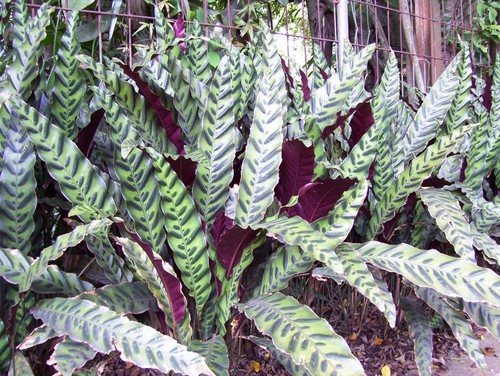
Grow Rattlesnake Plant (Goeppertia insignis), a striking calathea with wavy, spotted foliage that demands humidity, warmth, and pure water.
Rattlesnake Plant Identification Guide
Identify the Rattlesnake Plant (Goeppertia / Calathea lancifolia) by its long wavy leaves with dark spots and purple undersides. Includes look-alike comparisons.
Rattlesnake Plant identified by the community
Real specimens identified with Plant Identifier.