
Red Clover Identification Guide
How to identify red clover (Trifolium pratense) by its three-part leaves with pale chevrons, rounded pink-purple flower heads, and hairy stems.
Read the full Red Clover encyclopedia entry →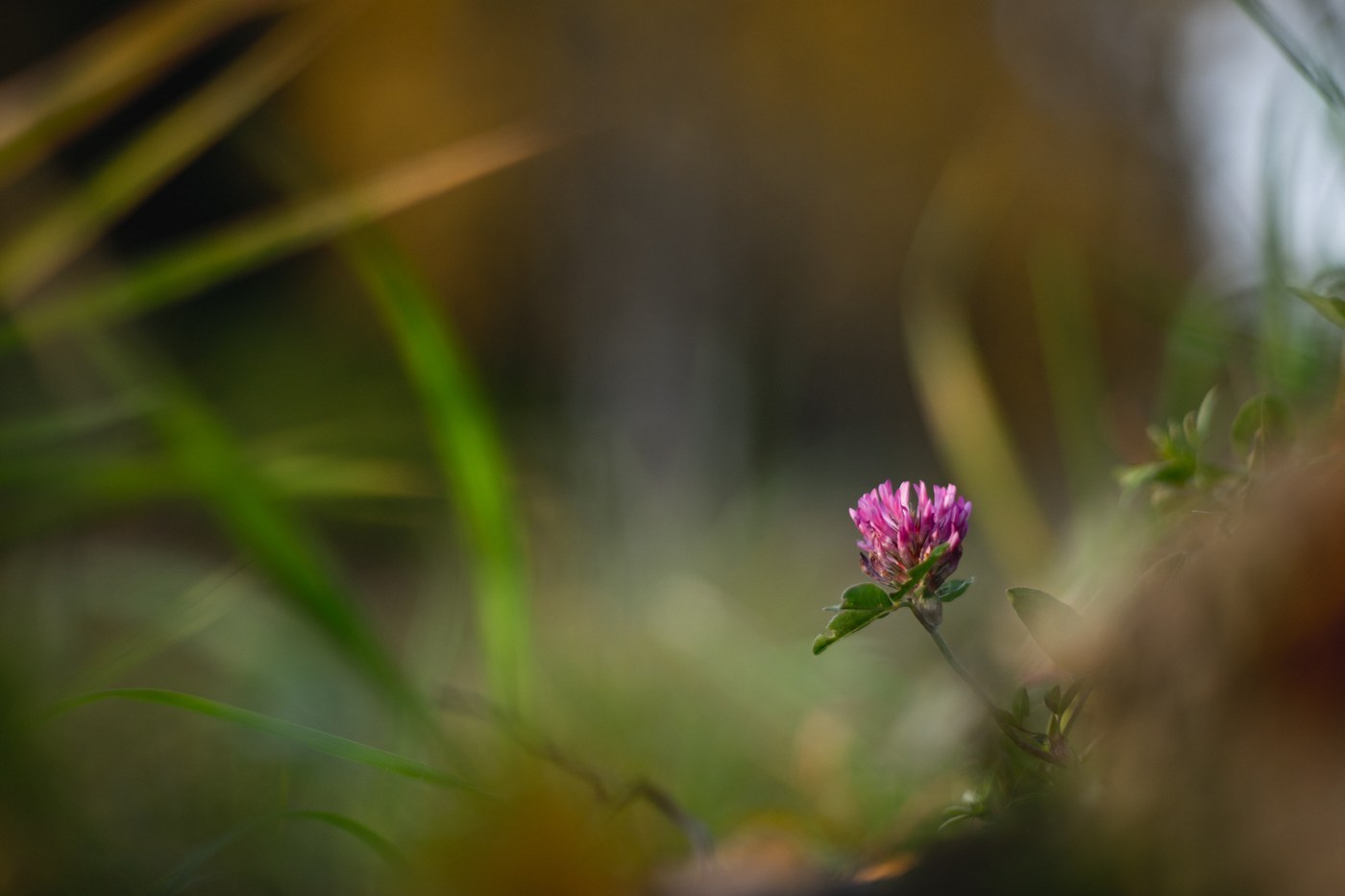
Key Identifying Features
Red clover (Trifolium pratense) is a familiar pasture and roadside legume. The fastest field marks are:
- Three-part (trifoliate) leaves, each leaflet usually carrying a pale, whitish chevron or "V" mark near its center.
- A rounded to egg-shaped flower head of densely packed pinkish-purple to magenta florets.
- Hairy stems and leaves, giving the plant a soft, slightly fuzzy feel.
Despite the name, the flowers are more rose-pink to purple than true red.
Leaves & Stems
Leaves are alternate and divided into three oval leaflets, each 1.5-4 cm long with finely toothed or smooth edges and a soft coating of hairs. The pale crescent marking on the upper leaflet surface is a reliable confirming detail. At the base of each leaf stalk are conspicuous stipules that are membranous, veined with red or green, and taper to a bristle-like point. Stems are erect to ascending, branched, and noticeably hairy, growing 20-60 cm tall.
Flowers & Fruit
The flower head is a globular cluster (1.5-3 cm across) of many small pea-type florets, sitting directly above a pair of leaves with little or no stalk. Color runs from pink to deep magenta. After bloom, each floret produces a tiny one- or two-seeded pod hidden within the dried head. Flowering peaks from late spring through summer and often repeats into autumn.
How to Tell It Apart from Look-Alikes
- White clover (T. repens) has white (sometimes pink-tinged) heads on long bare stalks, hairless creeping stems, and leaflets with a fainter pale band; it is lower and mat-forming.
- Crimson clover (T. incarnatum) has elongated, cone-shaped deep-crimson heads, not rounded pink ones.
- Alsike clover (T. hybridum) has pink-and-white heads on long stalks and lacks the leaf chevron.
- Medick and trefoil (Medicago, Lotus) have yellow flowers.
The combination of stalkless rounded pink heads sitting on a leaf pair, plus hairy foliage with pale chevrons, confirms red clover.
Where You'll Find It
Red clover is native to Europe and widely naturalized across North America and beyond. Look for it in meadows, pastures, hayfields, roadsides, lawns, and disturbed ground, often where soils are reasonably fertile. As a nitrogen-fixing legume it is also planted as a cover and forage crop.
Quick ID Checklist
- Three oval leaflets, each with a pale V-shaped chevron
- Hairy stems and leaves
- Rounded pink-to-magenta flower head
- Flower head sits on a pair of leaves, nearly stalkless
- Membranous, bristle-tipped stipules at leaf bases
Frequently asked questions
Is red clover actually red?
No, the flower heads are rose-pink to magenta-purple rather than true red. The name distinguishes it from white clover; if you find genuinely deep-crimson cone-shaped heads, you are likely looking at crimson clover instead.
How do I tell red clover from white clover?
Red clover has rounded pink heads sitting almost directly on a pair of leaves, with hairy upright stems. White clover has white heads on long bare stalks, hairless creeping stems that root at the nodes, and a lower mat-forming habit.
What is the pale mark on the leaves?
Each of the three leaflets usually carries a whitish, V-shaped chevron near its center. This pale watermark, combined with the soft hairs, is a quick confirming feature for red clover.
Where does red clover grow?
It thrives in meadows, pastures, hayfields, lawns, roadsides, and disturbed fertile ground. It is also deliberately sown as a forage crop and nitrogen-fixing cover crop.