
How to Care for Red Hot Poker
Red hot poker is a bold, easy perennial with fiery flower spikes that loves full sun and sharp drainage.
Read the full Red Hot Poker encyclopedia entry →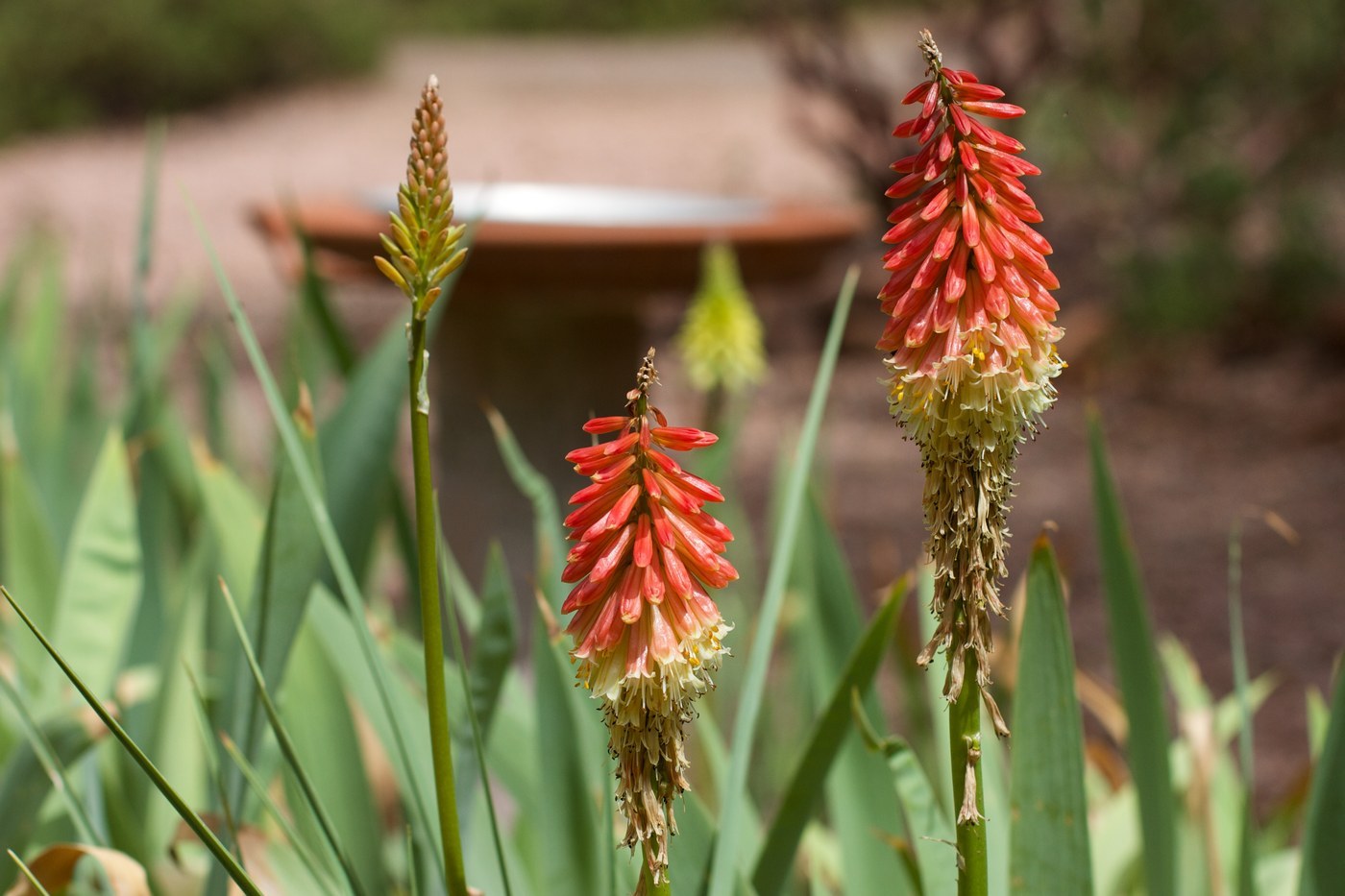
Red hot poker (Kniphofia uvaria), also called torch lily, is a striking clump-forming perennial with grassy foliage and dramatic spikes of tubular flowers that shade from fiery red-orange to yellow. It is an easy, drought-tolerant plant that thrives in full sun and well-drained soil.
Light
Give red hot poker full sun for the strongest stems and most abundant flowering. It tolerates very light shade, but too little sun leads to fewer, weaker flower spikes and floppier growth.
Water
Water needs are low to moderate. Keep young plants watered while establishing, then let established clumps rely largely on rainfall, watering only during prolonged drought. The plant is drought-tolerant and, above all, demands sharp drainage. Soggy soil, especially in winter, is its greatest enemy.
Soil & Potting
Well-drained soil is essential. Sandy or gritty loam is ideal; heavy, wet clay causes the fleshy crown to rot, particularly over winter. Amend dense soils with grit and consider planting on a slight slope or raised bed. It tolerates poor, lean soils and even coastal, sandy conditions.
Humidity & Temperature
Red hot poker is reasonably cold-hardy (roughly USDA zones 5-9) and thrives in heat. It does not need extra humidity. In colder zones, winter wet is more dangerous than cold; tie the foliage up over the crown to shed water and apply a light mulch for protection, removing it in spring.
Feeding
This plant needs little feeding. A light application of balanced fertilizer or compost in spring supports the big flower spikes, but overly rich soil promotes floppy foliage at the expense of blooms. Avoid heavy nitrogen.
Propagation
Propagate by division or seed. Divide established clumps in spring, replanting the offsets with the crown at soil level. Seed can be sown in spring but seedlings take a few years to reach flowering size and named varieties do not come true from seed. Division is the fastest, most reliable method.
Repotting / Pruning
Divide crowded clumps every 3-5 years in spring to maintain vigor. Deadhead spent flower spikes at the base to keep the plant tidy and encourage further bloom. Remove tattered or dead foliage in spring; in cold areas, delay heavy cutting back until spring so the leaves protect the crown over winter.
Common Problems & Pests
The primary problem is crown and root rot from wet, poorly drained soil. Ensuring sharp drainage prevents most trouble. Thrips can occasionally distort flowers, and snails or slugs may nibble young foliage. Otherwise it is a robust, largely pest-free perennial.
Seasonal Care Tips
In spring, divide if needed, clean up old foliage, and feed lightly as growth resumes. Summer brings the main show of flower spikes; deadhead to prolong the display. In fall, ease back on water and prepare cold-climate plants for winter. In winter, protect the crown from excess wet by tying up foliage and mulching lightly.
Frequently asked questions
Why won't my red hot poker flower?
The most common causes are too much shade, overly rich soil, or overcrowded clumps. Give it full sun, lean well-drained soil, avoid heavy nitrogen feeding, and divide congested plants every few years.
Does red hot poker need a lot of water?
No. It has low to moderate water needs and is drought-tolerant once established. Sharp drainage matters far more than frequent watering, and soggy soil can rot the crown.
How do I protect red hot poker over winter?
In cold climates, tie the foliage up over the crown so it sheds water, and apply a light mulch. Winter wet, not cold, is the main threat. Remove the mulch and tidy the foliage in spring.
How do I propagate red hot poker?
Divide established clumps in spring, replanting the offsets with the crown at soil level. Division is faster and more reliable than seed, which takes several years to flower and won't come true for named varieties.