
Red Oak Identification Guide
Identify northern red oak (Quercus rubra) by its pointed, bristle-tipped leaf lobes, dark ridged bark with shiny stripes, and flat-capped acorns that mature in two years.
Read the full Red Oak encyclopedia entry →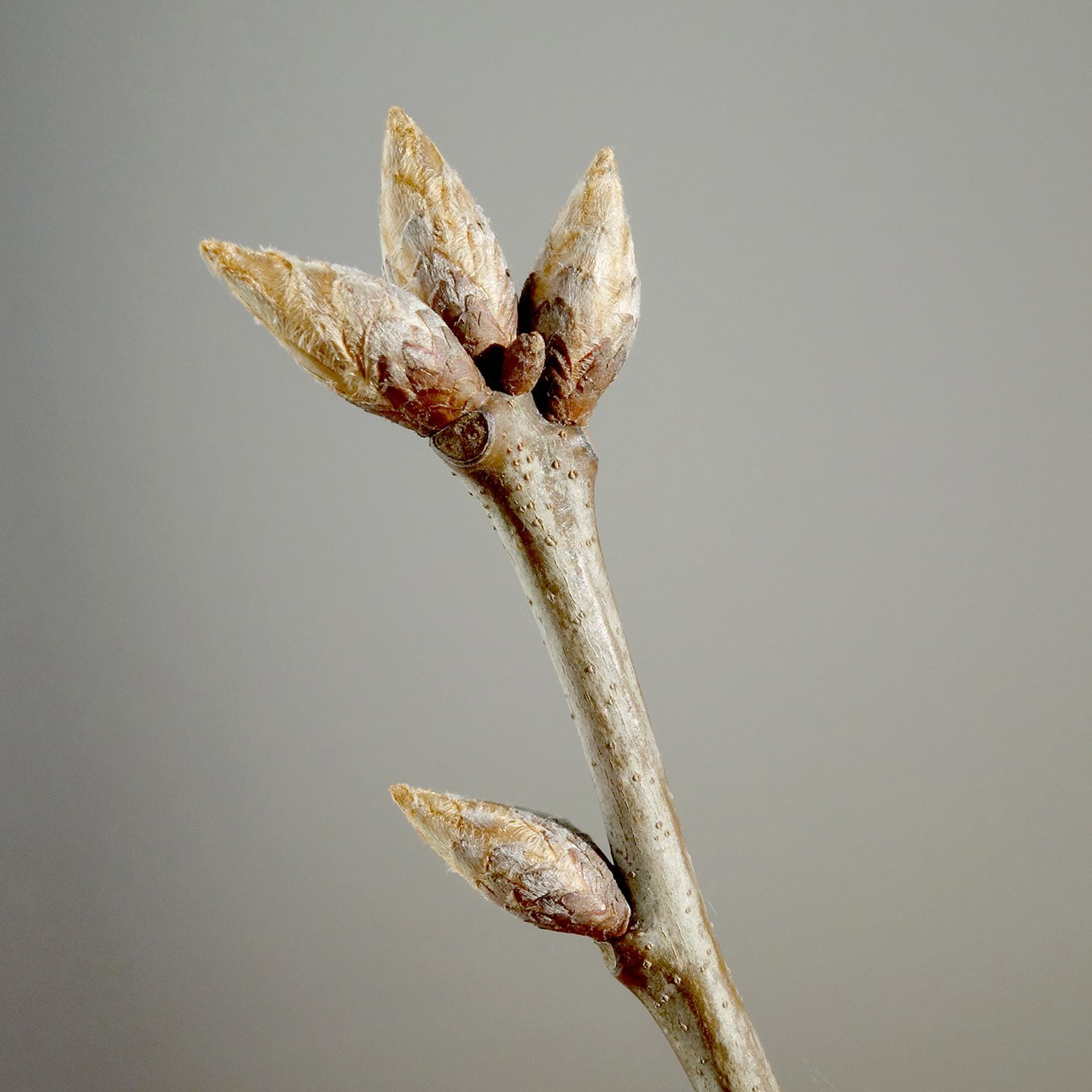
Key Identifying Features
Northern red oak (Quercus rubra) is a fast-growing, large hardwood of the red oak group, identified by leaf lobes that taper to points tipped with tiny bristles, dark furrowed bark with smooth shiny ridges, and broad, flat-capped acorns. The pointed, bristle-tipped lobes immediately separate it from white oaks.
- Large tree, 60-90 ft (18-27 m) tall with a rounded crown
- Leaf lobes pointed and bristle-tipped
- Bark with characteristic pale, smooth 'ski-track' ridges
Leaves & Stems
Leaves are 5-9 in long with 7-11 lobes that are moderately deep, pointed, and end in fine bristle tips. The sinuses between lobes typically extend only about halfway to the midrib, giving a fairly broad leaf compared with more deeply cut red-oak relatives. Leaves are dull dark green above, paler and mostly smooth below, turning russet to deep red in fall. Twigs are reddish-brown and hairless; buds are reddish-brown, conical, pointed, and clustered at the twig tip, often slightly hairy at the tip.
Flowers & Fruit
Red oak flowers in spring with yellow-green hanging male catkins. The acorn is distinctive: 3/4-1 in long, barrel- to egg-shaped, sitting in a shallow, flat, saucer-like cap that covers only the very top of the nut. Crucially, red oak acorns take two years to mature, so you may see both small first-year and larger second-year acorns. The kernel is bitter.
How to Tell It Apart from Look-Alikes
- White oak group (Quercus alba etc.): Rounded lobes without bristles and one-year sweet acorns - the opposite of red oak.
- Black oak (Quercus velutina): Has more deeply cut, glossier leaves, orange inner bark, and larger fuzzy buds.
- Pin oak (Quercus palustris): Deeper sinuses cut nearly to the midrib and small acorns; red oak's sinuses are shallower.
- Scarlet oak: Deeper, more C-shaped sinuses and bright scarlet fall color.
- Key cues: shallow-to-moderate sinuses, bristle-tipped pointed lobes, flat saucer acorn caps, and striped bark.
Where You'll Find It
Northern red oak grows throughout eastern and central North America in well-drained upland forests, slopes, and mixed hardwood stands, and is widely planted as a fast-growing shade and street tree. It tolerates a range of soils but prefers moist, rich, well-drained ground.
Quick ID Checklist
- Pointed leaf lobes tipped with bristles (red oak group)
- 7-11 lobes, sinuses cut about halfway to midrib
- Bark dark with smooth, pale shiny vertical ridges
- Acorns with shallow flat saucer caps, maturing over two years
- Reddish, pointed, clustered buds; russet-red fall color
Frequently asked questions
What is the fastest way to confirm a red oak?
Look at the leaf lobes - if they taper to points ending in tiny bristle hairs, the tree is in the red oak group. Northern red oak adds shallow-to-moderate sinuses and acorns with flat saucer caps.
How long do red oak acorns take to mature?
Two years, so you can often find both small immature and larger mature acorns on the tree at once - a useful distinction from white oak's one-year acorns.
What does red oak bark look like?
Dark gray to reddish, furrowed, with distinctive smooth, flat-topped, pale ridges that look like ski tracks running down the trunk.
How do I distinguish red oak from pin oak?
Pin oak leaves have very deep sinuses cut almost to the midrib and tiny acorns, while red oak has broader leaves with shallower sinuses and larger acorns.