Red Twig Dogwood Identification Guide
How to identify red twig dogwood by its brilliant winter stems, opposite leaves, and flat-topped white flower clusters.
Read the full Red Twig Dogwood encyclopedia entry →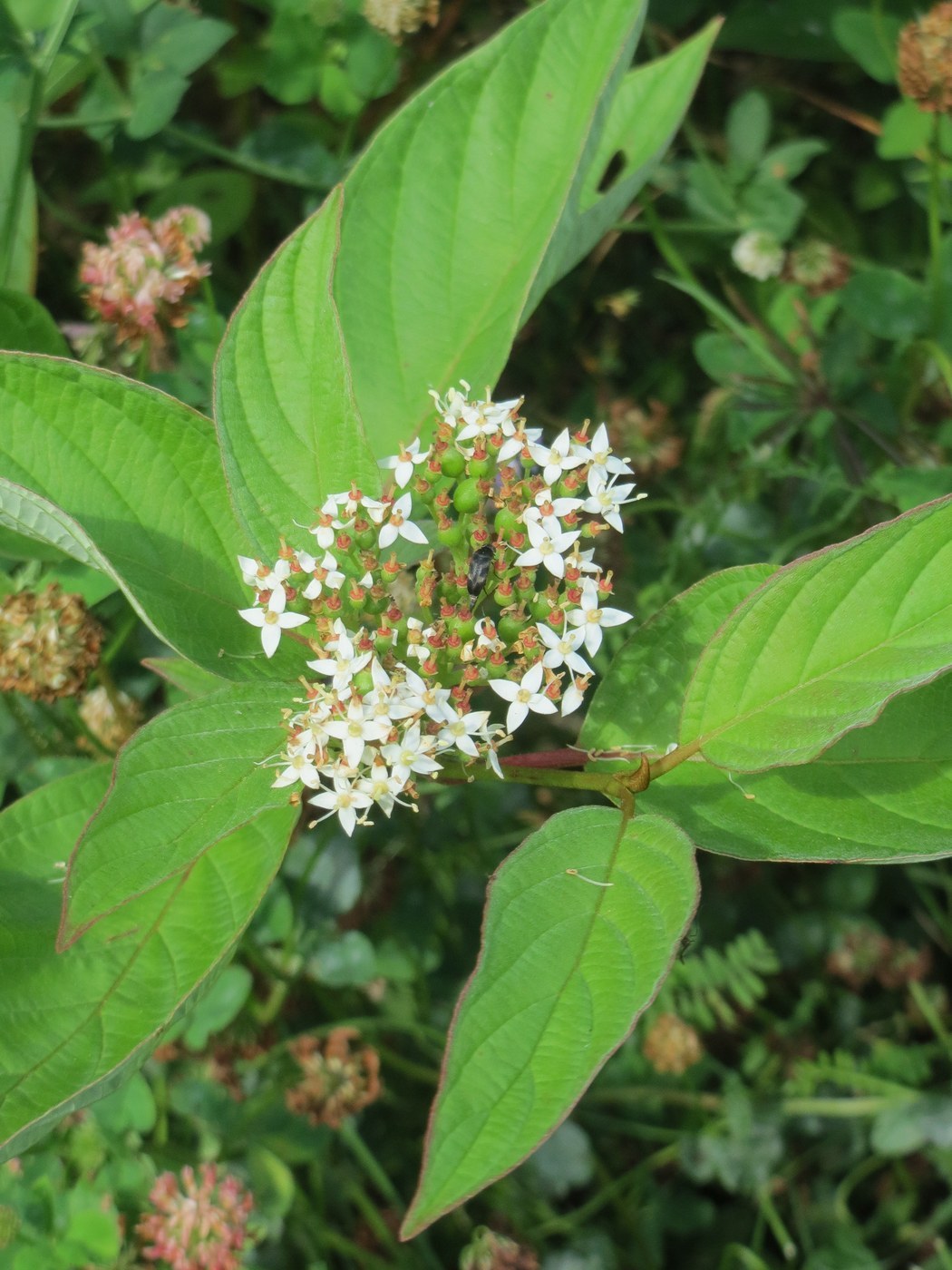
Key Identifying Features
Red twig dogwood (Cornus sericea, also sold as C. alba) is a deciduous, multi-stemmed shrub prized for its bright red to burgundy winter twigs. The signature trait is the deep red coloring of the smooth, slender stems, most vivid on young growth in late fall and winter after the leaves drop. It typically grows 6-9 feet tall and spreads by suckering and by stems that root where they touch the ground, forming dense thickets.
- Opposite leaves and branching (a dogwood hallmark)
- Red, smooth current-year stems, often coloring up after frost
- Flat-topped white flower clusters in late spring
- White to bluish berries in summer/fall
Leaves & Stems
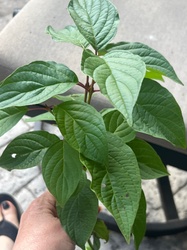
Leaves are simple, opposite, oval to lance-shaped, 2-5 inches long, with a pointed tip and smooth (untoothed) margins. The most reliable dogwood test: gently pull a leaf apart crosswise and you'll see fine, stretchy white latex threads connecting the arcuate (curving) veins that follow the leaf edge toward the tip. Fall color is reddish-purple. Stems are slender and smooth; the youngest wood is the reddest, while older bark turns grayish, which is why the plant is often cut back hard to keep stems bright.
Flowers & Fruit
Flowers appear in late spring to early summer as flat-topped clusters (cymes) of small, creamy-white, four-petaled blooms 1-2.5 inches across. Unlike flowering dogwood trees, there are no large showy bracts. These mature into clusters of small, round white to pale bluish-white berries (drupes) held on reddish stalks, attractive to birds. Sporadic reblooming can occur.
How to Tell It Apart from Look-Alikes
- Flowering dogwood tree (Cornus florida): a small tree with large 4-petal-like white/pink bracts; red twig is a shrub with thicket habit and no bracts.
- Yellow-twig dogwood (C. sericea 'Flaviramea'): identical except stems are bright yellow-green.
- Viburnums: also have flat flower clusters but lack the stretchy leaf latex and red winter stems.
- Willows: alternate leaves (not opposite) and lack latex threads.
The opposite leaves + latex veins + red winter stems combination is essentially diagnostic.
Where You'll Find It
Native across much of North America, red twig dogwood favors moist soils, stream banks, wet meadows, and pond margins, and tolerates standing water and clay. In landscapes it's widely planted in mass for winter interest in full sun to part shade. Cold winters and full sun produce the most intense stem color.
Quick ID Checklist
- Multi-stemmed deciduous shrub, often forming thickets
- Red, smooth twigs (brightest in winter on young wood)
- Opposite, oval untoothed leaves with curving veins
- Stretchy white latex when a leaf is torn
- Flat white flower clusters, no big bracts
- White to bluish berries in late summer
Frequently asked questions
Why are my dogwood's twigs not red?
Stem color is strongest on first-year wood in full sun and cold weather. Old stems fade to gray, so the plant looks dull if it hasn't been pruned. Cutting a third of the oldest stems to the ground each late winter keeps bright young growth coming.
How can I be sure it's a dogwood?
Tear a leaf gently across the middle and slowly pull the halves apart. Dogwoods produce fine, white, elastic latex threads connecting the two halves. Combined with opposite leaves and veins that curve toward the tip, this confirms the genus Cornus.
When do the white berries appear?
The small, round berries ripen from green to white or pale bluish-white on reddish stalks in late summer and fall, following the flat clusters of creamy-white flowers in late spring.
Is red twig dogwood the same as the flowering dogwood tree?
No. The flowering dogwood (Cornus florida) is a small tree with large showy bracts. Red twig dogwood is a suckering shrub with flat clusters of tiny flowers and no large bracts.
Red Twig Dogwood identified by the community
Recent Red Twig Dogwood specimens identified with Plant Identifier.