Red Twig Dogwood
Cornus sericea
A hardy deciduous shrub prized for its brilliant red winter stems, white spring flowers, and white berries. Especially striking in snowy landscapes when the bare crimson twigs glow.
- Light
- Full sun to part shade
- Water
- Medium to high; tolerates wet soil
- Difficulty
- Easy
Got a plant like this?
Identify any plant from a photo, free.
Overview
Red twig dogwood is a deciduous shrub native to North America, grown almost entirely for the vivid red color of its young bark, which intensifies in cold weather and shines against winter snow.
It is a fast, vigorous grower that spreads by underground stolons, forming thickets useful for erosion control and rain gardens. The greenish stems turn brightest red on new growth, so gardeners often prune hard each spring to maximize color.
Reliable, cold-hardy, and tolerant of wet ground, it is one of the easiest landscape shrubs for four-season interest.
How to identify it
- Stems: Smooth, slender, bright red to burgundy (brightest on young wood); some cultivars have yellow-green stems
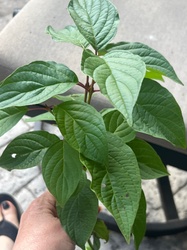
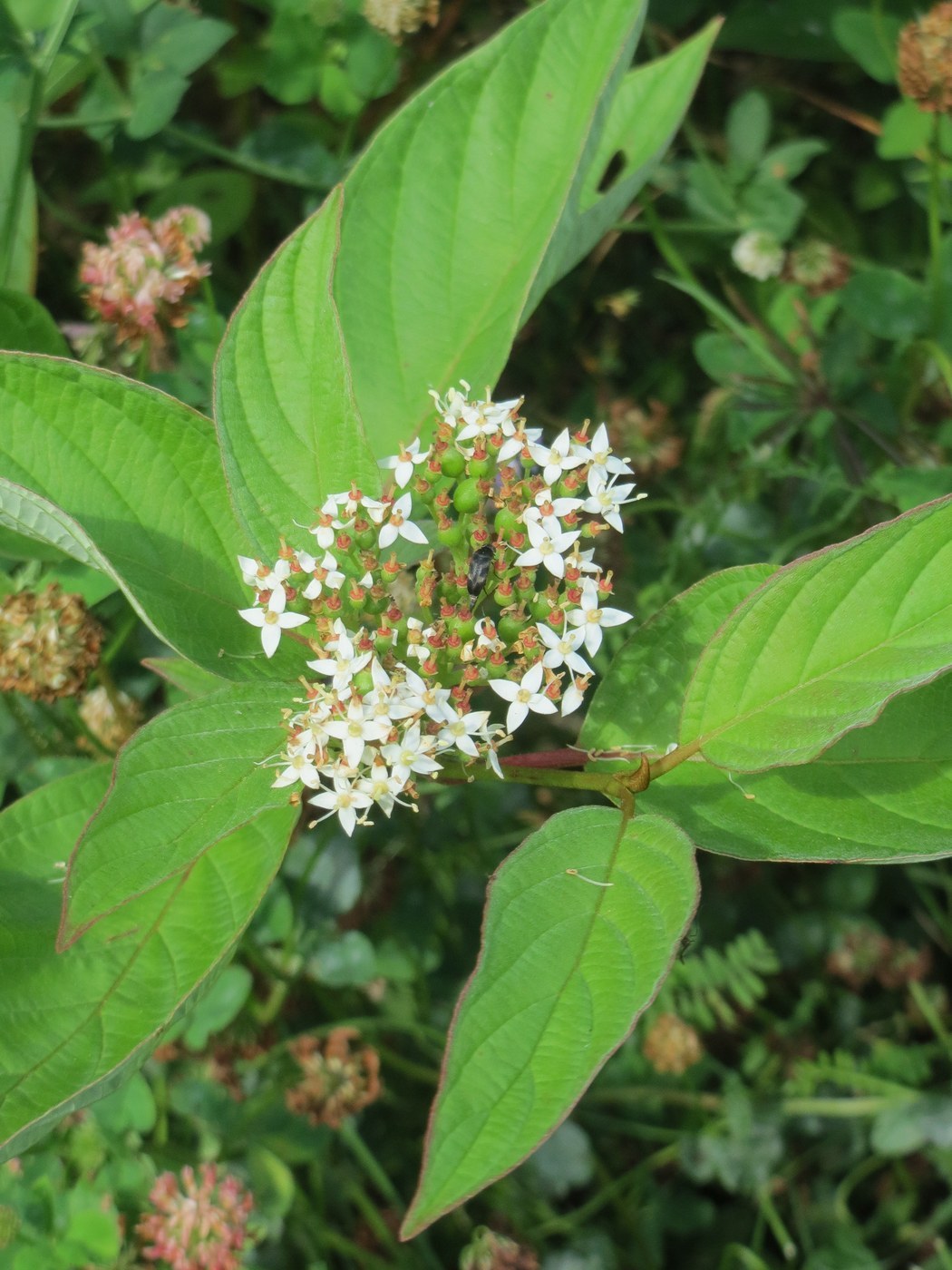
- Leaves: Opposite, oval, 2-4 in long with prominent arcing veins; green in summer turning reddish-purple in fall
- Flowers: Flat-topped clusters (cymes) of small creamy-white flowers in late spring
- Fruit: Clusters of white to bluish-white berries in summer
- Size & habit: Multi-stemmed, rounded, suckering shrub typically 6-9 ft tall and wide
Care & growing
Light: Best stem color in full sun; tolerates partial shade.
Water: Likes consistently moist soil and tolerates standing water and clay; water young plants regularly.
Soil: Adaptable; thrives in average to wet soils, slightly acidic to neutral.
Temperature: Very cold-hardy, roughly USDA zones 3-8.
Feeding: Rarely needs fertilizer; a light spring feeding is sufficient.
Pruning: Cut about a third of the oldest stems to the ground each late winter, or coppice the whole shrub hard, to encourage colorful new growth.
Propagation: Very easy from hardwood cuttings or by dividing suckers.
Habitat & origin
Native across northern and western North America, from Alaska and Canada south through much of the United States. In the wild it grows along streambanks, wet meadows, lake edges, and damp thickets, where its spreading roots stabilize soil.
It is widely planted in temperate gardens worldwide for winter color, in mass plantings, hedgerows, rain gardens, and naturalized wet areas.
Frequently asked questions
Why are my dogwood stems not turning red?
The brightest color appears on young, first-year wood. Prune out older gray stems each spring and give the plant full sun to keep the display vivid.
How big does red twig dogwood get?
Most reach 6-9 feet tall and wide, though hard annual pruning keeps them more compact.
Does it spread aggressively?
It suckers from the roots and can form colonies. Remove unwanted suckers or plant it where spreading is welcome, such as a rain garden.
When do its flowers and berries appear?
Flat clusters of creamy-white flowers open in late spring, followed by white to bluish-white berries in summer.
Red Twig Dogwood guides
In-depth guides for identifying, growing, and caring for Red Twig Dogwood.
How to Care for Red Twig Dogwood
Grow red twig dogwood (Cornus sericea) for glowing red winter stems. This easy, moisture-loving shrub thrives in sun and tolerates wet soil.
Red Twig Dogwood Identification Guide
How to identify red twig dogwood by its brilliant winter stems, opposite leaves, and flat-topped white flower clusters.
Red Twig Dogwood identified by the community
Real specimens identified with Plant Identifier.