
How to Care for Rhodiola
Grow Rhodiola rosea, a hardy alpine succulent, with full sun, gritty fast-draining soil, cool conditions, and restrained watering.
Read the full Rhodiola encyclopedia entry →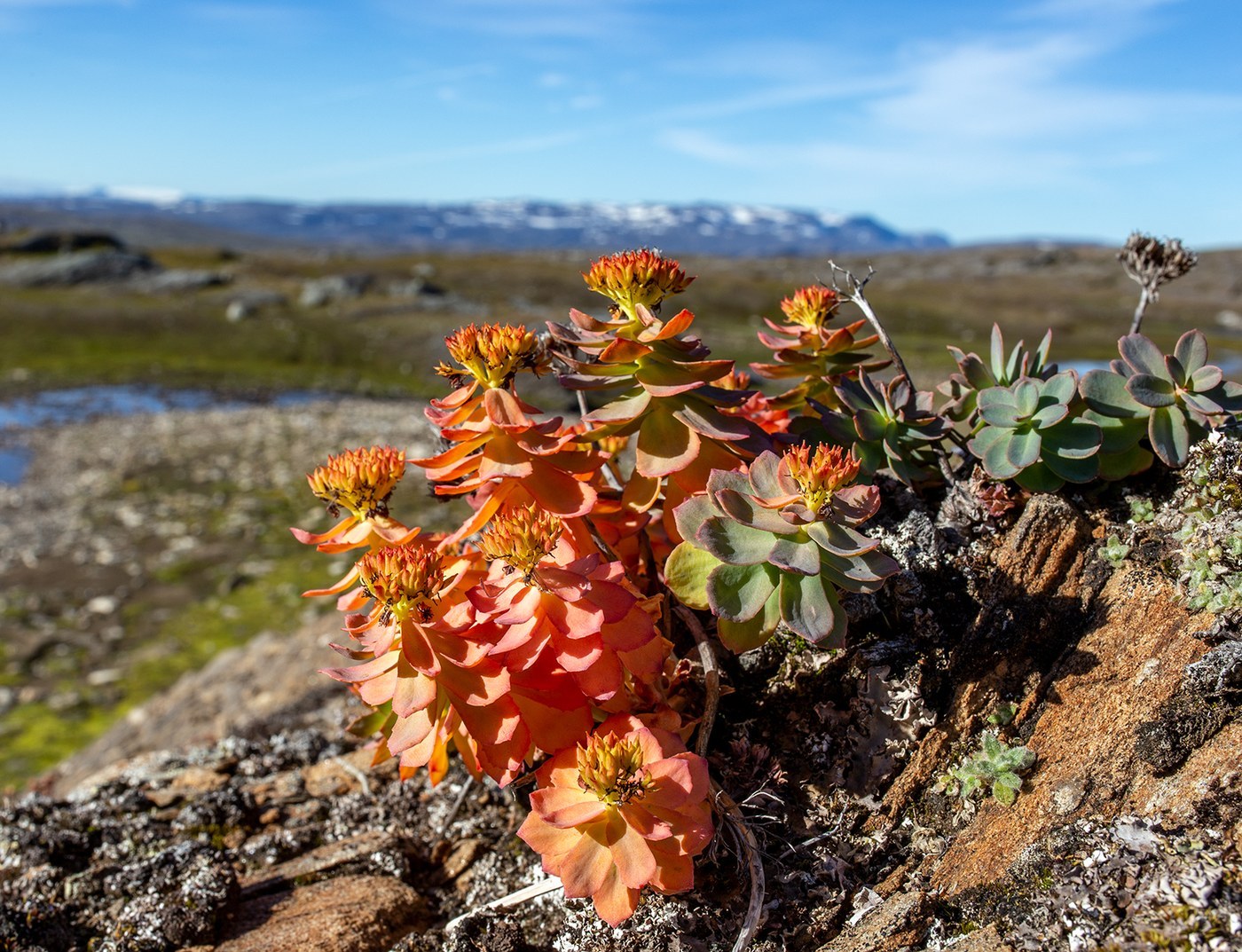
Rhodiola (Rhodiola rosea) is a tough, low-growing alpine succulent from cold mountain and coastal regions, prized in gardens for its fleshy blue-green rosettes and clusters of yellow-to-greenish spring flowers. It thrives in cool, bright, sharply drained conditions that mimic its native rocky slopes.
Light
Give Rhodiola full sun for the strongest, most compact rosettes and best flowering. In climates with intense summer heat, a little afternoon shade helps prevent scorch, but it is fundamentally a full-sun plant that becomes leggy and pale in deep shade.
Water
Water low to moderately. As a succulent adapted to rocky ground, it stores moisture in its fleshy leaves and rootstock and resents soggy conditions. Let the soil dry substantially between waterings, and reduce watering sharply in cool or dormant periods. Excellent drainage is essential to prevent rot.
Soil & Potting
Use a very gritty, fast-draining mix. A blend of standard potting or garden soil cut heavily with coarse sand, grit, perlite, or fine gravel works well. In beds, plant on slopes, raised rockeries, or gravel gardens where water never lingers. In containers, choose pots with generous drainage holes; unglazed terracotta helps wick away excess moisture.
Humidity & Temperature
Rhodiola is exceptionally cold-hardy and actually prefers cool climates, tolerating harsh alpine winters. It struggles in hot, humid summers, which can trigger rot and decline. Prioritize good air circulation and cool root conditions; it does not need supplemental humidity.
Feeding
Feeding needs are minimal. In lean native soils it grows slowly and steadily, so a light application of a balanced, dilute fertilizer once in spring is plenty. Overfeeding produces soft, floppy growth that is prone to rot, so err on the side of restraint.
Propagation
Propagate by seed sown in autumn or after cold stratification, by division of the woody rootstock in spring, or from rooted offsets and stem cuttings taken from the rosettes. Cuttings should be allowed to callus briefly before being set into gritty, barely moist mix.
Repotting / Pruning
Repot container plants every two to three years in spring, refreshing the gritty mix and dividing crowded clumps if needed. Little pruning is required; simply remove spent flower stems after bloom and tidy away any dead or shriveled leaves at the base.
Common Problems & Pests
The main threat is root and crown rot from overwatering or poor drainage, especially in warm, wet weather. Aphids may cluster on flower stems, and root mealybugs can appear in containers. Keep foliage dry, maintain airflow, and correct drainage promptly if you notice softening or blackening at the base.
Seasonal Care Tips
In spring, resume light watering as growth restarts and apply a single feeding. Through summer, keep it cool and on the dry side, providing afternoon shade in hot regions. In autumn it prepares for dormancy, so taper off water. In winter it is fully hardy and needs little more than protection from waterlogging.
Frequently asked questions
Why is my Rhodiola turning soft and mushy at the base?
This is almost always rot caused by overwatering or slow-draining soil. Move it to a grittier mix, cut back watering, and ensure the crown sits at or slightly above soil level with good airflow.
Can Rhodiola tolerate hot summers?
It much prefers cool climates and can suffer in hot, humid conditions. In warm regions, plant it where it gets afternoon shade, keep drainage sharp, and water sparingly to reduce heat-related rot.
How often should I water Rhodiola?
Water only when the soil has dried well, then let it dry again. During cool or dormant periods, water very little. Consistent moisture will harm this drought-adapted succulent.
Does Rhodiola need full sun?
Yes, full sun gives the most compact rosettes and best flowering. In shade it becomes stretched and pale, though light afternoon shade is acceptable in very hot climates.